Energy
West African leaders sign pact to accelerate $25bn Nigeria-Morocco gas pipeline

By Ambrose Nnaji
The Economic Community of West African States (ECOWAS) has moved the proposed $25 billion Nigeria-Morocco Gas Pipeline a step closer to construction after member states signed an intergovernmental agreement supporting the landmark regional energy project.
The agreement was signed on Sunday in Freetown, Sierra Leone, according to a joint statement by the Nigerian National Petroleum Company (NNPC) Limited and Morocco’s National Office of Hydrocarbons and Mines (ONHYM).
The accord marks one of the most significant milestones in the development of the trans-African gas pipeline, which is expected to strengthen regional energy security, expand access to natural gas, promote industrialisation across West Africa and increase gas exports to Europe.
Under the proposed project, the pipeline will transport up to 30 billion cubic metres (bcm) of natural gas annually from Nigeria through 13 West African countries to Morocco.
About 15 bcm of the projected annual capacity is expected to be delivered to Morocco and European markets through the existing Maghreb-Europe Gas Pipeline linking Morocco to Spain.
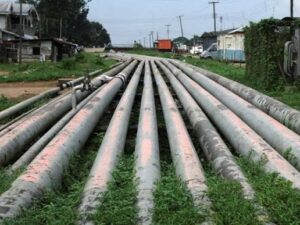
Originally conceived by the governments of Nigeria and Morocco nearly a decade ago, the pipeline will stretch approximately 6,900 kilometres using a combination of offshore and onshore routes, making it one of the world’s longest cross-border gas infrastructure projects.
NNPC and ONHYM confirmed that both the feasibility study and the Front-End Engineering Design (FEED) have been completed, paving the way for the next phase of implementation.
According to the joint statement, the next major milestone will be the signing of a separate agreement between Morocco and Mauritania in the presence of Nigeria’s President, further advancing the project’s execution.
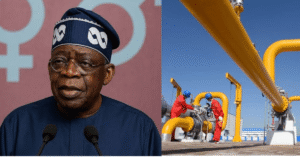

The Nigeria-Morocco Gas Pipeline is designed to unlock Nigeria’s vast natural gas reserves while supplying cleaner energy to participating countries for electricity generation, industrial development and mining activities.
Beyond improving energy access, the project is expected to deepen regional integration, create investment opportunities and support economic growth across West Africa.
Nigeria has steadily advanced the project over the past few years.
In June 2022, the Federal Executive Council approved NNPC to execute a Memorandum of Understanding (MoU) with ECOWAS to facilitate the pipeline’s development from Nigeria through West Africa to Morocco and Europe.
Later that year, NNPC signed additional MoUs with five African countries to broaden regional cooperation and accelerate implementation.
In March 2024, then NNPC Group Chief Executive Officer, Mele Kyari, said the project was expected to reach a Final Investment Decision (FID) before the end of 2024.
However, like many large-scale cross-border infrastructure projects, progress has been slowed by financing requirements, regulatory coordination among participating countries and the technical complexity of constructing one of the world’s longest offshore gas pipelines.
Despite these challenges, the latest ECOWAS agreement represents a major breakthrough, providing the political and legal framework needed to mobilise financing and coordinate implementation among participating states.
Once completed, the Nigeria-Morocco Gas Pipeline is expected to become a strategic energy corridor linking West Africa to Europe, enhancing energy security, supporting industrial growth and reinforcing Africa’s role in the global natural gas market.