Uncategorized
Seplat Energy earns triple honours in market excellence, upstream deal-making, sustainability impact


By Ambrose Nnaji
Seplat Energy Plc., Nigeria’s leading independent energy company, has secured three significant awards across finance, upstream operations, and sustainability, reinforcing its position as one of Africa’s most admired corporate performers.
At the 30th Anniversary of the PEARL Awards in Lagos, Seplat clinched the Market Excellence Award for the 2025 Highest Net Asset Ratio, a recognition that underscores the company’s strong asset efficiency and profitability on the Nigerian Exchange (NGX). The PEARL Awards—established in 1995 to promote discipline, transparency, and growth within Nigeria’s capital market—apply a rigorous, data-driven process to honour top-performing listed companies.
Explaining the metrics, the organisers stated that the Return on Net Assets (RONA) ratio highlights how efficiently a company converts its assets into earnings. Seplat’s performance in this category reflects sustained operational strength and investor value creation.
The company also won Upstream Deal of the Year at the World Energy Capital Assembly (WECA) Awards in London, a global recognition that celebrates outstanding transactions, financial performance, and innovation in the oil and gas industry. The accolade places Seplat among globally respected deal-makers shaping the future of upstream energy.

Rounding off the honours, Seplat received the Education Intervention of the Year at the SERAS Africa Sustainability Awards in Lagos. The award recognises the company’s contributions to human capital development and its role in driving inclusive, community-focused education initiatives. This year’s SERAS theme—“Sustainability 2.0: Innovating for Impact and Inclusive Growth”—reflects a shift towards more intentional, future-ready actions across the continent.
SERAS Founder Ken Egbas emphasised that African companies must increasingly connect “growth to inclusion, profit to purpose, and ambition to equity,” noting that Seplat and other winners demonstrated exemplary leadership in sustainable development.
Pearl Awards President/CEO Tayo Orekoya highlighted the credibility of the awards’ methodology, adding that each category is determined through verifiable metrics. NGX CEO Jude Chiemeka commended the Awards’ founders for fostering a culture of performance excellence within Nigeria’s capital markets.
Together, the recognitions affirm Seplat’s strong strategic execution, operational resilience, and commitment to innovation and social impact—hallmarks that continue to position the company as an industry leader both locally and globally.

By Ambrose Nnaji
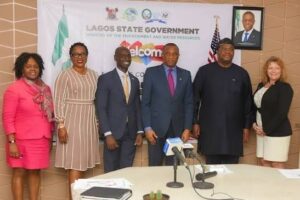
The United States has appointed Brandon Hudspeth as the new Consul General at its Consulate General in Lagos, placing an experienced diplomat at the helm of the mission as Washington undertakes a major restructuring of routine visa services in Nigeria and across Africa.
The U.S. Embassy in Nig eria announced the appointment on its official X account, describing Hudspeth’s posting as a return to Nigeria, where he previously served as the Consulate’s Political-Economic Section Chief.
His appointment comes at a significant moment for U.S.-Nigeria consular relations, following the transfer of routine U.S. visa processing from the U.S. Embassy in Abuja to the Lagos consulate.
Since August 1, routine U.S. visa applicants in Nigeria have been directed to Lagos, while the Abuja embassy no longer handles routine visa services.
The change makes Lagos the country’s designated centre for routine U.S. visa processing and gives the consulate a more prominent role in managing one of the most important areas of interaction between the two countries.
“We’re excited to welcome Brandon Hudspeth as the new Consul General at U.S. Consulate General Lagos, returning to Nigeria after previously serving as the Consulate’s Political-Economic Section Chief,” the embassy said.
Hudspeth previously served as Deputy Chief of Mission at the U.S. Embassy in Namibia before taking up his new assignment in Lagos.
His diplomatic career has included postings in the Philippines, Mali, Cuba and Afghanistan, as well as assignments in Washington at the Operations Center and the Bureau of African Affairs.
The U.S. Embassy said it looked forward to working with Hudspeth to strengthen relations between the United States and Nigeria.
His arrival coincides with a broader reorganisation of U.S. consular operations across Africa.
The U.S. Department of State has been consolidating routine visa processing into a network of designated regional hubs, with the stated objectives of strengthening screening and vetting, improving operational efficiency and standardising visa adjudication.
Under the new structure, Lagos is one of 20 designated visa-processing hubs in Africa, giving the Nigerian commercial capital a larger role in the processing of routine U.S. visa applications from Nigeria and potentially applicants from other countries without designated processing centres.
The designated hubs are Abidjan, Accra, Addis Ababa, Cape Town, Dakar, Dar es Salaam, Djibouti, Johannesburg, Kampala, Kigali, Kinshasa, Lagos, Lomé, Luanda, Malabo, Monrovia, Nairobi, Port Louis, Praia and Yaoundé.
Applicants from countries without designated hubs may be required to travel to an approved processing centre to complete their applications.
The restructuring is expected to reduce the number of U.S. diplomatic missions in Africa offering routine visa services from nearly 50 to 20.
However, the affected missions will continue to provide services to American citizens, emergency assistance and selected diplomatic functions.
For Nigeria, the concentration of routine visa processing in Lagos could increase the operational importance of the consulate, particularly given the high volume of travel between Nigeria and the United States for business, education, tourism, family visits and other purposes.
It also means that the capacity of the Lagos mission to manage demand efficiently will be closely watched by applicants and the Nigerian business and education communities.
The development comes as the United States continues construction of a new consulate campus in Eko Atlantic City, Lagos, designed to modernise U.S. diplomatic infrastructure and expand operational capacity.
The combination of a new Consul General, the transfer of routine visa services and the construction of a new consulate campus could further consolidate Lagos’s position as the central hub of U.S. consular activity in Nigeria.
Beyond visa processing, Hudspeth’s previous experience in political-economic affairs could also be relevant to the broader U.S.-Nigeria relationship, which encompasses trade, investment, energy, security, development and people-to-people ties.
His return to Nigeria therefore comes at a time when the relationship requires sustained diplomatic engagement amid changes in migration and visa policy and evolving economic and strategic priorities.
The appointment is expected to give Hudspeth a central role in advancing U.S. engagement with Lagos and strengthening cooperation with Nigerian government institutions, businesses, civil society and other stakeholders.
With Lagos now occupying a more prominent position in the U.S. visa-processing architecture for Africa, Hudspeth’s tenure is likely to be closely associated with the implementation of the new consular model and its impact on Nigerians seeking to travel to the United States.

By Editor
The Monetary Policy Committee (MPC) of the Central Bank of Nigeria (CBN) has retained the Monetary Policy Rate (MPR), the country’s benchmark interest rate, at 26.5 per cent.
The decision was announced at the conclusion of the committee’s 306th meeting held in Abuja on July 20 and 21.
All 11 members of the MPC attended the two-day meeting, where they assessed recent developments in the domestic and global economy before unanimously deciding to keep the benchmark rate unchanged.

By maintaining the MPR at 26.5 per cent, the CBN signalled its commitment to preserving its tight monetary policy stance as it seeks to further moderate inflationary pressures, support exchange rate stability and reinforce recent improvements in the country’s macroeconomic environment.
By Editor
The Nigeria Customs Service (NCS) is set to deploy cargo scanners at the Nnamdi Azikiwe International Airport, Abuja, in a move aimed at accelerating cargo inspections, improving trade facilitation and strengthening border security.
The project is currently awaiting final regulatory approval before becoming operational.
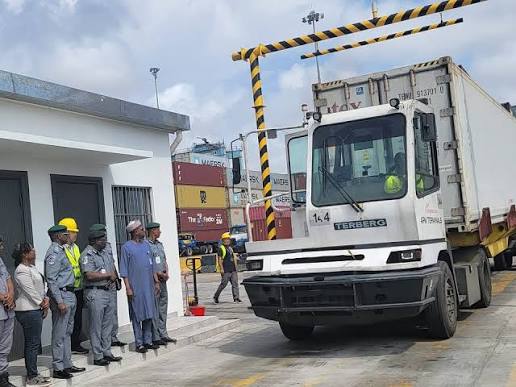
The Acting Comptroller of Non-Intrusive Inspection, Deputy Comptroller of Customs (DC) Umar Madugu, disclosed the development on July 15 during a readiness assessment of the newly installed scanning facilities, according to a statement by the service.
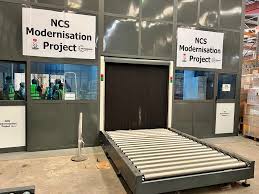
The deployment will introduce non-intrusive inspection technology, enabling Customs officers to examine cargo using advanced scanners rather than relying primarily on physical inspections.
According to the NCS, the technology is expected to shorten cargo clearance times, enhance operational efficiency and improve the detection of prohibited or undeclared goods.
As part of the assessment, Madugu inspected newly installed CX180 180DH pallet cargo scanners at the warehouses of Skyway Aviation Handling Company (SAHCO) and the Nigerian Aviation Handling Company (NAHCO) within the airport.
“The Nigeria Customs Service is on the verge of deploying non-intrusive inspection technology (cargo scanners) at the Nnamdi Azikiwe International Airport, with the project awaiting final regulatory approval for full takeoff,” he said.
Madugu noted that Customs officers completed specialised image analysis training last month, equipping them with the expertise required to interpret scanner images accurately.
He said the training would enable officers to identify prohibited and undeclared items more efficiently while significantly reducing cargo inspection times.
The Customs Service described the initiative as a major milestone in its ongoing drive to modernise cargo inspection and strengthen technology-driven border management.
To support seamless operations after the scanners become operational, Madugu recommended additional security and infrastructure upgrades around the scanning facilities. These include deploying traffic assessment officers to manage cargo movement and installing CCTV cameras to monitor inbound and outbound cargo.
“Traffic assessment officers will be positioned strategically and CCTV cameras installed to coordinate the movement of inbound and outbound cargo within the scanning area, ensuring seamless operations and improved efficiency,” he said.
The readiness assessment was conducted alongside officials from Trade Modernization Project Limited and the Quality Assurance Unit, who jointly evaluated the operational preparedness of the facilities.
Before the inspection, Madugu paid a courtesy visit to the Customs Area Controller of the FCT Area Command, Comptroller Victoria Aliboh, to obtain formal clearance for the exercise.
According to the NCS, the successful assessment marks another step towards deploying technology-driven cargo inspection at Abuja airport, with the scanners expected to commence operations once regulatory approval is secured.
The scanner deployment forms part of the service’s broader customs modernisation programme aimed at improving trade facilitation, enhancing border security and boosting revenue collection.
The NCS generated a record ₦7.281 trillion in revenue in 2025, its highest annual collection to date.
Between January and May, the service collected ₦3.35 trillion, processed nearly 700,000 import declarations and issued more than 112,000 Pre-Arrival Assessment Reports (PAARs).
Within the same period, Customs facilitated exports worth $1.218 billion through 21,376 export containers, reflecting sustained growth in Nigeria’s export trade.
The service also disclosed that approvals under the Import Duty Exemption Certificate scheme reached ₦34 trillion in 2025, with about 60 per cent of the waivers granted for military hardware imports.
Nigeria’s air freight logistics market is estimated to be worth more than $8 billion, with Lagos, Abuja, Port Harcourt and Kano serving as the country’s major cargo hubs.
Earlier, Aramex Nigeria Managing Director, Faisal Jarmakani, identified airport cargo processing as one of the biggest obstacles to the growth of Nigeria’s air freight industry.

According to him, multiple clearance procedures, overlapping regulatory agencies, documentation bottlenecks, physical inspections and limited technology integration continue to slow cargo movement at Nigerian airports.
He said greater digitalisation and stronger inter-agency collaboration would reduce processing delays, lower logistics costs and improve the efficiency of Nigeria’s air cargo sector.
The planned deployment of cargo scanners at the Abuja airport is expected to support those reforms by introducing faster, technology-driven cargo inspections once the project receives final regulatory approval.

Customs: Salako takes charge at Lilypond Export Command, pledges stronger trade facilitation

Eid-el-Maulud: Rite Foods calls for peace, unity, national progress

Rite Foods’ innovation, green energy drive earns top 50 impact recognition
-

 Fashion9 years ago
These ’90s fashion trends are making a comeback in 2017
-
Entertainment9 years ago
The final 6 ‘Game of Thrones’ episodes might feel like a full season
-
Fashion9 years ago
According to Dior Couture, this taboo fashion accessory is back
-
Fashion9 years ago
Model Jocelyn Chew’s Instagram is the best vacation you’ve ever had
-
Sports9 years ago
Steph Curry finally got the contract he deserves from the Warriors
-

 News9 months ago
Tinubu opens first stretch of Lagos–Calabar Coastal Highway, hints on ₦trillion legacy roads push
-
Entertainment9 years ago
The old and New Edition cast comes together to perform
-
Business9 years ago
Uber and Lyft are finally available in all of New York State