Energy
Lawyers champion sustainable path for Nigeria’s energy sector











By Ambrose Nnaji
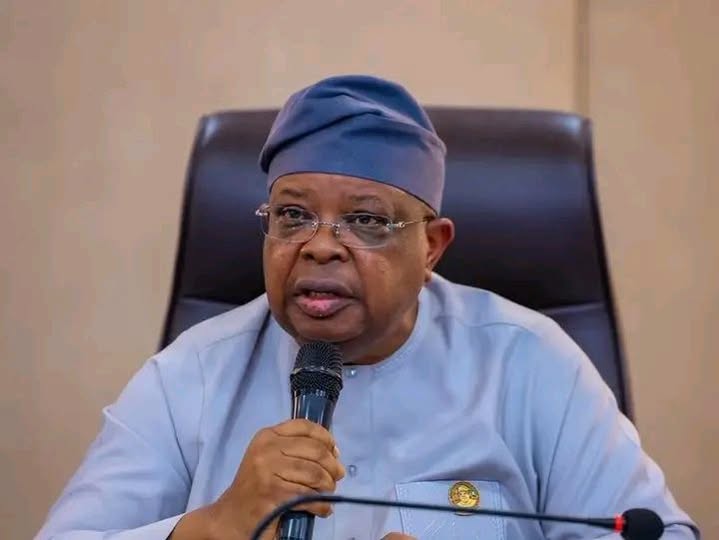
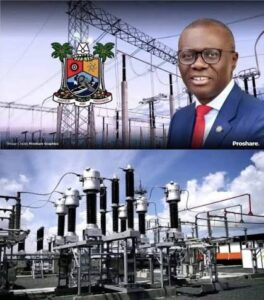
The Federal Government and Lagos State have agreed to coordinate efforts to improve electricity supply along the Lagos corridor under a 24/7 Energy Zones pilot approved by President Bola Tinubu.
The agreement followed a technical meeting in Lagos, between Minister of Power Joseph Tegbe and Governor Babajide Sanwo-Olu, alongside senior officials from both governments.
The pilot is set to begin in Lagos and extend to the Abuja–Kaduna–Kano and Enugu–Port Harcourt corridors, with the aim of improving supply to major commercial and industrial centres.
Tegbe said the Federal Ministry of Power had secured commitments from distribution companies to offtake more electricity and provide more reliable service to customers along the Lagos corridor. He said the ministry was ready to work with Lagos on four presidential priorities: grid stabilisation, market liquidity, grid expansion, and governance and regulatory harmonisation.
Sanwo-Olu welcomed the federal delegation and said Lagos was committed to finding practical solutions to the state’s electricity challenges. He said cooperation was needed to build a bankable, collaborative and competitive electricity market in Lagos.
To coordinate the work, Tegbe announced a joint technical committee to address outstanding issues and recommend next steps. The committee will report to a steering committee headed by Sanwo-Olu and co-chaired by the power minister. Its members will include the Special Adviser to the President on Power, the Permanent Secretary of the Federal Ministry of Power and the Lagos State Commissioner for Energy.
Also at the meeting were Special Adviser to the President on Power Lanre Babalola; Permanent Secretary of the Federal Ministry of Power Mahmuda Mamman; Lagos Deputy Governor Kadiri Obafemi Hamzat; Lagos Commissioner for Energy Biodun Ogunleye; and the managing directors of the Transmission Company of Nigeria (TCN), Nigerian Independent System Operator (NISO), and Rural Electrification Agency (REA), among other officials.
Energy
Beyond power access: Tegbe tasks REA board with turning electricity into economic opportunity

By Ambrose Nnaji
The Minister of Power, Joseph Tegbe, has charged the newly constituted Governing Board of the Rural Electrification Agency (REA) to focus on delivering measurable improvements in the lives, livelihoods and economic prospects of Nigerians as the country expands access to electricity.
Tegbe gave the charge in Abuja while inaugurating the new REA Go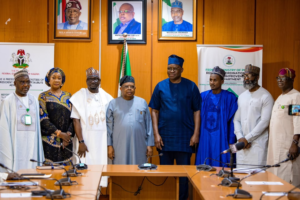 verning Board, led by former Ekiti State Governor Ayodele Fayose, urging members to ensure that electricity projects translate into tangible social and economic benefits for communities.
He said the effectiveness of the Agency should not be measured simply by the number of mini-grids, solar home systems or electrification projects delivered, but by their impact on households, businesses, schools, healthcare facilities and productive activities.
According to the Minister, every electricity project should ultimately represent an investment in human capital, productivity and economic inclusion.
The inauguration comes as Nigeria seeks to expand electricity access while reducing the infrastructure gap between urban and rural communities and increasing the role of decentralised power solutions in the country’s electricity mix.
Tegbe said REA has a critical role to play in turning electricity access into an instrument of economic development.
He pointed to programmes including the Energizing Education Programme, Energizing Economies Programme, Energizing Agriculture Programme and Africa Mini-Grids Programme as examples of initiatives designed to connect electricity provision with productive activities and social development.
The Minister said the new Board takes office at a critical period for the Agency, particularly as Nigeria seeks to attract investment into distributed energy infrastructure and improve the reliability and affordability of electricity.
The emphasis on productive use of electricity is significant because access to power alone does not automatically translate into economic development.
For rural communities, reliable electricity can support agro-processing, cold storage, irrigation, small manufacturing, digital services and other businesses capable of generating employment and household income.
Tegbe therefore urged the Board to ensure that REA’s interventions are designed around the needs of communities and the economic activities they support.
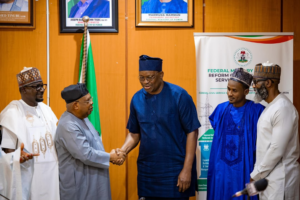
The Minister also outlined the governance responsibilities of the new Board, stressing the distinction between strategic oversight and day-to-day management.
He said the Board’s role was to provide strategic direction, supervision and accountability, while management should retain the operational flexibility required to execute the Agency’s mandate.
Under the framework, the Board is expected to meet quarterly to review performance, while management remains responsible for implementation between meetings subject to accountability requirements.
Tegbe said the governance structure was consistent with the Federal Government’s broader efforts to strengthen accountability and institutional performance across public agencies.
The new Board was constituted under Section 130 of the Electricity Act.
He commended Fayose’s experience in public administration and welcomed the other members of the governing body, assuring the Agency of continued collaboration with the Ministry of Power.
Responding on behalf of the Board, Fayose said the appointment of Tegbe as Minister of Power demonstrated the administration’s determination to address Nigeria’s long-standing electricity challenges.
He described Tegbe as a technocrat with the technical and managerial capacity required to drive reforms in the power sector.
Fayose said the Board was prepared to work with the Minister and REA management to support the Federal Government’s efforts to deliver a lasting solution to Nigeria’s electricity challenges.
He described the new Board’s mandate as an opportunity to strengthen the Agency’s contribution to national development.
For REA, the immediate challenge will be translating the new governance structure into faster project delivery, stronger accountability and measurable improvements in electricity access.
Nigeria’s rural electrification challenge extends beyond connecting communities to the grid. With millions of households and businesses still dependent on unreliable or expensive energy sources, decentralised solutions such as solar mini-grids and standalone systems are increasingly important to closing the access gap.
Reliable electricity can reduce the operating costs of small businesses, improve productivity and create opportunities for agricultural and commercial enterprises in communities that remain underserved by conventional grid infrastructure.

The success of the new REA Board will therefore ultimately be judged not by its inauguration, but by whether its oversight helps convert public and private investment in rural electricity into more reliable power, stronger businesses, jobs and improved livelihoods.
As Tegbe put it, electricity should be viewed not merely as a utility, but as an instrument for inclusion, opportunity and prosperity.

By Reporter
The Lagos State Electricity Regulatory Commission (LASERC) has clarified that its proposed 12-month billing rule will not erase existing electricity debts, dismissing claims that consumers would no longer be required to pay bills older than one year.
In a statement issued and obtained by NewsNexis Africa, the Commission said recent media reports had misinterpreted provisions of the proposed Retail Electricity Supply Code, creating the false impression that all outstanding electricity debts older than 12 months would automatically be cancelled.
LASERC explained that the provision is forward-looking and will only take effect when the new Code becomes operational. It stressed that electricity debts accumulated before the Code comes into force remain valid and enforceable under existing laws and contractual agreements.
“The Lagos State Electricity Regulatory Commission (LASERC) has issued a vital clarification regarding recent media interpretations of its proposed Retail Electricity Supply Code, explicitly clarifying that the rule limiting billing or recovery for electricity consumed to 12 months does not wipe out historical debts.
“This clarification comes in response to misinterpretations suggesting an immediate, sweeping cancellation of all debts owed by customers for electricity supply.”
According to the Commission, the proposed rule is intended to ensure electricity suppliers issue bills within a reasonable period after electricity has been consumed. Once a bill is issued within the prescribed 12-month window, it remains valid and recoverable.
LASERC Chief Executive Officer, Temitope George, said the proposed Retail Electricity Supply Code is designed to improve accountability between electricity suppliers and consumers while creating a transparent and predictable regulatory framework for the state’s electricity market.

She noted that the reforms are aimed at strengthening billing practices rather than exempting consumers from paying for electricity already consumed.
“By limiting back billing for electricity consumption to 12 months, we are creating a powerful regulatory incentive for distribution licensees to act responsibly towards their customers.
“Outstanding historical debts must still be settled, but moving forward, bills must be issued in a timely and predictable manner.”
Power sector experts say the clarification is crucial in preventing confusion among consumers while reinforcing the need for greater accountability in electricity billing.
They noted that back-billing has been a longstanding source of disputes between electricity distribution companies and customers, particularly unmetered consumers who often receive estimated bills months after electricity has been consumed.
According to the experts, placing a 12-month limit on future back-billing encourages distribution companies to improve billing efficiency, strengthen customer record management and accelerate metering, without undermining their legal right to recover legitimate debts already incurred.
They added that the proposed rule also aligns with global regulatory principles that require utilities to issue bills within a reasonable period, providing consumers with greater certainty and reducing prolonged billing disputes.
However, the analysts stressed that the success of the reform would depend on effective enforcement, widespread deployment of prepaid and smart meters, robust consumer awareness campaigns and improved complaint resolution mechanisms.
They further observed that while customers remain obligated to settle verified historical debts, electricity distribution companies must also meet their statutory obligations by issuing timely and accurate bills and ensuring eligible consumers are metered.
The Commission also reminded electricity distribution licensees of their legal obligation to meter all eligible customers within timelines prescribed by the regulator.
It said the proposed Code forms part of wider reforms to improve billing transparency, enhance investor confidence and promote a safe, reliable, affordable and sustainable electricity market in Lagos State.
Established under the Lagos Electricity Law signed by Governor Babajide Sanwo-Olu in December 2024, LASERC assumed full regulatory responsibility for the state’s electricity market following the inauguration of its board in March.
The proposed Retail Electricity Supply Code sets out the rights and obligations of electricity consumers, distribution licensees and other participants in Lagos’ electricity market.
In May, the Commission approved 14 electricity licences and permits covering off-grid generation, embedded generation, independent electricity distribution, metering services and interconnected mini-grid operations.
LASERC is also advancing broader electricity sector reforms, including universal metering, increased private sector participation and decentralised power supply, as part of Lagos State’s ambition to establish an independent electricity market and achieve 97.5 per cent electricity availability by 2030.

Nigeria’s $50b energy investment gap: Refining gains, gas infrastructure, supply risks

NCDMB targets local production of critical oil, gas components

NCDMB, Dangote push beyond compliance as local content retention hits 61%

-

 News7 months ago
Investor confidence lifts Guinness Nigeria above ₦1trn market cap
-

 News11 months ago
Tinubu opens first stretch of Lagos–Calabar Coastal Highway, hints on ₦trillion legacy roads push
-

 News4 months ago
HEDA demands probe into alleged ₦1bn PFIPC budget allocation
-

 Business4 months ago
Villa of Love bets on interactive digital engagement with ₦100m entertainment platform
-

 Business3 months ago
BREAKING: RenCap says CBN HoldCo rule could trigger ₦1.7tn capital raise by banks
-

 Banking3 months ago
Nigerian pension funds anchor ₦20.69bn FCMB-TLG private debt raise
-
Business3 months ago
First HoldCo posts record ₦653.5bn H1 profit as shares hit 10% gain
-

 News4 months ago
Nigeria Customs posts ₦3.35tn revenue, intensifies anti-smuggling operations