Banking
IMF urges hybrid approach as tokenization transforms financial infrastructure

By Our Reporter
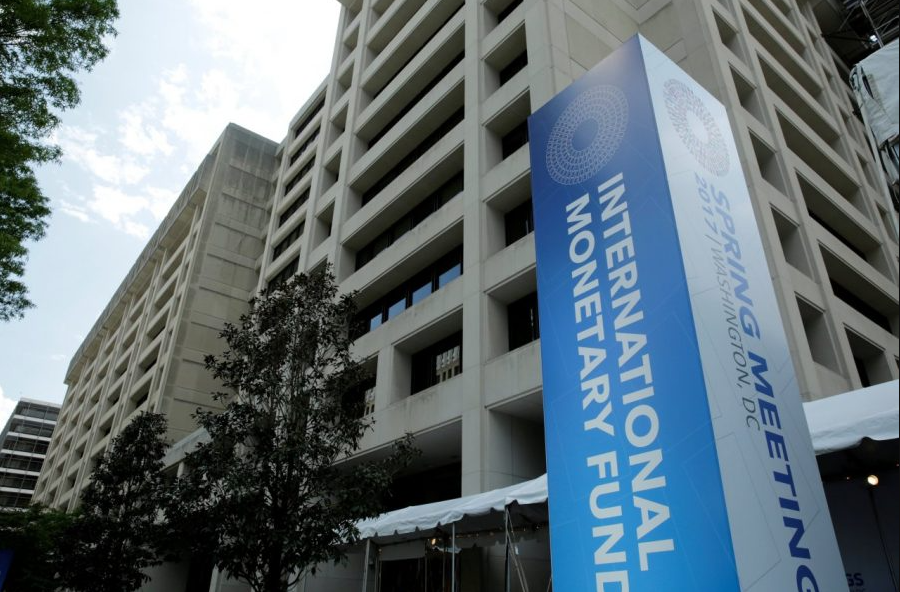
The International Monetary Fund (IMF) has said tokenization will fundamentally transform global financial market infrastructure but is unlikely to replace the institutions that provide governance, regulation and oversight for the financial system.
The position is contained in an IMF working paper titled “The Evolution of Financial Market Infrastructures in a Tokenized Economy: Exploring Blockchain Implementation Options for Issuance, Central Clearing, Settlement, and Reporting,” authored by Yaiza Cabedo, Tommaso Mancini-Griffoli, Fabian Schär and Nicolas Zhang.
According to the paper, blockchain technology and smart contracts have the potential to automate many core financial market functions, but legal entities and regulated institutions will remain indispensable for risk management, compliance, accountability and supervisory intervention.
The IMF described tokenization as the most significant technological shift in financial market infrastructure since the dematerialization of securities.
“Tokenization has the potential to reshape Financial Market Infrastructures more profoundly than any technological shift since securities dematerialization,” the paper stated.
The Fund explained that distributed ledger technology and programmable smart contracts can automate processes such as record-keeping, reconciliation, delivery-versus-payment settlements and collateral management, significantly reducing operational inefficiencies and transaction costs.
It added that shared programmable platforms could streamline the entire lifecycle of financial transactions by improving collateral efficiency, reducing reconciliation requirements and enhancing coordination across financial institutions.
However, the IMF cautioned that critical responsibilities—including risk governance, margin setting, default management, business continuity, legal oversight and regulatory intervention—cannot be fully delegated to software.
Rather than eliminating existing financial market infrastructure, the technology is expected to redefine how it operates.
The report projects that the future financial system will rely on hybrid models combining blockchain-based automation with traditional institutional oversight.
Under such arrangements, smart contracts would increasingly manage transactional and operational processes, while regulated institutions would continue to oversee governance, legal compliance, accountability and crisis management.
The IMF noted that hybrid structures will remain necessary where blockchain settlements lack legal recognition, ownership rights depend on off-chain legal enforcement, or transactions involve multiple distributed ledger platforms.
While highlighting the efficiency gains of tokenization, the paper also identified emerging risks, including smart contract vulnerabilities, concentration of governance, reliance on external data providers (oracles), privacy concerns and fragmentation across blockchain networks.
It urged policymakers to clearly define which financial processes can be safely automated and which should remain under institutional control to preserve market integrity and financial stability.
According to the IMF, the key policy challenge is no longer whether financial market infrastructure will survive the transition to blockchain technology, but how existing institutions should evolve to support tokenized financial ecosystems.
Tokenization involves converting ownership rights or other assets into digital tokens that can be securely issued, transferred and recorded on blockchain networks.
The report comes as regulators around the world accelerate efforts to establish legal frameworks for digital assets.
In Nigeria, the Securities and Exchange Commission (SEC) has tightened oversight of digital asset operators through its regulatory incubation programme.
The regulatory landscape was further strengthened in 2025 when President Bola Ahmed Tinubu signed the Investment and Securities Act (ISA) 2025 into law, replacing the Investments and Securities Act of 2007.
The legislation classifies eligible digital assets as securities, bringing tokenized investment products within the SEC’s regulatory jurisdiction and providing a clearer legal framework for blockchain-based capital market activities.
Financial market infrastructure comprises payment systems, securities depositories, central counterparties, clearing houses, settlement systems and trade repositories that facilitate the issuance, clearing, settlement and reporting of financial transactions.
The IMF noted that although central banks, regulators and financial institutions are increasingly embracing tokenization to improve efficiency, lower settlement costs and accelerate cross-border transactions, legal certainty, effective regulation and institutional governance will remain the foundation of resilient financial markets.
By Ambrose Nnaji
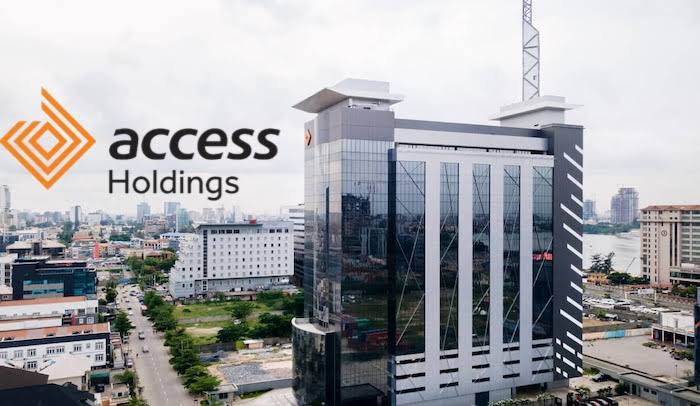
Access Holdings Plc has completed the sale of a 7.44 per cent stake in its Ghanaian subsidiary, Access Bank (Ghana) Plc, in a move analysts say aligns with the Central Bank of Nigeria’s (CBN) regulatory requirements on overseas investments by Nigerian banks.
The transaction was disclosed in a filing with the Ghana Stock Exchange (GSE), where Access Bank (Ghana) is listed.
According to the filing, Access Bank Plc sold 12,085,318 ordinary shares, representing 7.44 per cent of the issued share capital of Access Bank (Ghana) Plc, on July 15.
The transaction received all necessary regulatory approvals, including a no-objection from the Bank of Ghana.
The company said the share sale attracted strong demand from a broad range of investors, including pension funds, institutional investors and high-net-worth individuals, reflecting continued confidence in the bank’s long-term growth prospects.
IC Securities (Ghana) Limited acted as the adviser and executing broker for the transaction.
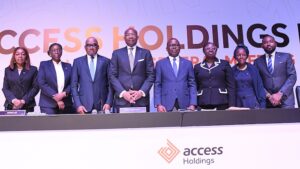
Commenting on the development, the Managing Director of Access Bank (Ghana), Pearl Nkrumah, said the sale would enhance local ownership and improve liquidity in the bank’s shares while enabling management to remain focused on delivering long-term value to shareholders.
Before the transaction, Access Bank Plc held a 93.40 per cent stake in the Ghanaian subsidiary, with the remaining 6.60 per cent owned by public investors following its listing on the Ghana Stock Exchange.
Following the sale, Access Holdings’ effective stake has reduced to about 85.96 per cent, while public and institutional investors now own approximately 14.04 per cent.
Despite the dilution, the group retains a controlling interest in its Ghanaian banking subsidiary.
Analysts believe the divestment is part of Access Holdings’ broader capital optimisation strategy aimed at complying with regulatory limits on investments in foreign banking subsidiaries.
Head of Research at GTI Limited, Abiodun Ogunniyi, said the transaction is consistent with the CBN’s revised framework for financial holding companies, which limits banks’ investments in overseas subsidiaries to 10 per cent of shareholders’ funds.
According to him, other Nigerian banking groups with extensive international operations may undertake similar restructuring measures as they align with the regulatory requirements.
He added that the disposal strengthens Access Holdings’ capital position while allowing the group to focus resources on markets with stronger earnings contributions.
Also commenting, founder of chartered accountancy firm Okwudili Ijezie & Co., Chief Blakey Ijezie, described the transaction as a strategic capital optimisation exercise rather than a withdrawal from the Ghanaian market.
He said the sale is unlikely to have any significant negative impact on Access Holdings’ operations or shareholder value, noting that the group maintains a dominant position in Ghana while creating room to strengthen capital, invest in technology and fund expansion across other African markets.
According to him, future dividend payments will continue to depend largely on the group’s earnings performance, capital strength and efficient allocation of resources.
The transaction also comes as Access Holdings continues efforts to address regulatory requirements disclosed in its 2025 audited financial statements.
The group had previously disclosed that its investments in foreign banking subsidiaries exceeded the limit prescribed under the Banks and Other Financial Institutions Act (BOFIA), prompting a 12-month remediation programme involving capital optimisation, balance sheet restructuring and governance initiatives.
Access Holdings reported a Capital Adequacy Ratio (CAR) of 18.3 per cent at the end of the 2025 financial year, while its flagship banking subsidiary posted a CAR of 21 per cent. The group also completed a ₦40 billion private placement as part of its ongoing recapitalisation programme.
Analysts say the Ghana stake sale forms part of the group’s efforts to reduce foreign banking exposure, strengthen regulatory compliance and position itself for sustainable growth while preserving majority ownership of its Ghanaian subsidiary.
By Editor

Caption:
L- R:
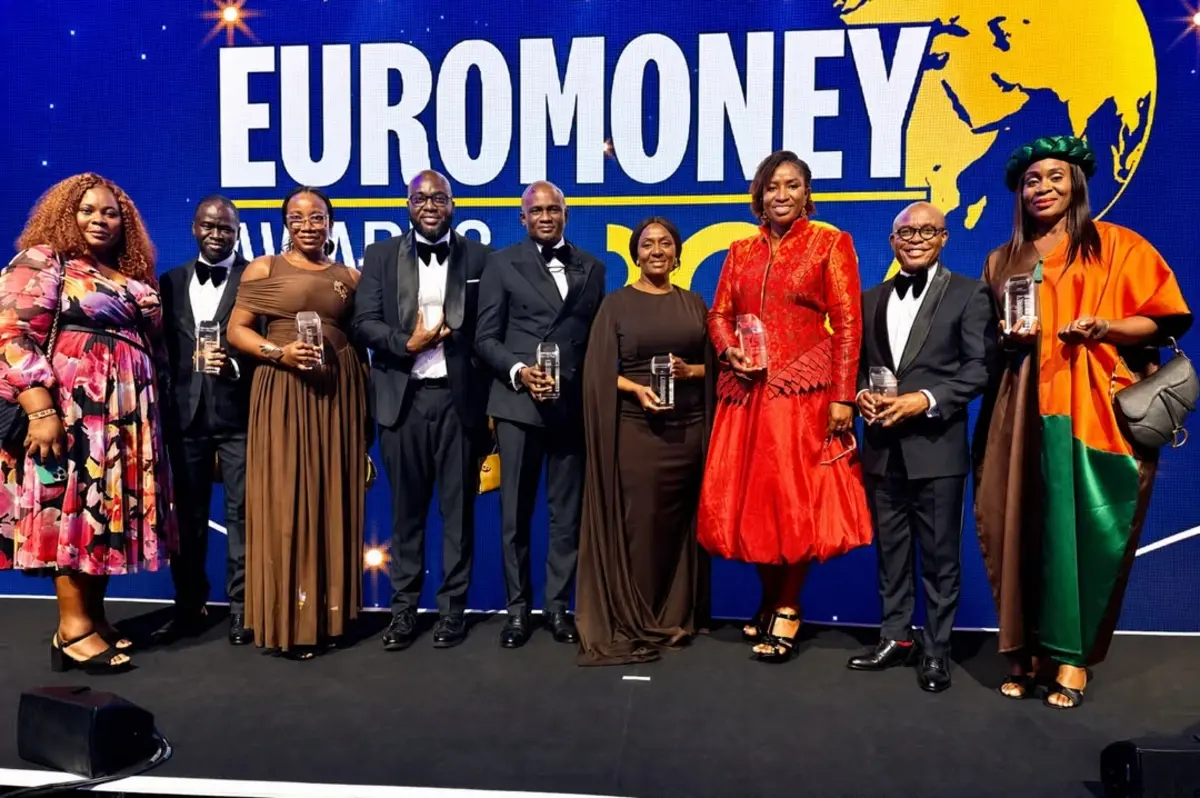
Deputy Head, Commercial Banking (Personal Banking and Mortgages), Access Bank UK, Tolulope Ajibade; Unit Head, SME Banking, Product Team, Access Bank, Oyebode Omotoye; Programme Manager, Sustainability, Access Holdings, Esther Graham; Head, Marketing and Communications, Access Bank Ghana, Eric Frimpong; Head, Sustainability, Access Holdings, Ayodeji Lawal; Board Chair, Access Bank Ghana, Ama Sarpong Bawuah; Country Managing Director, Access Bank Ghana, Pearl Nkrumah; Country Managing Director, Access Bank Zambia, Dr. Iheanyi Nwogu; Deputy Head, Commercial Banking (Corporates), Access Bank UK, Ginika Onyechi, after winning 15 awards at the Euromoney Awards for Excellence in London, United Kingdom.
Access Bank Plc has won 16 honours at the Euromoney Awards for Excellence 2026, reinforcing its position as one of Africa’s leading financial institutions and highlighting its growing influence in global banking.
The awards recognise the bank’s achievements in customer experience, sustainable finance, SME banking, digital banking, corporate responsibility and overall market leadership across several African countries.
Widely regarded as one of the banking industry’s most prestigious honours, the Euromoney Awards for Excellence celebrate institutions that demonstrate outstanding performance in innovation, governance, customer service, strategic execution and long-term value creation.
Access Bank’s 2026 recognitions include awards for corporate responsibility in Angola, Botswana and Nigeria; digital banking in Cameroon; customer experience in the Democratic Republic of Congo and Kenya through the National Bank of Kenya; SME banking in Ghana, Nigeria and Zambia; sustainable finance and ESG leadership in Rwanda and Zambia; and Best Bank awards in The Gambia, Sierra Leone and Zambia.
The awards reflect the bank’s continued investment in digital transformation, financial inclusion, sustainability, customer-focused services and support for small and medium-sized enterprises across its markets.
They also underscore the strength of Access Bank’s governance, risk management and operational model as it expands its presence across Africa while strengthening international banking corridors that facilitate trade and investment.
Commenting on the achievement, Managing Director and Chief Executive Officer of Access Bank Plc, Roosevelt Ogbonna, described the recognition as a testament to the confidence of customers, the commitment of employees and the bank’s long-term strategic direction.
“These awards are a tribute to the trust our customers place in us, the dedication of our employees and the strength of the communities and markets we serve. More importantly, they affirm that our commitment to innovation, customer excellence, sustainability and responsible growth continues to deliver meaningful impact at scale,” he said.
Ogbonna added that the honours validate years of disciplined execution and demonstrate that African financial institutions can compete successfully on the global stage.
He said the bank remains committed to raising industry standards by delivering innovative financial solutions, creating long-term value for stakeholders and supporting Africa’s economic transformation.
According to the bank, the recognition translates into improved banking experiences for customers through enhanced digital services, stronger security, greater international connectivity and expanded access to financial products.
For investors, regulators, correspondent banks and development finance institutions, the awards further reinforce Access Bank’s growing scale, resilience and credibility within the global financial services industry.

By Olamide Akintunde
Nigeria’s pension funds have emerged as the cornerstone investors in the successful ₦20.69 billion Series II issuance of the FCMB-TLG Private Debt Fund, reinforcing growing institutional confidence in private debt as a source of long-term financing for mid-sized businesses.
The Series II offer, launched by FCMB Asset Management Limited (FCMBAM) and TLG Capital, raised ₦20.69 billion against a target of ₦20 billion under the Fund’s ₦100 billion issuance programme, representing an oversubscription of 3.43percent.
The offer attracted 22 investors, including 12 Pension Fund Administrators (PFAs), with pension funds accounting for 78percent of the capital raised. The remaining investments came from high-net-worth individuals, corporate investors and FCMBAM, which contributed 3percent of the offer in line with regulatory requirements.
The latest fundraising builds on the success of the Fund’s inaugural ₦10 billion Series I issuance in September 2024, which was oversubscribed by 4.3percent.
FCMBAM said the outcome reflects increasing investor confidence in private debt as an asset class and in the Fund’s governance framework.
The FCMB-TLG Private Debt Fund, Nigeria’s first naira-denominated private debt fund, was launched in 2024 to provide long-term local currency financing to mid-sized businesses operating in key sectors, including agriculture, clean energy, education, healthcare, technology, and transport and logistics.
According to the Fund managers, all Series I capital was deployed within 12 months to finance nine companies across its target sectors.
Since inception, the Fund has distributed ₦3.46 billion to investors, representing a cumulative dividend yield of 33.22% as of March 31.
The proceeds from the Series II issuance will be invested in carefully selected private debt opportunities, providing long-term financing to businesses aligned with the United Nations Sustainable Development Goals (SDGs).
The Fund managers said the investments have already enabled portfolio companies to expand food processing, manufacture medical consumables locally, improve clean energy access, digitise essential goods distribution and increase exports, with the new capital expected to expand these efforts.
Chief Executive Officer of FCMB Asset Management Limited, James Ilori, said the strong participation by pension funds validates the firm’s strategy of mobilising domestic institutional capital to finance Nigerian businesses.
“When we launched Nigeria’s first naira-denominated private debt fund, our objective was to demonstrate that domestic institutional capital could be responsibly channelled into mid-sized businesses while delivering competitive returns. The fact that pension funds contributed more than three-quarters of this raise shows that confidence in the model continues to grow,” he said.
Chief Executive Officer of TLG Capital, Zain Latif, described the oversubscribed issuance as evidence that local pension assets are becoming a sustainable source of funding for the real economy.
He noted that the 78percent contribution from pension funds was more significant than the overall amount raised, saying it demonstrates that domestic institutional investors are increasingly supporting Nigerian businesses through local currency financing.
FCMB Asset Management manages more than ₦540 billion in assets and is the investment management subsidiary of FCMB Group Plc, while London-based TLG Capital has invested across 25 African countries and raised more than $350 million since its establishment.


PTML to pilot Customs’ new MIS File Tracker as Miko targets seamless nationwide rollout

Dangote picks London over Dubai for cement listing, cites faster approval process

Dangote confirms successful completion of $2.5 billion private placement
-

 Fashion9 years ago
These ’90s fashion trends are making a comeback in 2017
-
Entertainment9 years ago
The final 6 ‘Game of Thrones’ episodes might feel like a full season
-
Fashion9 years ago
According to Dior Couture, this taboo fashion accessory is back
-
Sports9 years ago
Steph Curry finally got the contract he deserves from the Warriors
-
Entertainment9 years ago
The old and New Edition cast comes together to perform
-
Business9 years ago
Uber and Lyft are finally available in all of New York State
-
Sports9 years ago
Phillies’ Aaron Altherr makes mind-boggling barehanded play
-
Entertainment9 years ago
Disney’s live-action Aladdin finally finds its stars