Banking
IMF urges hybrid approach as tokenization transforms financial infrastructure

By Our Reporter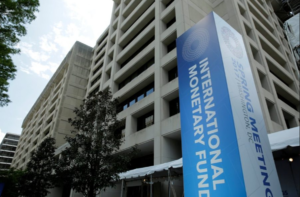

The International Monetary Fund (IMF) has said tokenization will fundamentally transform global financial market infrastructure but is unlikely to replace the institutions that provide governance, regulation and oversight for the financial system.
The position is contained in an IMF working paper titled “The Evolution of Financial Market Infrastructures in a Tokenized Economy: Exploring Blockchain Implementation Options for Issuance, Central Clearing, Settlement, and Reporting,” authored by Yaiza Cabedo, Tommaso Mancini-Griffoli, Fabian Schär and Nicolas Zhang.
According to the paper, blockchain technology and smart contracts have the potential to automate many core financial market functions, but legal entities and regulated institutions will remain indispensable for risk management, compliance, accountability and supervisory intervention.
The IMF described tokenization as the most significant technological shift in financial market infrastructure since the dematerialization of securities.
“Tokenization has the potential to reshape Financial Market Infrastructures more profoundly than any technological shift since securities dematerialization,” the paper stated.
The Fund explained that distributed ledger technology and programmable smart contracts can automate processes such as record-keeping, reconciliation, delivery-versus-payment settlements and collateral management, significantly reducing operational inefficiencies and transaction costs.
It added that shared programmable platforms could streamline the entire lifecycle of financial transactions by improving collateral efficiency, reducing reconciliation requirements and enhancing coordination across financial institutions.
However, the IMF cautioned that critical responsibilities—including risk governance, margin setting, default management, business continuity, legal oversight and regulatory intervention—cannot be fully delegated to software.
Rather than eliminating existing financial market infrastructure, the technology is expected to redefine how it operates.
The report projects that the future financial system will rely on hybrid models combining blockchain-based automation with traditional institutional oversight.
Under such arrangements, smart contracts would increasingly manage transactional and operational processes, while regulated institutions would continue to oversee governance, legal compliance, accountability and crisis management.
The IMF noted that hybrid structures will remain necessary where blockchain settlements lack legal recognition, ownership rights depend on off-chain legal enforcement, or transactions involve multiple distributed ledger platforms.
While highlighting the efficiency gains of tokenization, the paper also identified emerging risks, including smart contract vulnerabilities, concentration of governance, reliance on external data providers (oracles), privacy concerns and fragmentation across blockchain networks.
It urged policymakers to clearly define which financial processes can be safely automated and which should remain under institutional control to preserve market integrity and financial stability.
According to the IMF, the key policy challenge is no longer whether financial market infrastructure will survive the transition to blockchain technology, but how existing institutions should evolve to support tokenized financial ecosystems.
Tokenization involves converting ownership rights or other assets into digital tokens that can be securely issued, transferred and recorded on blockchain networks.
The report comes as regulators around the world accelerate efforts to establish legal frameworks for digital assets.
In Nigeria, the Securities and Exchange Commission (SEC) has tightened oversight of digital asset operators through its regulatory incubation programme.
The regulatory landscape was further strengthened in 2025 when President Bola Ahmed Tinubu signed the Investment and Securities Act (ISA) 2025 into law, replacing the Investments and Securities Act of 2007.
The legislation classifies eligible digital assets as securities, bringing tokenized investment products within the SEC’s regulatory jurisdiction and providing a clearer legal framework for blockchain-based capital market activities.
Financial market infrastructure comprises payment systems, securities depositories, central counterparties, clearing houses, settlement systems and trade repositories that facilitate the issuance, clearing, settlement and reporting of financial transactions.
The IMF noted that although central banks, regulators and financial institutions are increasingly embracing tokenization to improve efficiency, lower settlement costs and accelerate cross-border transactions, legal certainty, effective regulation and institutional governance will remain the foundation of resilient financial markets.