News
Airtel defies market slump as SWOOT stocks lose nearly N12tn

By Olamide Akintunde
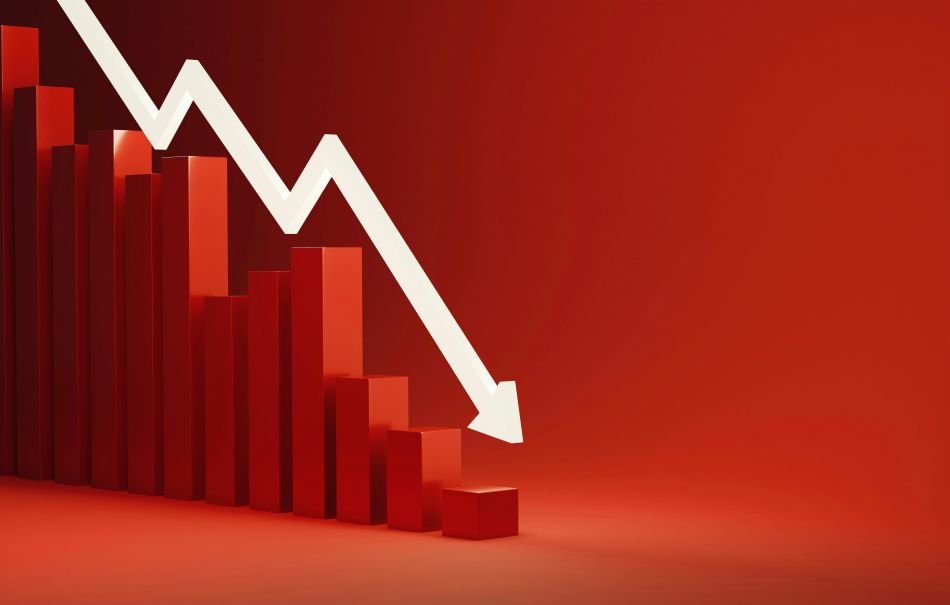
Nigeria’s largest listed companies lost a combined N11.97 trillion in market value in June 2026 as widespread profit-taking, foreign exchange volatility and elevated interest rates triggered a broad sell-off across the Nigerian Exchange (NGX).
Data compiled from the NGX showed that the combined market capitalization of the 25 companies classified as SWOOT (Stocks Worth Over One Trillion Naira) declined from N145.74 trillion in May to N133.78 trillion in June, representing an 8.21 per cent month-on-month decline.
The downturn marked a broad correction among the Exchange’s largest stocks after months of sustained gains that had lifted many blue-chip companies to record valuations.
Market analysts attributed the sell-off to aggressive profit-taking, continued exchange rate volatility, high interest rates that boosted the appeal of fixed-income securities, portfolio rebalancing and sector-specific regulatory developments.
As the largest contributors to the NGX’s overall market capitalization, declines in SWOOT stocks had a significant impact on the broader equity market.
The June correction erased a sizeable portion of the gains recorded earlier in the year, with major losses spread across the telecommunications, cement, banking, consumer goods, energy and power sectors.
Among the heavyweight stocks, Airtel Africa was the only company to post a significant gain during the month, adding N4.28 trillion to its market capitalization.
Meanwhile, Nestlé Nigeria, Presco, Transcorp Hotels and Transcorp Power Plc recorded little or no change in their valuations.
Dangote Cement Plc recorded the largest decline in value, with its market capitalization falling by N3.66 trillion, from N19.91 trillion in May to N16.25 trillion in June—an 18.39 per cent drop.
The decline reflected investor profit-taking following a strong rally, while concerns over construction demand, rising energy costs and elevated borrowing costs also weighed on sentiment.
BUA Cement Plc followed closely, losing N2.70 trillion as its valuation declined from N14.22 trillion to N11.52 trillion, representing a 19 per cent fall.
The stock came under pressure as investors rotated into fixed-income instruments offering attractive yields after months of strong equity gains.
In the energy sector, Aradel Holdings Plc posted the sharpest percentage decline among the reviewed companies.
Its market capitalization fell from N8.40 trillion to N6.16 trillion, translating to a loss of N2.24 trillion or 26.7 per cent.
The correction followed a period of rapid appreciation, with investors taking profits amid fluctuating crude oil prices and broader uncertainty in the energy market.
MTN Nigeria also recorded significant losses, with its market capitalization dropping by N2.10 trillion, from N17.22 trillion to N15.12 trillion, representing a 12.2 per cent decline.
The telecom giant’s pullback reflected a combination of profit-taking, persistent foreign exchange pressures, rising operating costs and a high-interest-rate environment that continued to divert investment flows toward fixed-income assets.
Zenith Bank lost N870 billion, with its market capitalization declining from N5.38 trillion to N4.52 trillion, a 16.09 per cent drop.
Guaranty Trust Holding Company (GTCO) shed N440 billion, while United Bank for Africa (UBA) lost N270 billion.
Wema Bank recorded one of the steepest percentage declines in the banking sector, falling 22.39 per cent after losing N300 billion in market value.
Fidelity Bank lost N180 billion, while Stanbic IBTC Holdings and Ecobank Transnational Incorporated (ETI) declined by N100 billion and N40 billion, respectively.
The sector-wide decline reflected profit-taking following months of strong performance, alongside investor caution over ongoing bank recapitalisation and the impact of higher interest rates.
BUA Foods lost N500 billion, while Nigerian Breweries and International Breweries shed N340 billion and N360 billion, respectively, amid concerns over weak consumer spending and persistent inflationary pressures.
In the industrial sector, Lafarge Africa lost N520 billion, while Okomu Oil Palm declined by N320 billion.
Power generation company Geregu Power also shed N540 billion, representing an 18.99 per cent decline, as investors locked in profits after previous gains.
Despite the sharp June correction, the combined market capitalization of SWOOT companies remains well above the N86.43 trillion recorded at the end of December 2025, highlighting the strong gains delivered by Nigeria’s largest listed companies over the past six months.
Market observers believe June’s decline reflects a healthy correction rather than deteriorating corporate fundamentals.
However, the pace of recovery will likely depend on the direction of interest rates, exchange rate stability, corporate earnings and overall investor confidence in the months ahead.

By Reporter
Rite Foods Limited, an indigenous food and beverage company, has felicitated with Muslim faithful across Nigeria as they celebrate Eid-el-Maulud, commemorating the birth of Prophet Muhammad.
The company urged Muslims to use the occasion to reflect on the values of peace, tolerance, unity, compassion and peaceful coexistence embodied in the teachings of the Prophet.
In a goodwill message, the Managing Director and Chief Executive Officer of Rite Foods, Seleem Adegunwa, called on Muslim faithful to demonstrate exemplary conduct and promote harmony as they celebrate.
Adegunwa also urged Nigerians to use the occasion to pray for the peace, unity and sustainable development of the country.
“As a company that shares in the joy of our consumers, we stand with our Muslim brothers and sisters as they mark this important moment in their faith. We hope this season brings renewed unity and progress for all Nigerians,” he said.
Also speaking, the Head of Corporate Affairs and Sustainability at Rite Foods, Ekuma Eze, said the company was delighted to celebrate important occasions with its consumers across the country.
Eze encouraged Muslim faithful to celebrate the season with family and friends, noting that Rite Foods’ portfolio of products is designed to cater to consumers across different occasions.
The company’s product portfolio includes Bigi Carbonated Soft Drinks, Bigi Premium Drinking Water, Sosa Fruit Drinks, Fearless Energy Drink, Rite Spicy Beef Sausage, Bigi Beef Sausage and Bigi Flex Sausage.
The company said its products are manufactured using automated infrastructure and technology, with continued investment in innovation and quality.
Rite Foods has also received industry recognition for its sustainability and innovation initiatives, including Outstanding FMCG Corporate Brand of the Year at the Edge Awards, as well as honours at the Sustainability, Innovation and Social Impact (SISA) Awards and the SERAS Awards.
The company reiterated its commitment to supporting initiatives that promote social cohesion, community development and sustainable growth while creating value for its consumers and other stakeholders.

By Reporter
Nigerian management consultant, organizational strategist and leadership expert, Michael Odafe Ugbewanko, has been admitted into the Forbes Human Resources Council, an invitation-only professional body that brings together senior human resources executives, chief people officers, founders and business leaders shaping the future of work globally.
Ugbewanko, who is the Lead Consultant at Dmidaf Global Consult, joins an international network of C-suite executives, vice presidents, directors, founders and business owners recognised for their professional accomplishments and leadership in the human resources profession.
In a welcome message, Forbes Councils Member Success Specialist, Jessica McClendon, said members of the council enjoy access to an exclusive platform designed to expand their professional influence and industry impact.
“Welcome to Forbes Human Resources Council. We’re delighted to have you as part of our vibrant and empowering community. Here, you’ll have the opportunity to share your expertise with the Forbes.com audience, connect with industry-leading peers and access carefully curated benefits that support your personal and professional growth,” the message stated.
The appointment represents another milestone for Ugbewanko, whose work has centred on helping organisations build sustainable, high-performing institutions through strategic leadership, operational excellence and effective human capital management.
Over the past decade, he has advised hundreds of chief executives across more than 1,000 organisations, helping businesses strengthen what he identifies as the three foundations of long-term success—process, structure and people.
Speaking on his admission, Ugbewanko described the recognition as an opportunity to contribute African perspectives to global conversations on leadership, organisational transformation and the future of work.
“The future of business belongs to organisations that intentionally build strong systems and empower people to perform at their highest potential. I am honoured to join a global community of leaders committed to advancing excellence in human resources and organisational leadership while representing the innovation and resilience of African businesses on the global stage,” he said.
Widely regarded as one of Africa’s leading voices on organisational effectiveness, Ugbewanko was named one of the 10 Most Influential HR Leaders in Africa by Entrepreneur Magazine in 2025. He is also the author of HR Is Dead, a book that advocates a more strategic role for human resources in driving business growth and institutional sustainability.
Beyond his consulting practice, he convenes the Operational Excellence Conclave, a leadership forum held ten times each year for chief executives, founders, senior executives and political leaders seeking practical strategies for building resilient organisations. He also leads The Presidential Table, an executive advisory platform limited to 15 chief executives annually and focused on transformational organisational growth.
Academically, Ugbewanko holds a Master’s degree in Human Resource Management from the University of South Wales, United Kingdom, and a Bachelor’s degree in Philosophy from the University of Ibadan. He is a Chartered Management Consultant (FIMC, CMC), a Fellow of Corporate Governance (FCGP), and an Associate Member of the Chartered Institute of Personnel and Development (CIPD), United Kingdom.
His admission into the Forbes Human Resources Council reflects the growing global recognition of African business leaders contributing to discussions on leadership, governance, people strategy and organisational excellence, while strengthening the continent’s voice in shaping the future of work.

By Reporter
The National Drug Law Enforcement Agency (NDLEA) has intercepted 1.63 million pills of tramadol (250mg) concealed in specially fabricated compartments of two articulated trucks along the Lagos-Ibadan Expressway, exposing what it described as a transnational drug trafficking syndicate operating across the Togo-Benin-Nigeria corridor.
The agency’s Director of Media and Advocacy, Femi Babafemi, disclosed the development in a statement on Sunday, noting that the latest seizures bring the total quantity of tramadol recovered from the same syndicate to more than 2.18 million pills in three separate operations conducted within one month.
According to the statement, the first trailer was tracked and intercepted on July 2 while heading to Kano.
NDLEA operatives recovered 853,000 pills of tramadol (250mg) hidden in a fabricated compartment beneath the truck’s cargo floor and arrested the 22-year-old driver, Jabir Kabiru.
Two days later, on July 4, intelligence-led operations led to the interception of another trailer, also travelling to Kano on the same highway.
The agency recovered an additional 777,000 pills of tramadol (250mg) concealed in a similar hidden compartment and arrested the driver, Muhammed Nuhu, also aged 22.
Investigations, according to the NDLEA, revealed that the trucks intercepted on June 21, July 2 and July 4, together with their illicit consignments, were all linked to the same international drug trafficking network.
In a separate operation, NDLEA operatives intercepted 4.70 kilograms of Canadian Loud, a synthetic strain of cannabis, at the import shed of the Murtala Muhammed International Airport (MMIA), Lagos.
The consignments, concealed inside cartons marked “Odugwu,” arrived from Canada on British Airways and Ethiopian Airlines flights on June 24 and July 3, respectively.
The agency arrested two cargo agents, Ali Rotimi Samson and Orimolade Oluwagbenga, in connection with the shipments before apprehending Edeh Onyeamachi Stanislaus, who attempted to collect the consignments from a logistics company.
Further investigations led to the arrest of the alleged owner of the drugs, Chioma Nneka Mokeme, a 44-year-old businesswoman, on July 7 in Surulere, Lagos, with support from the Nigeria Police Force’s Area C Command.
The agency also arrested Hajara Abdullahi, a 38-year-old Chadian national, and her Nigerian associate, Abdulkareem Jidda, 44, in Apapa, Lagos.
Their arrest followed the interception of 50,000 pills of tramadol (225mg) in Kogi State on July 12, with investigations linking the consignment to the two suspects.
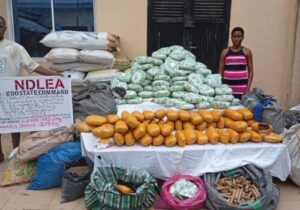
NDLEA also recorded several other seizures during the period.
In Rivers State, operatives arrested 80-year-old Chika Ugwoji in Ahoada on July 14 after recovering 800 grams of skunk from him.
In Edo State, a couple, Christian Chukwuka, 32, and Nwanneka Christian, 33, were arrested during a raid on a drug warehouse along Sapele Road, Benin City.
The operation led to the seizure of 219.5 kilograms of cannabis sativa and 192.67 kilograms of compressed Canadian Loud.
The NDLEA said the operations underscore its sustained crackdown on organised drug trafficking networks and cross-border narcotics syndicates operating within and outside Nigeria.

Customs: Salako takes charge at Lilypond Export Command, pledges stronger trade facilitation

Eid-el-Maulud: Rite Foods calls for peace, unity, national progress

Rite Foods’ innovation, green energy drive earns top 50 impact recognition
-

 Fashion9 years ago
These ’90s fashion trends are making a comeback in 2017
-
Entertainment9 years ago
The final 6 ‘Game of Thrones’ episodes might feel like a full season
-
Fashion9 years ago
According to Dior Couture, this taboo fashion accessory is back
-
Fashion9 years ago
Model Jocelyn Chew’s Instagram is the best vacation you’ve ever had
-
Sports9 years ago
Steph Curry finally got the contract he deserves from the Warriors
-

 News9 months ago
Tinubu opens first stretch of Lagos–Calabar Coastal Highway, hints on ₦trillion legacy roads push
-
Entertainment9 years ago
The old and New Edition cast comes together to perform
-
Business9 years ago
Uber and Lyft are finally available in all of New York State