News
UN backs Dangote model as Africa confronts deepening food security crisis

By Ambrose Nnaji
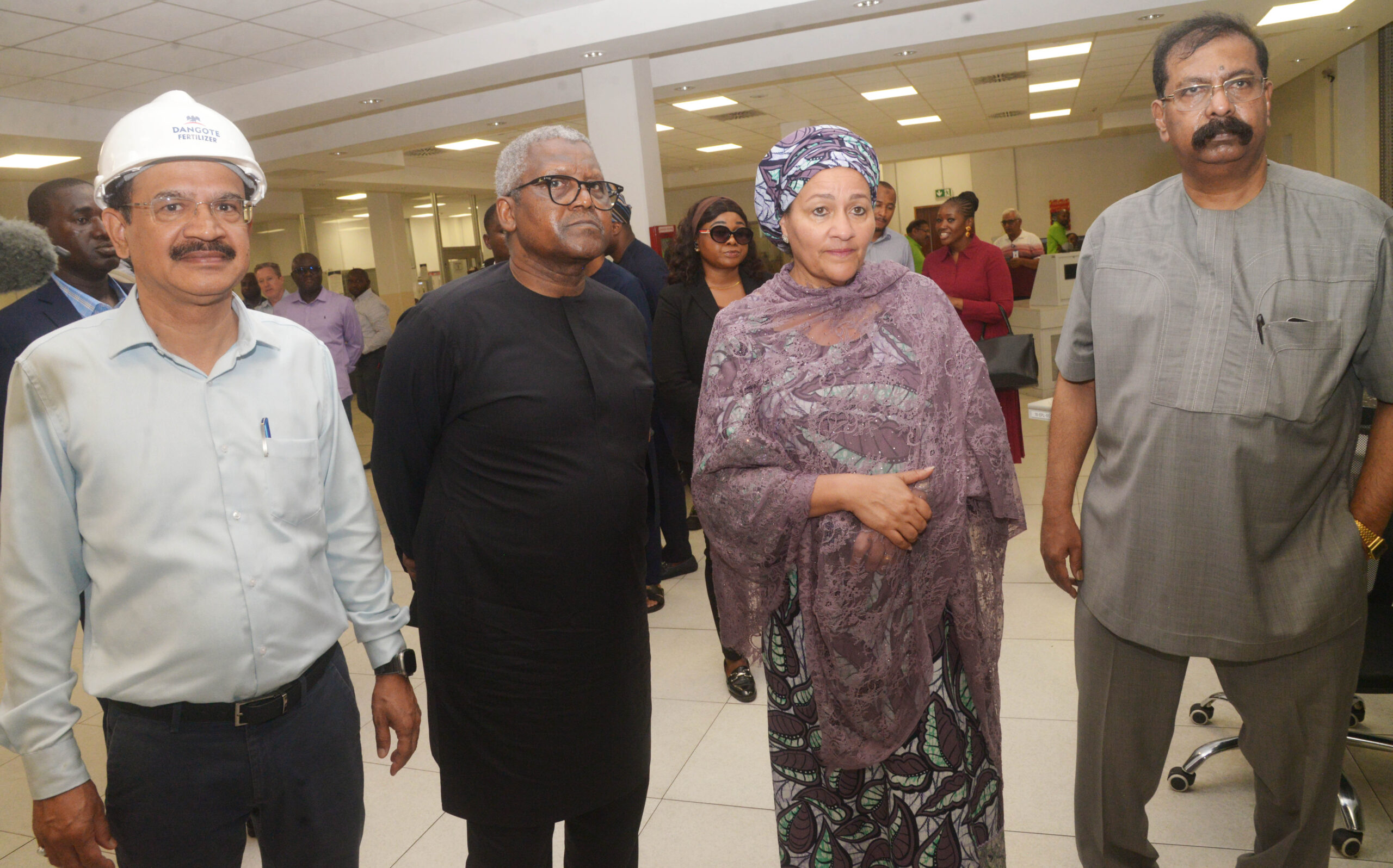
The Deputy Secretary-General of the United Nations, Amina Mohammed, has underscored the strategic importance of Dangote Industries Limited—particularly its fertiliser arm—in tackling Africa’s mounting food security challenges, while calling for stronger global partnerships to scale its impact.
Speaking during a visit to the company’s industrial complex, in Lagos, Mohammed said the United Nations would prioritise amplifying scalable, private-sector-led solutions capable of mitigating the continent’s food crisis, describing Dangote’s integrated industrial model as a critical pathway.
“I think the UN’s job here is to amplify and to put visibility on the possibilities of mitigating a food security crisis, and this is one of them. I hope that when we go back, we can continue to engage partners and countries that should collaborate with Dangote Industries,” she said.
Her remarks come amid heightened concern over food shortages and supply chain disruptions across Africa, driven by global economic pressures, climate-related shocks and geopolitical tensions, particularly in the Middle East.
President and Chief Executive of Dangote Industries Limited, Aliko Dangote, said the group has ramped up exports of urea and Premium Motor Spirit (PMS) to African markets affected by supply disruptions.
He noted that the company has intensified fertiliser shipments to support agricultural productivity and ease supply constraints across the continent.
“The challenges are many. One is urea, which is fertiliser that we have. In the last couple of days, we’ve been loading to mostly African countries, which we were not doing before. And
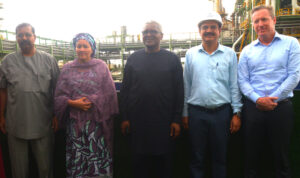
Managing Director/CEO, Dangote Fertiliser Limited, Sunil-Kumar Chauhan; President/CE, Dangote Industries Limited, Aliko Dangote; Deputy Secretary-General of the United Nations, Amina Mohammed; Vice President Oil & Gas, Dangote Industries Limited, Devakumar Edwin, during the visit to Dangote Fertiliser Limited, in Lagos.
 now it’s petroleum products, which we are sending mainly to African countries”, he said.
Dangote added that the refinery has shipped about 17 cargoes of petrol to countries across Africa, leveraging its 650,000 barrels-per-day capacity to stabilise supply in multiple regions.
“What I can do is assure Nigerians and most of West Africa, Central Africa, and East Africa—we have the capacity to supply them,” he said.
On feedstock supply, Dangote commended the Nigerian National Petroleum Company Limited for increasing crude deliveries to the refinery in March, with volumes rising to 10 cargoes—six supplied in naira and four in dollars—to support domestic fuel availability.
Despite the improvement, supply remains below the 19 cargoes required for optimal operations, forcing the refinery to bridge the gap through imports from the United States and other African producers.
Dangote also raised concerns over the reluctance of international oil companies operating in Nigeria to sell crude directly to the refinery, noting that their preference for trading intermediaries increases costs and has broader implications for the economy.
He added that the refinery is seeking expanded access to domestically priced crude under local currency arrangements as part of efforts to moderate fuel costs and strengthen long-term energy and food security across the continent.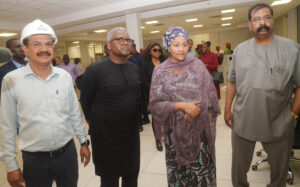

By Reporter
Nigerian management consultant, organizational strategist and leadership expert, Michael Odafe Ugbewanko, has been admitted into the Forbes Human Resources Council, an invitation-only professional body that brings together senior human resources executives, chief people officers, founders and business leaders shaping the future of work globally.
Ugbewanko, who is the Lead Consultant at Dmidaf Global Consult, joins an international network of C-suite executives, vice presidents, directors, founders and business owners recognised for their professional accomplishments and leadership in the human resources profession.
In a welcome message, Forbes Councils Member Success Specialist, Jessica McClendon, said members of the council enjoy access to an exclusive platform designed to expand their professional influence and industry impact.
“Welcome to Forbes Human Resources Council. We’re delighted to have you as part of our vibrant and empowering community. Here, you’ll have the opportunity to share your expertise with the Forbes.com audience, connect with industry-leading peers and access carefully curated benefits that support your personal and professional growth,” the message stated.
The appointment represents another milestone for Ugbewanko, whose work has centred on helping organisations build sustainable, high-performing institutions through strategic leadership, operational excellence and effective human capital management.
Over the past decade, he has advised hundreds of chief executives across more than 1,000 organisations, helping businesses strengthen what he identifies as the three foundations of long-term success—process, structure and people.
Speaking on his admission, Ugbewanko described the recognition as an opportunity to contribute African perspectives to global conversations on leadership, organisational transformation and the future of work.
“The future of business belongs to organisations that intentionally build strong systems and empower people to perform at their highest potential. I am honoured to join a global community of leaders committed to advancing excellence in human resources and organisational leadership while representing the innovation and resilience of African businesses on the global stage,” he said.
Widely regarded as one of Africa’s leading voices on organisational effectiveness, Ugbewanko was named one of the 10 Most Influential HR Leaders in Africa by Entrepreneur Magazine in 2025. He is also the author of HR Is Dead, a book that advocates a more strategic role for human resources in driving business growth and institutional sustainability.
Beyond his consulting practice, he convenes the Operational Excellence Conclave, a leadership forum held ten times each year for chief executives, founders, senior executives and political leaders seeking practical strategies for building resilient organisations. He also leads The Presidential Table, an executive advisory platform limited to 15 chief executives annually and focused on transformational organisational growth.
Academically, Ugbewanko holds a Master’s degree in Human Resource Management from the University of South Wales, United Kingdom, and a Bachelor’s degree in Philosophy from the University of Ibadan. He is a Chartered Management Consultant (FIMC, CMC), a Fellow of Corporate Governance (FCGP), and an Associate Member of the Chartered Institute of Personnel and Development (CIPD), United Kingdom.
His admission into the Forbes Human Resources Council reflects the growing global recognition of African business leaders contributing to discussions on leadership, governance, people strategy and organisational excellence, while strengthening the continent’s voice in shaping the future of work.
By Reporter
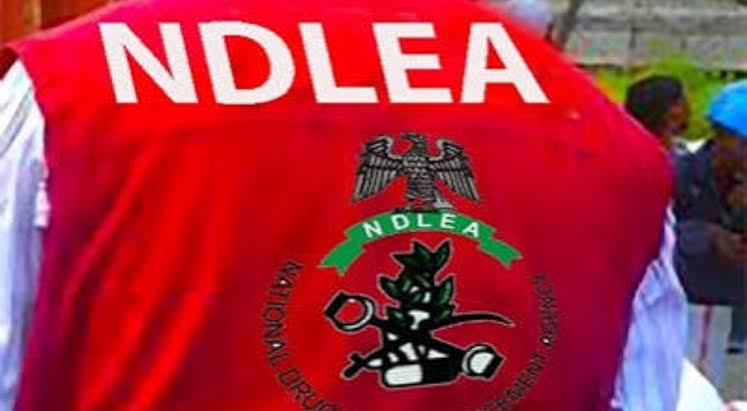
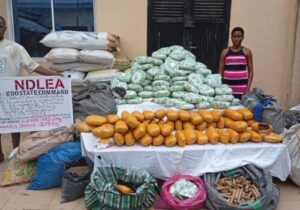
The National Drug Law Enforcement Agency (NDLEA) has intercepted 1.63 million pills of tramadol (250mg) concealed in specially fabricated compartments of two articulated trucks along the Lagos-Ibadan Expressway, exposing what it described as a transnational drug trafficking syndicate operating across the Togo-Benin-Nigeria corridor.
The agency’s Director of Media and Advocacy, Femi Babafemi, disclosed the development in a statement on Sunday, noting that the latest seizures bring the total quantity of tramadol recovered from the same syndicate to more than 2.18 million pills in three separate operations conducted within one month.
According to the statement, the first trailer was tracked and intercepted on July 2 while heading to Kano.
NDLEA operatives recovered 853,000 pills of tramadol (250mg) hidden in a fabricated compartment beneath the truck’s cargo floor and arrested the 22-year-old driver, Jabir Kabiru.
Two days later, on July 4, intelligence-led operations led to the interception of another trailer, also travelling to Kano on the same highway.
The agency recovered an additional 777,000 pills of tramadol (250mg) concealed in a similar hidden compartment and arrested the driver, Muhammed Nuhu, also aged 22.
Investigations, according to the NDLEA, revealed that the trucks intercepted on June 21, July 2 and July 4, together with their illicit consignments, were all linked to the same international drug trafficking network.
In a separate operation, NDLEA operatives intercepted 4.70 kilograms of Canadian Loud, a synthetic strain of cannabis, at the import shed of the Murtala Muhammed International Airport (MMIA), Lagos.
The consignments, concealed inside cartons marked “Odugwu,” arrived from Canada on British Airways and Ethiopian Airlines flights on June 24 and July 3, respectively.
The agency arrested two cargo agents, Ali Rotimi Samson and Orimolade Oluwagbenga, in connection with the shipments before apprehending Edeh Onyeamachi Stanislaus, who attempted to collect the consignments from a logistics company.
Further investigations led to the arrest of the alleged owner of the drugs, Chioma Nneka Mokeme, a 44-year-old businesswoman, on July 7 in Surulere, Lagos, with support from the Nigeria Police Force’s Area C Command.
The agency also arrested Hajara Abdullahi, a 38-year-old Chadian national, and her Nigerian associate, Abdulkareem Jidda, 44, in Apapa, Lagos.
Their arrest followed the interception of 50,000 pills of tramadol (225mg) in Kogi State on July 12, with investigations linking the consignment to the two suspects.
NDLEA also recorded several other seizures during the period.
In Rivers State, operatives arrested 80-year-old Chika Ugwoji in Ahoada on July 14 after recovering 800 grams of skunk from him.
In Edo State, a couple, Christian Chukwuka, 32, and Nwanneka Christian, 33, were arrested during a raid on a drug warehouse along Sapele Road, Benin City.
The operation led to the seizure of 219.5 kilograms of cannabis sativa and 192.67 kilograms of compressed Canadian Loud.
The NDLEA said the operations underscore its sustained crackdown on organised drug trafficking networks and cross-border narcotics syndicates operating within and outside Nigeria.
By  Reporter
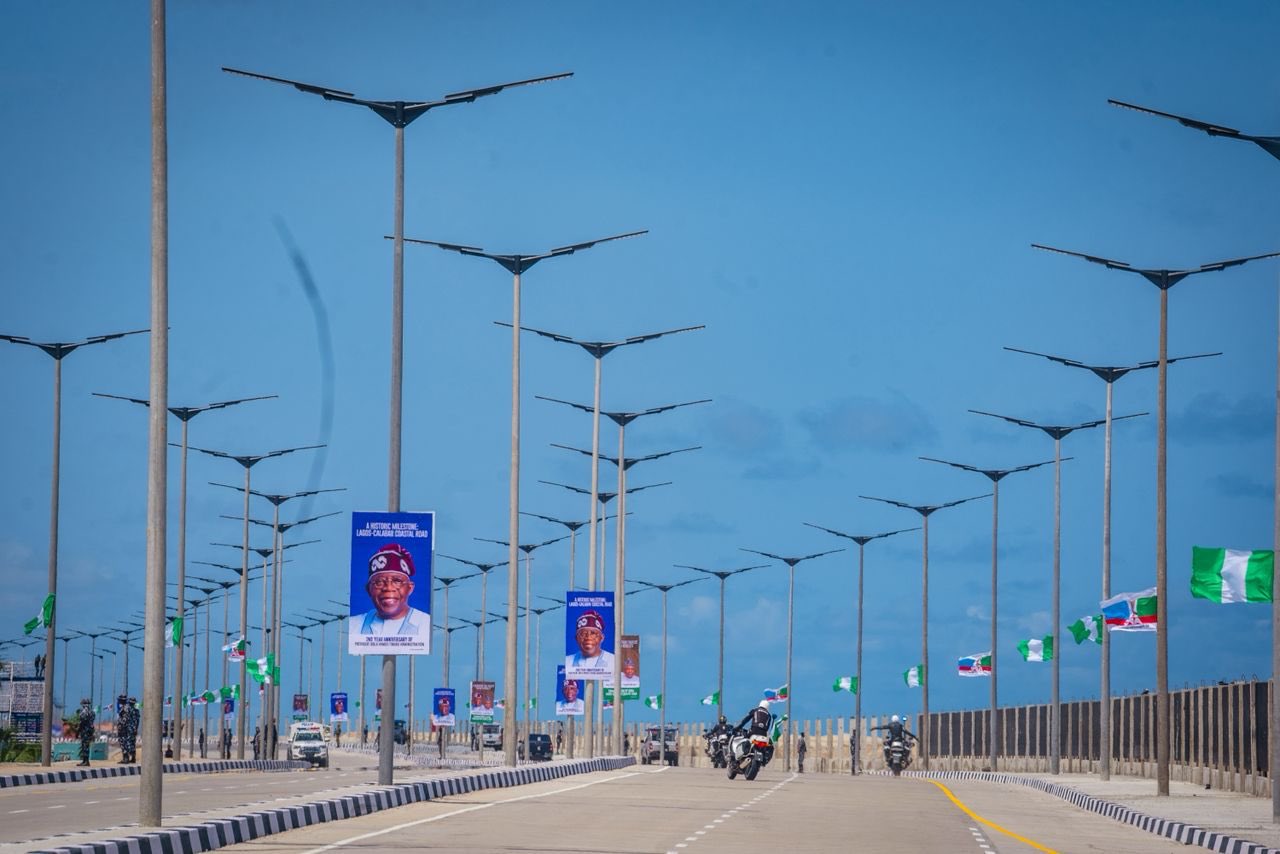
The Federal Government has renamed the Lagos-Calabar Coastal Highway as the President Bola Ahmed Tinubu Coastal Highway, following the completion of Section One of the flagship infrastructure project.
Minister of Works David Umahi announced the decision during a media briefing on Thursday at the ministry’s headquarters in Abuja, describing it as a recognition of President Bola Tinubu’s long-held vision for the 750-kilometre coastal corridor.
According to Umahi, the decision was reached in consultation with the ministry’s leadership, including the Permanent Secretary, Minister of State, directors and other senior officials.
“That coastal highway is named the President Bola Ahmed Tinubu Coastal Highway. By the powers conferred on me as Minister of Works, in consultation with my Permanent Secretary, the Minister of State, directors and staff of the ministry, we decided to name it after him because of his dream for it,” Umahi said.
He noted that Tinubu first conceived the idea nearly three decades ago while serving as Governor of Lagos State.
“It is one thing to dream and another thing to have the grace to actualise that dream. This is one man who dreams and has the grace and divine mandate to actualise that dream,” he added.
Umahi disclosed that the first section of the highway, stretching 47.47 kilometres from Victoria Island to Lekki, is a six-lane carriageway with a 25-metre-wide median reserved for a future railway line.
The minister also announced that President Tinubu had approved a 400-kilometre extension of the Fourth Legacy Highway, increasing its total length from about 700 kilometres to 1,100 kilometres.
The expanded route will run from Akwanga in Nasarawa State through Jos, Bauchi, Gombe and Biu to Maiduguri, with an additional extension into Taraba State.
He further disclosed that the President had approved the dualisation of another 400 kilometres of the East-West Road, the reconstruction of sections of the Lagos-Ibadan Expressway using reinforced concrete pavement technology, the completion of the abandoned Ibi Bridge in Taraba State and the construction of the 5.76-kilometre Lao Bridge.
According to Umahi, the projects are designed to improve transport connectivity, boost economic activities and modernise Nigeria’s road infrastructure.
He described the approvals as part of the Tinubu administration’s broader commitment to delivering strategic infrastructure that supports national economic growth and regional integration.
The Lagos-Calabar Coastal Highway is one of the Federal Government’s flagship road projects, intended to improve connectivity along Nigeria’s southern coastline while promoting trade, tourism and investment.
In April 2024, Umahi disclosed that the project would be completed over eight years, with delivery in phases throughout President Tinubu’s tenure.
The first phase, covering approximately 47.7 kilometres from Ahmadu Bello Way to the Lekki Deep Sea Port in Lagos State, is expected to be completed within 36 months.

PTML to pilot Customs’ new MIS File Tracker as Miko targets seamless nationwide rollout

Dangote picks London over Dubai for cement listing, cites faster approval process

Dangote confirms successful completion of $2.5 billion private placement
-

 Fashion9 years ago
These ’90s fashion trends are making a comeback in 2017
-
Entertainment9 years ago
The final 6 ‘Game of Thrones’ episodes might feel like a full season
-
Fashion9 years ago
According to Dior Couture, this taboo fashion accessory is back
-
Sports9 years ago
Steph Curry finally got the contract he deserves from the Warriors
-
Entertainment9 years ago
The old and New Edition cast comes together to perform
-
Business9 years ago
Uber and Lyft are finally available in all of New York State
-
Sports9 years ago
Phillies’ Aaron Altherr makes mind-boggling barehanded play
-
Entertainment9 years ago
Disney’s live-action Aladdin finally finds its stars