Business
NLNG’s $100,000 Nigeria Prize for Literature names 11-book poetry longlist

By Reporter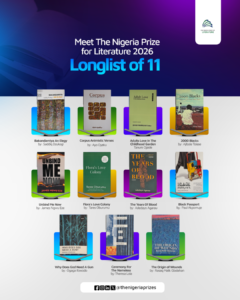

The race for Africa’s richest literary prize intensified as the Nigeria Prize for Literature unveiled an 11-book longlist for its 2026 edition, narrowing the competition from 223 poetry collections submitted by writers across Nigeria and the diaspora.
Sponsored by Nigeria LNG Limited (NLNG), the prestigious prize carries a $100,000 award and is widely regarded as one of Africa’s most influential literary honours, having helped launch and consolidate the careers of many of Nigeria’s leading writers over the past two decades.
The longlist, announced by Chairman of the Prize’s Advisory Board, Akachi Adimora-Ezeigbo, reflects what literary observers describe as a vibrant and evolving poetry landscape shaped by themes of identity, memory, violence, migration, justice, spirituality and resilience.
The selected works, listed alphabetically, are Adult Love by Tanure Ojaide, Bakandamiya by Saddiq Dzukogi, Black Passport by Paul Akpomuje, 2000 Blacks by Ajibola Tolase, Ceremony for the Nameless by Theresa Lola, Corpus Animistic Verses by Ayo Oyeku, Floral’s Love Colony by Tares Oburumu, The Origin of Wounds by Malik Gbolahan, The Years of Blood by Adebayo Agarau, Unbind Me Now by James Ugwu Eze and Why Does God Need a Gun by Ogaga Ifowodo.
Beyond celebrating literary excellence, stakeholders say the Nigeria Prize for Literature has become one of the country’s most important cultural investments, helping to raise the profile of Nigerian writers, strengthen the publishing industry and promote reading culture. NLNG has consistently maintained that the prize is designed not only to reward outstanding authors but also to contribute to national development by supporting the arts and preserving Nigeria’s literary heritage.
Industry observers say the inclusion of both established poets such as Tanure Ojaide and Ogaga Ifowodo alongside younger voices including Adebayo Agarau, Malik Gbolahan and James Ugwu Eze reflects the increasing depth of Nigerian poetry. They note that the prize has evolved into an important benchmark for literary quality, often increasing the visibility of shortlisted authors, boosting book sales and creating opportunities for international publishing, festival appearances and translation rights.
Adimora-Ezeigbo described the longlist as an important milestone in the 2026 competition, saying the selected collections demonstrate the depth, diversity and artistic maturity of contemporary Nigerian poetry.
According to her, the works revisit history while interrogating dominant narratives, examining the social, political and cultural forces shaping both individual lives and collective memory.
“Despite their varied concerns, the books share a commitment to exploring the resilience of individuals and communities in the face of violence, oppression and social fragmentation.”
She noted that the collections display diverse poetic traditions ranging from folklore-inspired narratives to experimental contemporary verse, while employing vivid imagery, lyrical intensity and intellectual sophistication to illuminate complex social realities.
“Their language is fluid, evocative and aesthetically refined,” she said, adding that the books collectively demonstrate poetry’s enduring power to challenge assumptions, preserve memory and inspire social reflection.
She said judges will now undertake a more rigorous evaluation based on originality, language, structure, artistic merit and enduring literary value before selecting the final shortlist.
The 2026 longlist features several internationally acclaimed poets, including Nigerian literary heavyweight Tanure Ojaide, former Nigeria Prize winner Saddiq Dzukogi, celebrated poet and human rights advocate Ogaga Ifowodo, and emerging voices whose works have earned recognition in leading international literary journals.
Their inclusion reflects the growing global visibility of Nigerian poetry, which has increasingly found audiences through prestigious international awards, university presses and literary festivals.
Literary analysts say Nigerian poets have become some of Africa’s strongest cultural ambassadors, producing works that interrogate political violence, migration, climate change, identity, gender and historical memory while appealing to readers across continents.
“The quality of this year’s longlist shows how Nigerian poetry continues to reinvent itself,” said a Lagos-based literary critic who has followed the prize since its inception.
“Many of these writers have already gained international recognition, but the Nigeria Prize remains the country’s highest platform for celebrating literary excellence.”
Publishing stakeholders also argue that beyond rewarding writers, the prize has become an important economic driver for Nigeria’s creative industry by boosting book sales, attracting publishing investments and increasing global attention on Nigerian literature.
“The Nigeria Prize has helped build confidence in literary publishing,” said a publishing executive familiar with the industry.
“When books make the longlist or shortlist, they often enjoy renewed readership, additional print runs and international visibility.”
Since its establishment by NLNG in 2004, the Nigeria Prize for Literature has become one of the continent’s most prestigious cultural institutions, rotating annually among prose fiction, poetry, drama and children’s literature.

Beyond the cash award, the prize has strengthened Nigeria’s literary ecosystem by encouraging creative writing, stimulating publishing activity and promoting a stronger reading culture.
Analysts also argue that the prize has had a multiplier effect on Nigeria’s creative economy. Besides rewarding writers, it has encouraged publishers to invest in new titles, stimulated literary festivals and academic engagement, and positioned Nigerian literature more prominently within the global publishing market. Although the financial rewards accrue to a single winner, longlisted and shortlisted books frequently gain renewed commercial attention following the announcement.
The announcement of the longlist opens the next phase of the competition. A three-book shortlist is expected later this month, while the eventual winner will be announced in October.