Uncategorized
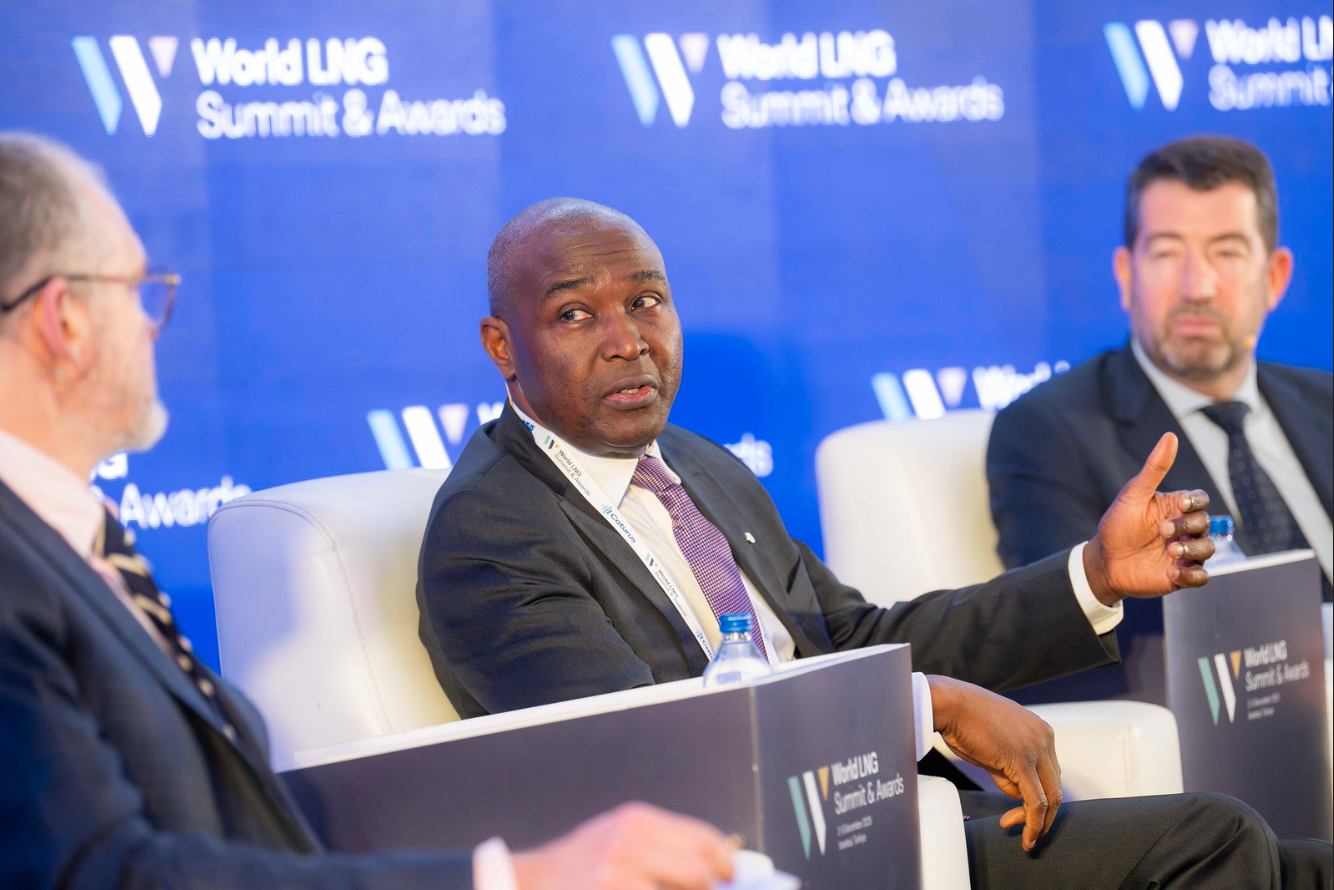
NLNG calls for unified global strategy to sustain LNG growth

Uncategorized
NOG 2026: Nigeria to unveil first-ever gas, power infrastructure map to boost energy investment
 By Ambrose Nnaji
Nigeria is set to unveil its first-ever comprehensive Gas and Power Infrastructure Map at NOG Energy Week 2026, a landmark initiative expected to reshape investment decision-making and unlock fresh capital flows into the country’s energy sector.
The unveiling, scheduled for the 25th edition of NOG Energy Week in Abuja, marks a significant milestone in Nigeria’s efforts to provide investors, policymakers and industry stakeholders with a single, authoritative source of intelligence on the nation’s energy infrastructure.
For years, investors have cited the lack of consolidated and reliable data as a major obstacle to large-scale investment in Nigeria’s gas and power industries. The new infrastructure map seeks to bridge that gap by providing an integrated overview of critical energy assets across the country.
Developed under the Gas for Africa programme in collaboration with NNPC Limited, the publication offers the most detailed mapping of Nigeria’s gas and power ecosystem to date. It captures pipelines, gas processing facilities, power generation plants, LNG infrastructure, transmission networks and other strategic assets that underpin the country’s energy value chain.
Industry stakeholders say the initiative will improve market transparency, support project planning and provide investors with the intelligence needed to identify opportunities across the sector.
Complementing the infrastructure map is a comprehensive strategic report on Nigeria’s gas industry, described as the most extensive assessment of the sector ever assembled in a single publication.
The report adopts a full value-chain approach, examining developments in Nigeria’s gas market since 2020, the implementation of the NNPC Gas Master Plan 2026, upstream gas production trends and reserves, midstream infrastructure expansion, pipeline capacity requirements, and growth opportunities in compressed natural gas (CNG), piped natural gas (PNG) and liquefied natural gas (LNG).
It also provides detailed insights into the gas-to-power segment and the role of gas in driving industrialisation through sectors such as fertilisers, petrochemicals, methanol production and metals processing.
Together, the map and report are expected to provide investors with an unprecedented understanding of Nigeria’s energy landscape at a time when global energy markets are undergoing significant realignment.
The launch comes amid growing international demand for secure and diversified energy supplies, as geopolitical tensions and supply chain disruptions continue to reshape global energy trade patterns.
Nigeria is increasingly positioning itself as a strategic energy partner, supported by rising hydrocarbon production, ongoing gas sector reforms and major infrastructure developments across the petroleum value chain.
By translating complex infrastructure and market data into actionable intelligence, the publications are expected to strengthen Nigeria’s investment proposition and support efforts to accelerate gas development, power generation and industrial growth.
Participants attending NOG Energy Week 2026 will be the first to gain access to the infrastructure map and strategic report, providing early insights into investment opportunities as industry leaders, government officials, financiers and project developers converge on Abuja for the event.
With preparations intensifying ahead of the conference, organisers say the launch underscores Nigeria’s ambition to leverage its vast gas resources to drive economic growth, energy security and industrial transformation while reinforcing its position as a leading energy destination in Africa.
By Ambrose Nnaji
Lagos, Nigeria (VOICE OF NAIJA)-The Federal Competition and Consumer Protection Commission (FCCPC) has sealed the Lekki office of PWAN Maxi Property and Business Solution Limited over allegations that the company failed to allocate 20 plots of land to a consumer despite receiving full payment.
The enforcement action, was carried out following an investigation by the commission into complaints of non-allocation of land and alleged non-compliance with regulatory directives.
Speaking during the exercise, the FCCPC South-West Zonal Coordinator, Olubunmi Otti, said the action was taken pursuant to Section 150(4)(a) of the Federal Competition and Consumer Protection Act (FCCPA) 2018 after the company allegedly failed to comply with a compliance notice issued by the commission.
According to Otti, the FCCPC commenced investigations in February 2025 after receiving a complaint from a consumer who alleged that PWAN had failed to allocate 20 plots of land that had been fully subscribed to and paid for.
She disclosed that the company ignored two invitations issued by the commission during the investigation process.
“Following a consumer complaint against the management of PWAN Max Property and Business Solutions Ltd for non-allocation of 20 plots of land fully subscribed to and paid for by a consumer, the commission initiated an investigation and invited the company to appear before it. However, the company failed to honour the invitations,” Otti said.
She explained that after a summons was issued, PWAN appeared before the commission, provided a witness statement and undertook to allocate the 20 plots of land and provide all relevant documentation by June 30, 2025.
However, the company allegedly failed to fulfil the commitment after the deadline elapsed.
As a result, the FCCPC issued a compliance notice in line with Section 150(1) of the FCCPA, detailing the nature of the breach, remedial actions required, timelines for compliance and penalties for failure to comply.
Otti stated that despite being duly served and granted sufficient time to address the issues raised, the company failed to comply with the notice.
“Consequently, and in direct exercise of FCCPC powers under Section 150(4)(a) of the FCCPA 2018, the commission has proceeded to seal these premises until the breach is remedied,” she said.
She emphasized that the enforcement measure is intended to protect consumers and ensure compliance with regulatory obligations rather than punish businesses.
According to her, the premises will remain sealed until the commission confirms that all outstanding obligations have been met and issues a compliance certificate.
Otti urged businesses to take compliance notices seriously and advised consumers to conduct due diligence before committing funds to property transactions.
Some affected customers who spoke during the exercise accused the company of collecting payments without providing the promised land allocations.
One of the complainants, Olamide Olagunloye, alleged that he paid a total of N1 million for a plot of land but has yet to receive allocation.
He said he initially paid N700,000 before making an additional payment of N300,000 and had repeatedly visited the office over the past three months without finding company representatives available.
Another customer, Ifeanyi Okafor, said he began making instalment payments for a land purchase after being approached by company representatives in 2018.
According to him, he eventually halted payments after becoming concerned about the process, having paid about N480,000.
Okafor said his concerns deepened after hearing similar complaints from another buyer who had purchased multiple plots and was allegedly being asked to make additional payments related to allocation.
Uncategorized
Nigeria, South Africa must move beyond diplomacy to strategic economic partnership – Osaghae

By Editor
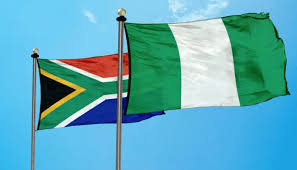
As Africa confronts growing global economic uncertainty, intensifying geopolitical competition, and the urgent need for greater continental integration, Nigeria and South Africa must elevate their relationship beyond diplomatic goodwill and historical ties to a strategic partnership capable of shaping Africa’s future, Director-General of the Nigerian Institute of International Affairs (NIIA), Professor Eghosa Osaghae, has said.
Speaking at the Nigeria-South Africa Chamber of Commerce (NSACC) Breakfast Meeting in Lagos on the theme, “Nigeria-South Africa Relations: Unlocking the Next Frontier of Strategic Partnership,” Osaghae argued that the relationship between Africa’s two largest economies carries significance far beyond bilateral interests.
According to him, the future competitiveness of the African continent will depend largely on the ability of Nigeria and South Africa to collaborate more effectively in trade, investment, innovation, security, diplomacy, and institutional development.
“These are two countries that have historically shaped African affairs,” Osaghae noted. “When Nigeria and South Africa work together, they create opportunities not only for themselves but for the entire continent.”
He observed that despite periodic tensions and policy disagreements, both countries remain indispensable partners in advancing Africa’s economic integration agenda and strengthening the continent’s voice in global affairs.
Osaghae said the African Continental Free Trade Area (AfCFTA) provides a unique platform for both countries to move from competition toward collaboration, particularly in sectors such as manufacturing, financial services, technology, telecommunications, energy, agriculture, and the creative economy.
The NIIA Director-General stressed that sustainable economic growth is driven not merely by natural resources or market size but by strong institutions, policy consistency, and the capacity to build systems that can support long-term development.
Drawing lessons from South Africa’s economic evolution and Nigeria’s entrepreneurial dynamism, he argued that Africa’s development challenge is no longer simply about creating opportunities but about building institutions capable of sustaining growth at scale.
“Nigeria possesses extraordinary entrepreneurial energy, while South Africa has developed strong institutional and corporate systems. The real opportunity lies in combining these strengths to create globally competitive African enterprises,” he said.
Osaghae also called for deeper collaboration in knowledge exchange, research, education, and policy development, noting that stronger intellectual engagement between both countries could help address common challenges ranging from industrialization and unemployment to regional security and technological transformation.
He further emphasised the need to strengthen people-to-people relations and address negative perceptions that have occasionally strained ties between citizens of both nations.
According to him, mutual understanding, cultural exchange, and stronger business networks will be critical in fostering trust and unlocking new investment opportunities.
Earlier, Chairman of the Nigeria-South Africa Chamber of Commerce, Ije Jidenma, urged both countries to strengthen economic cooperation, cultural exchange, and strategic partnerships, describing Nigeria and South Africa as indispensable pillars of Africa’s economic future.
Jidenma noted that while the relationship between both countries has historically been rooted in political solidarity, particularly during the anti-apartheid struggle, the next phase must be driven by economic collaboration and shared prosperity.
She highlighted successful cross-border investments, including the contributions of MTN, Stanbic IBTC Bank, Dangote Group, and other major African enterprises, as evidence of the opportunities that exist when businesses from both countries work together.
According to her, greater collaboration under AfCFTA, stronger investment protection frameworks, and increased support for entrepreneurs seeking to expand across borders would accelerate intra-African trade and improve investor confidence.
“We must focus on what we are doing right and build on those successes,” Jidenma said. “Nigeria and South Africa have the capacity to help reposition Africa in the global economy if we work together strategically.”
She also called for stronger media partnerships, exchange programmes, and cultural initiatives that would promote better understanding between citizens of both countries and help counter negative stereotypes.
As part of efforts to deepen commercial engagement, Jidenma disclosed plans for a business delegation to South Africa later this year, aimed at helping Nigerian businesses better understand the country’s regulatory environment, business culture, and investment opportunities.
The event brought together diplomats, business leaders, policymakers, academics, and investors who shared a common view that stronger Nigeria-South Africa cooperation remains essential to achieving Africa’s aspirations for economic growth, industrial development, and global competitiveness.
For participants, the message was clear: Africa’s future will not be built by individual nations acting alone but by strategic partnerships capable of translating shared ambitions into measurable economic outcomes.

NOG 2026: Nigeria to unveil first-ever gas, power infrastructure map to boost energy investment

Senate orders arrest of Mele Kyari over alleged N210tr NNPCL financial gaps

Consumer complaints trigger FCCPC enforcement action against PWAN
-

 Fashion9 years ago
These ’90s fashion trends are making a comeback in 2017
-
Entertainment9 years ago
The final 6 ‘Game of Thrones’ episodes might feel like a full season
-
Fashion9 years ago
According to Dior Couture, this taboo fashion accessory is back
-
Entertainment9 years ago
The old and New Edition cast comes together to perform
-
Business9 years ago
Uber and Lyft are finally available in all of New York State
-
Sports9 years ago
Steph Curry finally got the contract he deserves from the Warriors
-
Sports9 years ago
Phillies’ Aaron Altherr makes mind-boggling barehanded play
-
Entertainment9 years ago
Disney’s live-action Aladdin finally finds its stars