Oil & Gas
Nigeria targets zero gas flaring by 2030, unveils reform-driven energy transformation at OTC

Nigeria targets zero gas flaring by 2030, unveils reform-driven energy transformation at OTC
By Ambrose Nnaji
Nigeria’s oil and gas sector is undergoing a quiet but far-reaching transformation, driven by indigenous participation, climate-focused targets, and sweeping policy reforms, regulators told global investors at the 2026 Offshore Technology Conference (OTC) in Houston, Texas.
Speaking at the Nigerian Pavilion organised by the Petroleum Technology Association of Nigeria (PETAN), the Commission Chief Executive of the Nigerian Upstream Petroleum Regulatory Commission (NUPRC), Gbenga Komolafe (represented by Executive Commissioner Olabisi Eyesan), said the sector is being reshaped from the ground up.
The pavilion, themed “Africa’s Energy Transformation: Scaling Investment, Technology, and Local Capacity for Sustainable Growth,” spotlighted Nigeria’s ambition to lead the continent’s evolving energy landscape.
Eyesan revealed that nearly 100 indigenous companies are now active across the oil and gas value chain—marking a decisive shift from decades of dominance by international oil companies.
“At the heart of this transformation is our commitment to eliminate gas flaring by 2030 and achieve net-zero emissions by 2060,” she said.
According to her, gas flaring has already dropped below 10 per cent, with firm measures in place to eradicate it completely. Rather than merely penalising flaring, the Commission is commercialising it by allocating flare sites to companies capable of converting waste gas into productive energy.
The initiative is projected to generate up to three gigawatts of electricity, contributing significantly to Nigeria’s power supply.
Eyesan emphasised that Nigeria’s energy transition strategy is pragmatic, integrating cleaner technologies alongside hydrocarbons rather than abandoning fossil fuels entirely. She noted that some offshore platforms already deploy solar solutions, while carbon capture, utilisation, and storage projects are under consideration.
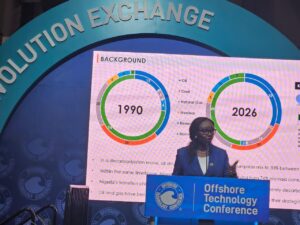

She described the Petroleum Industry Act (PIA) as a “game changer,” citing improved regulatory clarity and enhanced competitiveness. She added that policy flexibility remains key to sustaining investor confidence.
“The government has been responsive. We continuously evaluate our position to attract and retain investment,” she said, stressing that collaboration—not confrontation—guides regulatory engagement.
Looking beyond Nigeria, Eyesan positioned the country as a catalyst for Africa’s broader energy development.
“Nigeria is not just a major player; we are a beacon for the continent, with the resources to expand energy access, reduce poverty, and drive industrialisation,” she said.
She also disclosed strong investor appetite for Nigeria’s 2025 licensing round, which offers about 50 assets and has attracted nearly 300 applicants.
In the downstream segment, she noted that fuel subsidy removal has accelerated the adoption of alternative fuels such as compressed natural gas (CNG), with further growth expected as domestic gas infrastructure expands.
Earlier, PETAN Chairman Wole Ogunsanya said Nigeria’s strong presence at OTC 2026 underscores resilience despite global economic uncertainties.
“Even in challenging times globally, we ensured Nigeria was strongly represented. The level of engagement and participation has been very encouraging,” he said.
Ogunsanya added that Nigeria is nearing a major refining milestone, with projections of up to one million barrels per day in operational refining capacity—positioning the country to reduce import dependence and better meet domestic demand.


L-R
Chairman of the Petroleum Technology Association of Nigeria (PETAN), Engr. Wole Ogunsanya; Commission Chief Executive, Nigerian Upstream Petroleum Regulatory Commission (NUPRC), Oritsemeyiwa Eyesan; Chief Financial Officer, NNPCL, Adedapo Segun; and the Managing Director and Chief Executive Officer (MD/CEO) of Aradel Holdings Plc., Adegbite Falade at the opening section of Nigerian Pavillion at the 2026 Offshore Technology Conference (OTC), in Houston Texas.