
Uncategorized
Nigeria, South Africa must move beyond diplomacy to strategic economic partnership – Osaghae



By Editor
As Africa confronts growing global economic uncertainty, intensifying geopolitical competition, and the urgent need for greater continental integration, Nigeria and South Africa must elevate their relationship beyond diplomatic goodwill and historical ties to a strategic partnership capable of shaping Africa’s future, Director-General of the Nigerian Institute of International Affairs (NIIA), Professor Eghosa Osaghae, has said.
Speaking at the Nigeria-South Africa Chamber of Commerce (NSACC) Breakfast Meeting in Lagos on the theme, “Nigeria-South Africa Relations: Unlocking the Next Frontier of Strategic Partnership,” Osaghae argued that the relationship between Africa’s two largest economies carries significance far beyond bilateral interests.
According to him, the future competitiveness of the African continent will depend largely on the ability of Nigeria and South Africa to collaborate more effectively in trade, investment, innovation, security, diplomacy, and institutional development.
“These are two countries that have historically shaped African affairs,” Osaghae noted. “When Nigeria and South Africa work together, they create opportunities not only for themselves but for the entire continent.”
He observed that despite periodic tensions and policy disagreements, both countries remain indispensable partners in advancing Africa’s economic integration agenda and strengthening the continent’s voice in global affairs.
Osaghae said the African Continental Free Trade Area (AfCFTA) provides a unique platform for both countries to move from competition toward collaboration, particularly in sectors such as manufacturing, financial services, technology, telecommunications, energy, agriculture, and the creative economy.
The NIIA Director-General stressed that sustainable economic growth is driven not merely by natural resources or market size but by strong institutions, policy consistency, and the capacity to build systems that can support long-term development.
Drawing lessons from South Africa’s economic evolution and Nigeria’s entrepreneurial dynamism, he argued that Africa’s development challenge is no longer simply about creating opportunities but about building institutions capable of sustaining growth at scale.
“Nigeria possesses extraordinary entrepreneurial energy, while South Africa has developed strong institutional and corporate systems. The real opportunity lies in combining these strengths to create globally competitive African enterprises,” he said.
Osaghae also called for deeper collaboration in knowledge exchange, research, education, and policy development, noting that stronger intellectual engagement between both countries could help address common challenges ranging from industrialization and unemployment to regional security and technological transformation.
He further emphasised the need to strengthen people-to-people relations and address negative perceptions that have occasionally strained ties between citizens of both nations.
According to him, mutual understanding, cultural exchange, and stronger business networks will be critical in fostering trust and unlocking new investment opportunities.
Earlier, Chairman of the Nigeria-South Africa Chamber of Commerce, Ije Jidenma, urged both countries to strengthen economic cooperation, cultural exchange, and strategic partnerships, describing Nigeria and South Africa as indispensable pillars of Africa’s economic future.
Jidenma noted that while the relationship between both countries has historically been rooted in political solidarity, particularly during the anti-apartheid struggle, the next phase must be driven by economic collaboration and shared prosperity.
She highlighted successful cross-border investments, including the contributions of MTN, Stanbic IBTC Bank, Dangote Group, and other major African enterprises, as evidence of the opportunities that exist when businesses from both countries work together.
According to her, greater collaboration under AfCFTA, stronger investment protection frameworks, and increased support for entrepreneurs seeking to expand across borders would accelerate intra-African trade and improve investor confidence.
“We must focus on what we are doing right and build on those successes,” Jidenma said. “Nigeria and South Africa have the capacity to help reposition Africa in the global economy if we work together strategically.”
She also called for stronger media partnerships, exchange programmes, and cultural initiatives that would promote better understanding between citizens of both countries and help counter negative stereotypes.
As part of efforts to deepen commercial engagement, Jidenma disclosed plans for a business delegation to South Africa later this year, aimed at helping Nigerian businesses better understand the country’s regulatory environment, business culture, and investment opportunities.
The event brought together diplomats, business leaders, policymakers, academics, and investors who shared a common view that stronger Nigeria-South Africa cooperation remains essential to achieving Africa’s aspirations for economic growth, industrial development, and global competitiveness.
For participants, the message was clear: Africa’s future will not be built by individual nations acting alone but by strategic partnerships capable of translating shared ambitions into measurable economic outcomes.

By Editor
The Monetary Policy Committee (MPC) of the Central Bank of Nigeria (CBN) has retained the Monetary Policy Rate (MPR), the country’s benchmark interest rate, at 26.5 per cent.
The decision was announced at the conclusion of the committee’s 306th meeting held in Abuja on July 20 and 21.
All 11 members of the MPC attended the two-day meeting, where they assessed recent developments in the domestic and global economy before unanimously deciding to keep the benchmark rate unchanged.

By maintaining the MPR at 26.5 per cent, the CBN signalled its commitment to preserving its tight monetary policy stance as it seeks to further moderate inflationary pressures, support exchange rate stability and reinforce recent improvements in the country’s macroeconomic environment.
By Editor
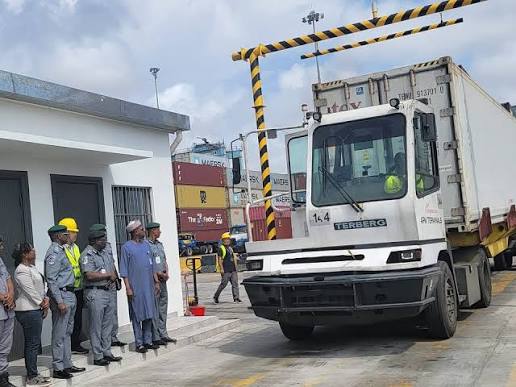
The Nigeria Customs Service (NCS) is set to deploy cargo scanners at the Nnamdi Azikiwe International Airport, Abuja, in a move aimed at accelerating cargo inspections, improving trade facilitation and strengthening border security.
The project is currently awaiting final regulatory approval before becoming operational.
The Acting Comptroller of Non-Intrusive Inspection, Deputy Comptroller of Customs (DC) Umar Madugu, disclosed the development on July 15 during a readiness assessment of the newly installed scanning facilities, according to a statement by the service.
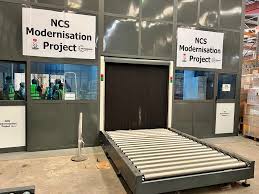
The deployment will introduce non-intrusive inspection technology, enabling Customs officers to examine cargo using advanced scanners rather than relying primarily on physical inspections.
According to the NCS, the technology is expected to shorten cargo clearance times, enhance operational efficiency and improve the detection of prohibited or undeclared goods.
As part of the assessment, Madugu inspected newly installed CX180 180DH pallet cargo scanners at the warehouses of Skyway Aviation Handling Company (SAHCO) and the Nigerian Aviation Handling Company (NAHCO) within the airport.
“The Nigeria Customs Service is on the verge of deploying non-intrusive inspection technology (cargo scanners) at the Nnamdi Azikiwe International Airport, with the project awaiting final regulatory approval for full takeoff,” he said.
Madugu noted that Customs officers completed specialised image analysis training last month, equipping them with the expertise required to interpret scanner images accurately.
He said the training would enable officers to identify prohibited and undeclared items more efficiently while significantly reducing cargo inspection times.
The Customs Service described the initiative as a major milestone in its ongoing drive to modernise cargo inspection and strengthen technology-driven border management.
To support seamless operations after the scanners become operational, Madugu recommended additional security and infrastructure upgrades around the scanning facilities. These include deploying traffic assessment officers to manage cargo movement and installing CCTV cameras to monitor inbound and outbound cargo.
“Traffic assessment officers will be positioned strategically and CCTV cameras installed to coordinate the movement of inbound and outbound cargo within the scanning area, ensuring seamless operations and improved efficiency,” he said.
The readiness assessment was conducted alongside officials from Trade Modernization Project Limited and the Quality Assurance Unit, who jointly evaluated the operational preparedness of the facilities.
Before the inspection, Madugu paid a courtesy visit to the Customs Area Controller of the FCT Area Command, Comptroller Victoria Aliboh, to obtain formal clearance for the exercise.
According to the NCS, the successful assessment marks another step towards deploying technology-driven cargo inspection at Abuja airport, with the scanners expected to commence operations once regulatory approval is secured.
The scanner deployment forms part of the service’s broader customs modernisation programme aimed at improving trade facilitation, enhancing border security and boosting revenue collection.
The NCS generated a record ₦7.281 trillion in revenue in 2025, its highest annual collection to date.
Between January and May, the service collected ₦3.35 trillion, processed nearly 700,000 import declarations and issued more than 112,000 Pre-Arrival Assessment Reports (PAARs).
Within the same period, Customs facilitated exports worth $1.218 billion through 21,376 export containers, reflecting sustained growth in Nigeria’s export trade.
The service also disclosed that approvals under the Import Duty Exemption Certificate scheme reached ₦34 trillion in 2025, with about 60 per cent of the waivers granted for military hardware imports.
Nigeria’s air freight logistics market is estimated to be worth more than $8 billion, with Lagos, Abuja, Port Harcourt and Kano serving as the country’s major cargo hubs.
Earlier, Aramex Nigeria Managing Director, Faisal Jarmakani, identified airport cargo processing as one of the biggest obstacles to the growth of Nigeria’s air freight industry.

According to him, multiple clearance procedures, overlapping regulatory agencies, documentation bottlenecks, physical inspections and limited technology integration continue to slow cargo movement at Nigerian airports.
He said greater digitalisation and stronger inter-agency collaboration would reduce processing delays, lower logistics costs and improve the efficiency of Nigeria’s air cargo sector.
The planned deployment of cargo scanners at the Abuja airport is expected to support those reforms by introducing faster, technology-driven cargo inspections once the project receives final regulatory approval.
Uncategorized
Air Peace grounds airbus A320 after ground handling vehicle damages engine at Lagos airport
By Our Reporter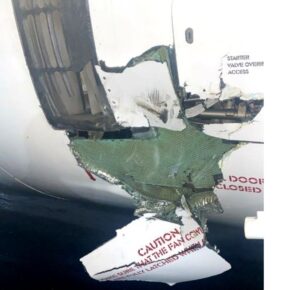
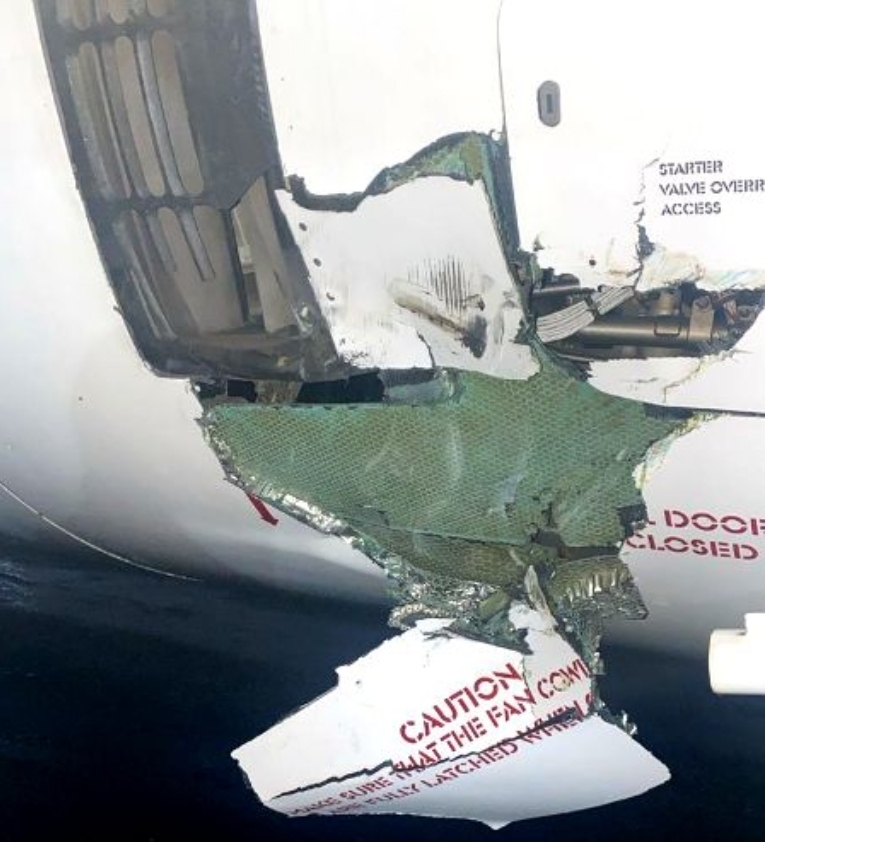
Air Peace has grounded one of its Airbus A320 aircraft after a baggage conveyor belt operated by a ground handling company collided with one of the aircraft’s engines at the Murtala Muhammed Airport Terminal 1 (MMA1) in Lagos, disrupting the airline’s domestic flight operations.
The incident occurred shortly after Flight P47427 arrived safely from Kano and all passengers had disembarked. No passengers or crew members were injured.
In a statement, Air Peace said the damaged aircraft had been scheduled to operate several domestic flights over the coming days. With the aircraft declared unserviceable, the airline said it is redeploying its fleet, a move expected to result in delays and possible flight cancellations on some routes.
Preliminary reports indicate that the accident occurred while a baggage conveyor belt belonging to the Nigerian Aviation Handling Company (NAHCO) was being positioned beside the aircraft.
According to initial findings, the conveyor belt operator, identified as Sunday, reportedly slumped while driving the equipment. After falling from the moving vehicle, the unattended conveyor belt continued moving and struck one of the aircraft’s engines.
The operator was immediately evacuated to the Federal Airports Authority of Nigeria (FAAN) clinic at the airport, where he is receiving medical treatment.
The collision caused significant damage to the aircraft’s engine, rendering the Airbus A320 unfit for service pending engineering assessment, repairs and regulatory clearance.
Air Peace apologised to passengers affected by the disruption, assuring them that its operations and customer service teams have been mobilised to provide alternative travel arrangements where possible.
“We sincerely apologise to our esteemed passengers whose travel plans may be affected by this unforeseen ground handling incident. Our operational and customer service teams are actively working to minimise the inconvenience by providing available alternatives and ensuring that affected passengers receive the necessary assistance,” the airline said.
The airline reiterated that safety remains its highest operational priority and said it is working closely with the ground handling company and aviation authorities to determine the cause of the incident and prevent a recurrence.
Industry experts noted that aircraft engine damage typically requires detailed technical inspections, replacement of damaged components, certification by licensed aviation engineers and regulatory approval before the aircraft can return to service. Depending on the severity of the damage and the availability of spare parts, repairs could take several days or even weeks.
To minimise passenger disruption, airlines often adjust schedules, deploy replacement aircraft where available and consolidate flights during such periods.
Aviation safety stakeholders described the incident as a reminder of the importance of strict ramp safety procedures, continuous supervision of airside operations and regular medical fitness assessments for personnel operating ground support equipment.
They also stressed the need for enhanced emergency safety mechanisms capable of automatically stopping moving airside vehicles if an operator becomes incapacitated.
Although the incident occurred after passengers had safely disembarked, experts said it highlights the significant operational and financial risks associated with ground handling accidents, including aircraft downtime, repair costs, flight cancellations and passenger compensation.
Investigations involving Air Peace, the ground handling company and relevant aviation authorities are ongoing. The findings are expected to determine the exact cause of the accident and recommend measures to strengthen safety procedures for airport ground handling operations.
Air Peace thanked passengers for their patience and understanding, assuring them that every effort is being made to restore normal flight schedules while maintaining the highest standards of operational safety.


PTML to pilot Customs’ new MIS File Tracker as Miko targets seamless nationwide rollout

Dangote picks London over Dubai for cement listing, cites faster approval process

Dangote confirms successful completion of $2.5 billion private placement
-

 Fashion9 years ago
These ’90s fashion trends are making a comeback in 2017
-
Entertainment9 years ago
The final 6 ‘Game of Thrones’ episodes might feel like a full season
-
Fashion9 years ago
According to Dior Couture, this taboo fashion accessory is back
-
Sports9 years ago
Steph Curry finally got the contract he deserves from the Warriors
-
Entertainment9 years ago
The old and New Edition cast comes together to perform
-
Business9 years ago
Uber and Lyft are finally available in all of New York State
-
Sports9 years ago
Phillies’ Aaron Altherr makes mind-boggling barehanded play
-
Entertainment9 years ago
Disney’s live-action Aladdin finally finds its stars