Energy
Nigeria scales gas production, targets 12bcf/d amid infrastructure drive

By Ambrose Nnaji
Nigeria’s gas production has climbed from 6.8 billion cubic feet per day (bcf/d) in 2023 to 7.5bcf/d in 2025, as the country intensifies efforts to position gas as a cornerstone of its energy transition strategy.
The Coordinating Director of the Decade of Gas Secretariat, Ed Ubong, disclosed this at the Decade of Gas/World Bank Ministerial Roundtable and Workshop in Abuja, attributing the growth to stronger collaboration among government institutions, regulators, investors, and industry operators.
Ubong said Nigeria is targeting an ambitious increase to 12bcf/d by 2030, underpinned by policies aimed at unlocking reserves, boosting infrastructure, and stimulating domestic demand.
He emphasised that deeper collaboration among African nations, development partners, and private investors will be critical to unlocking the continent’s vast gas potential and strengthening regional energy integration.
The roundtable drew participation from ministers across Africa, representatives of the World Bank, regulators, and over 60 project sponsors. Key agencies in attendance included the Nigerian Midstream and Downstream Petroleum Regulatory Authority (NMDPRA) and the Nigerian Upstream Petroleum Regulatory Commission (NUPRC).
According to Ubong, the forum is expected to catalyse funding discussions—particularly with the World Bank—to accelerate gas infrastructure development across Nigeria and the wider African market.
He noted that the Federal Government’s designation of 2021–2030 as the “Decade of Gas” marked a strategic pivot toward gas as a key driver of economic growth. This vision has been reinforced by President Bola Ahmed Tinubu’s “Gas for Nigeria’s Prosperity” agenda.
Since the establishment of the Secretariat in 2023, efforts have focused on expanding infrastructure, ensuring competitive pricing, stimulating demand through credible off-takers, and building human capital across the value chain.
Gas-to-power and the expansion of liquefied petroleum gas (LPG) adoption remain priority areas. While gas-to-power aims to improve electricity supply, increased LPG usage is expected to reduce reliance on firewood and charcoal, with positive implications for public health and environmental sustainability.
Ubong revealed that over 215 gas demand projects are currently tracked within the NMDPRA’s centralised database, improving coordination, planning, and execution. He added that accountability frameworks have been strengthened to ensure timely delivery across the sector.
He also highlighted increasing investor confidence, noting that several upstream operators have taken Final Investment Decisions (FIDs) on major gas projects, with more investments expected.
On regional integration, Ubong said Nigeria is positioning itself as a hub for a West African gas ecosystem, stressing the need for cross-border alignment on supply, demand, and infrastructure. He pointed to projects such as the African Atlantic Gas Pipeline as critical to connecting markets and enabling bidirectional gas flows.
Nigeria has identified 16 priority pipeline projects requiring an estimated $22 billion in investment, with public-private partnerships seen as essential to execution.
In line with global climate commitments, he added that efforts to reduce gas flaring are being intensified even as production rises.
On domestic consumption, Nigeria plans to increase LPG utilisation from 1.8 million tonnes per annum to 3 million tonnes by 2030, supported by the distribution of over five million gas cylinders nationwide.
While notable progress has been recorded, Ubong said sustained collaboration remains vital to achieving Nigeria’s gas ambitions and broader energy security goals.

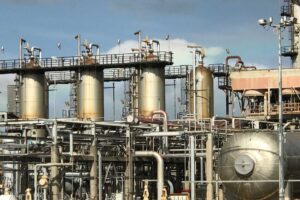
Gas Plant