Business
Nigeria, China advance $200m poultry project to drive agro-industrial growth


By Ambrose Nnaji
The Society of Petroleum Engineers (SPE), Nigerian Council, has warned that Nigeria’s ambition to increase crude oil production to three million barrels per day by 2030 will depend less on the award of new oil blocks and more on the country’s ability to rapidly execute projects, mobilise investment, deploy technology and strengthen indigenous operators.
Chairman of the SPE Nigerian Council, Francis Nwaochei, who is also Deputy General Manager, Partners Relations and Regulatory Affairs at Chevron Nigeria Limited, said the country’s energy sector has entered a decisive phase where operational execution, rather than policy announcements, will determine whether recent reforms translate into increased production and economic growth.
Speaking ahead of the 49th Nigerian Annual International Conference and Exhibition (NAICE 2026), scheduled for August 3-5, in Lagos, Nwaochei said this year’s conference theme, “Thriving in the Evolving Global Energy Landscape: Collaborative Growth and Resilience,” reflects the realities confronting Nigeria and Africa’s energy industry.
According to him, rapid changes in global investment patterns, technology adoption, geopolitical dynamics and decarbonisation policies require African producers to pursue energy security and environmental sustainability simultaneously rather than treating them as competing priorities.
He argued that resilience for Africa should no longer be viewed merely as protection against market shocks but as a competitive strategy capable of attracting investment, reducing costs and expanding access to energy.
“Our continent faces the dual challenge of ending energy poverty while accelerating industrialisation. Achieving both requires collaboration among regulators, operators, financiers, technology developers and service providers to reduce operating costs, de-risk investments and unlock capital,” he said.
Nwaochei described the recent conclusion of Nigeria’s 2025 licensing round by the Nigerian Upstream Petroleum Regulatory Commission (NUPRC) as an important milestone but cautioned that the award of exploration licences represents only the beginning of the investment cycle.
He commended the Federal Government, the Ministry of Petroleum Resources and the NUPRC for conducting what he described as a transparent, automated and market-driven licensing process under the Petroleum Industry Act (PIA).
However, he stressed that the real challenge now lies in converting the newly awarded assets into commercially viable production.
“The licensing round is only the catalyst. Turning those licences into producing assets requires rapid technology deployment, reservoir management, disciplined capital mobilisation and efficient project execution,” he said.
According to him, discussions at NAICE 2026 will focus on the commercial and technical pathways required to move the newly awarded assets from exploration to production while supporting Nigeria’s production target.
Nwaochei noted that indigenous operators have become increasingly central to Nigeria’s upstream industry following the ongoing divestment of international oil companies from onshore and shallow-water assets.
He said local companies now account for about 60 per cent of national oil production and must demonstrate stronger operational capability, financial discipline and environmental stewardship as they assume responsibility for ageing assets and decommissioning obligations.
“The success of indigenous operators will largely determine Nigeria’s future production growth,” he added.
Beyond upstream operations, the SPE chairman identified domestic refining as another strategic pillar of Nigeria’s energy security.
He said the expansion of large-scale private refineries alongside modular refining projects presents an opportunity to transform Nigeria into a regional refining hub, provided government succeeds in balancing domestic crude supply obligations with commercially sustainable pricing for producers.
Addressing concerns over Nigeria’s OPEC production quota, Nwaochei argued that the country’s immediate priority should be building sustainable production capacity rather than focusing solely on quota limitations.
He also identified natural gas and condensate production, which are not subject to OPEC crude quotas, as areas offering immediate opportunities for production growth and increased revenue.
Financing remains one of the biggest constraints to Africa’s energy ambitions, he said, particularly as many Western commercial banks continue reducing exposure to oil and gas projects because of Environmental, Social and Governance (ESG) policies.
Nwaochei therefore urged African governments and financial institutions to strengthen regional financing mechanisms capable of supporting large-scale energy investments.
He expressed optimism that the planned commencement of the Africa Energy Bank later this year would provide an alternative source of capital for oil and gas projects across the continent.

On infrastructure security, he called for greater deployment of digital surveillance systems, fibre-optic monitoring, automated metering and artificial intelligence to protect critical oil and gas assets.
He noted, however, that technology alone cannot solve the challenge of pipeline vandalism and crude oil theft without meaningful implementation of the Host Community Development Trusts established under the Petroleum Industry Act.
The SPE chairman also stressed that Africa’s energy transition must reflect the continent’s developmental realities.
According to him, hydrocarbons will continue to play a critical role in industrialisation, manufacturing and electricity generation for decades, even as producers work to reduce carbon emissions and improve environmental performance.
He urged operators to eliminate routine gas flaring, reduce methane emissions and adopt cleaner production technologies to ensure Nigerian crude remains competitive in international markets that are increasingly imposing carbon-related trade measures.
Nwaochei said NAICE 2026 will feature more than 600 peer-reviewed technical papers covering reservoir management, drilling engineering, artificial intelligence, deep-water operations, carbon capture and other emerging technologies.
The conference will also host strategic policy discussions on fiscal reforms, investment attraction, local content development, indigenous operators, energy financing and resilient energy systems, alongside exhibitions showcasing digital energy technologies, subsea innovations and operational equipment.
He added that technical recommendations emerging from the conference would be compiled into an official communiqué for submission to government, regulators and industry stakeholders as part of efforts to strengthen evidence-based policy implementation.
According to him, the conference is intended not merely as an industry gathering but as a platform for developing practical solutions that will help Nigeria and Africa build a more competitive, resilient and sustainable energy sector.
Responding to questions on collaboration and technology in driving industry growth, Nwaochei said collaboration can only succeed when all stakeholders share common objectives adding that once government, regulators, operators, investors and service companies align around the same national goals, cooperation becomes much easier.
“The Federal Government has made its ambition very clear by setting a target of producing three million barrels of oil per day. You can already see every segment of the industry aligning with that objective.
“Operators are increasing drilling activities, regulators are repositioning themselves as business enablers through supportive policies, and the industry is working towards a common goal. That is what true collaboration looks like.”
Nwaochei stressed that technology remains the single most important factor in improving the competitiveness of Nigeria’s energy industry.
“Every country that has advanced industrially has done so through technology. The same applies to Nigeria’s energy industry.
“If we improve our technological capabilities in reservoir engineering, production, gas development, downstream operations and other areas, we will significantly improve productivity and competitiveness.
“The telecommunications revolution transformed Nigeria through technology. We need a similar transformation across the petroleum industry. Countries such as China and Japan have demonstrated what technological innovation can achieve.”, he said.
SPE Council Secretary, Obianuju Igbokwe urged young professionals to develop both technical and personal leadership skills.
“Technical competence will take you far, but personal development will take you even further.
Identify professionals whose careers you admire, study how they work, understand their strengths and deliberately build those qualities in yourself.
Young professionals should define the kind of reputation they want to build and intentionally develop the skills needed to achieve it.”, Igbokwe said.
Also, the SPE Chief of Staff, Choja Ojanomare said NAICE should be viewed as a long-term institution rather than an annual event.
“NAICE is not a sprint; it is a marathon that has been running for nearly five decades.
It has consistently brought together government, regulators, industry players and academia to exchange ideas that have shaped Nigeria’s energy policies over the years.
“The conference has contributed significantly to the evolution of Nigeria’s petroleum industry, and its impact extends well beyond a single year.”, he said.

Caption:
L-R:
The Chairman, Planning Committee, Nigeria Annual International Conference and Exhibition (NAICE) 2026, Capt. Aris John-Emezi; Secretary, Society of Petroleum Engineers (SPE) Nigeria Council, Obianuju Igbokwe; Chairman, Francis Nwaochei; Vice Chairman, Etta Agbor; and Vice Chairman-elect, SPE Nigeria Council, Oladipo Ashafa during a press conference to announce the upcoming SPE-NAICE 2026, in Lagos.
By Reporter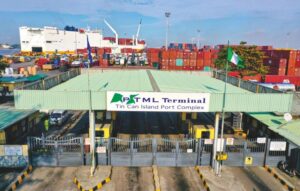
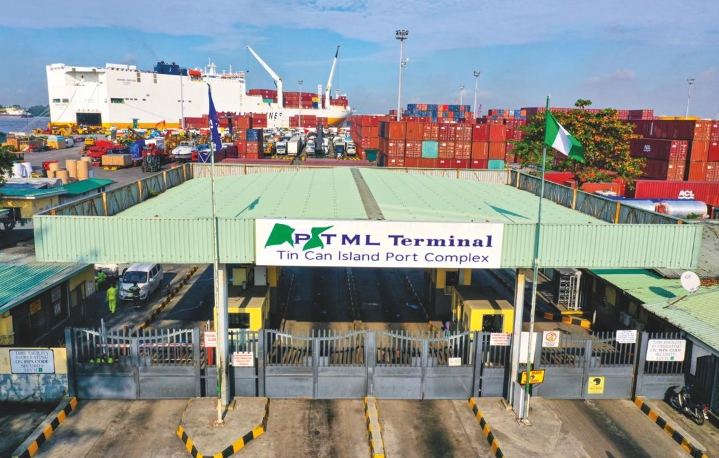
The Port and Terminal Multi-services Limited (PTML) Area Command of the Nigeria Customs Service (NCS) has been selected as the pioneer command to pilot the Service’s newly developed Management Information System (MIS) File Tracker, with Acting Customs Area Controller, Deputy Comptroller Nura Miko, assuring that the command will deliver a successful implementation capable of supporting nationwide deployment.
The selection places PTML once again at the forefront of Customs’ digital transformation agenda, reinforcing its reputation as the Service’s testing ground for technology-driven reforms following its successful implementation of the Unified Customs Management System (UCMS), popularly known as B’Odogwu.
The MIS File Tracker, unveiled as part of the Nigeria Customs Service’s modernisation programme, is expected to automate internal administrative processes, eliminate cumbersome paperwork and improve operational transparency across Customs formations.
Speaking at the launch, the Comptroller-General of Customs, Bashir Adewale Adeniyi, described the initiative as another significant milestone in the Service’s drive to build a fully digital Customs administration capable of delivering faster, more transparent and efficient public service.
Represented by the Deputy Comptroller-General in charge of ICT and Modernisation, Oluyomi Adebakin, Adeniyi said the platform demonstrates the Service’s commitment to deploying cutting-edge technology in line with global best practices.
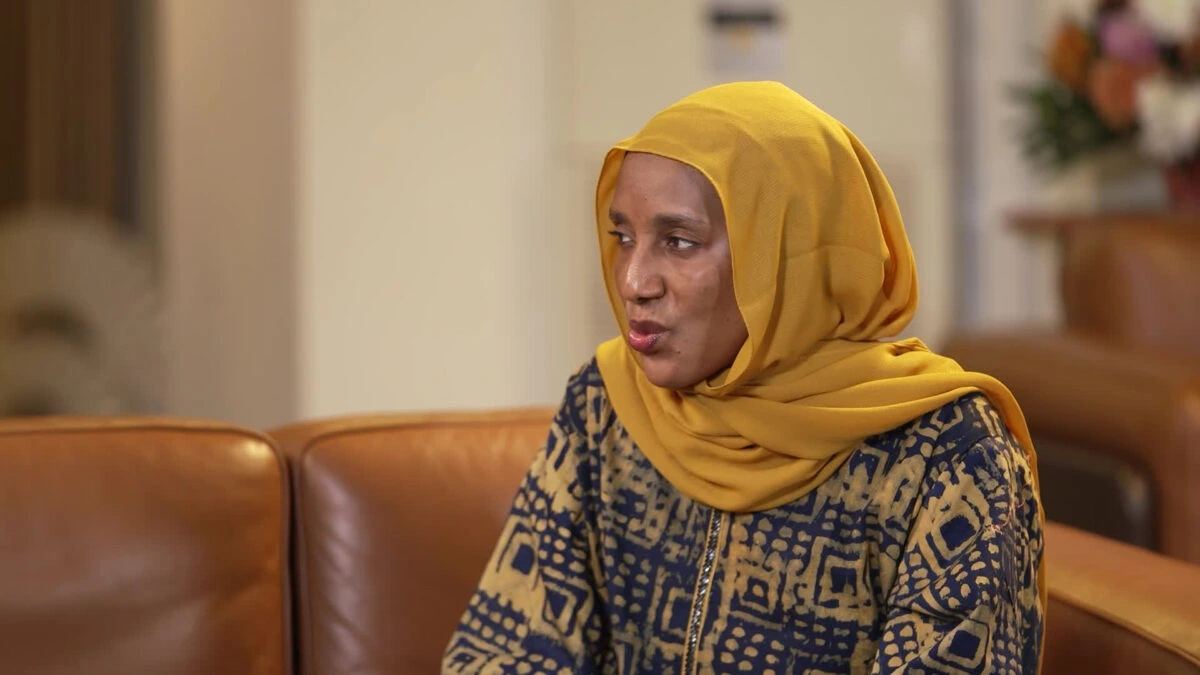
According to her, the enterprise-wide digital platform integrates multiple administrative functions through a Single Sign-On (SSO) architecture, enabling officers to access several applications from a unified database.
She explained that the system digitises critical administrative functions, including leave and pass applications, file tracking, duty rosters, internal staff orders, nominal rolls and personnel management processes, while also creating channels for officers to submit feedback to improve the platform during implementation.
“The system is designed to reduce manual processes, improve workflow efficiency and support evidence-based decision-making across the Nigeria Customs Service,” she said.

Adebakin noted that PTML was deliberately selected for the pilot phase because of its consistent record in successfully implementing major digital innovations introduced by the Service.
Responding, Miko said the command considers the selection both a privilege and a responsibility, assuring Customs headquarters that PTML would justify the confidence reposed in it.
According to him, the command has consistently embraced technology-driven reforms aimed at facilitating legitimate trade while improving internal efficiency.
“We will ensure the successful deployment of the MIS File Tracker and provide the necessary feedback that will support its smooth rollout across other Customs commands,” Miko said.
He disclosed that PTML is simultaneously working to reduce cargo clearance time for compliant Roll-on/Roll-off (RoRo) consignments from two hours to one hour through increased automation, a move expected to further strengthen trade facilitation at the terminal.
Miko added that successful implementation of the MIS File Tracker would accelerate the Service’s transition towards a paperless administrative environment while improving accountability and institutional efficiency.
Trade and customs experts said the pilot deployment represents another important step in Customs’ broader modernisation programme but stressed that sustained training, system interoperability and cybersecurity will determine its long-term success.
A maritime and trade facilitation expert, Dr. Eugene Nweke, said digitising internal administrative processes is as important as automating cargo clearance because institutional efficiency directly affects trade operations.
“Efficient internal administration ultimately translates into faster operational decision-making. Digital file tracking reduces bureaucratic delays, enhances accountability and improves institutional memory within Customs,” he said.
Similarly, customs and port operations analyst Lucky Amiwero said successful implementation of the platform would depend on how seamlessly it integrates with existing Customs digital systems.
According to him, digital reforms should not operate in silos but must be interconnected to support faster processing and more informed decision-making.
“The value of digital transformation lies in integration. When internal administrative systems communicate effectively with operational platforms, Customs becomes more responsive, transparent and efficient,” Amiwero noted.
He also urged the Service to prioritise continuous staff capacity building and cybersecurity safeguards as digital adoption expands.
Industry stakeholders believe PTML’s performance during the pilot phase will provide valuable lessons for nationwide implementation, especially as the Nigeria Customs Service intensifies efforts to modernise its operations through technology.
The launch of the MIS File Tracker adds to a growing portfolio of digital reforms under the leadership of Comptroller-General Adeniyi, complementing initiatives such as the B’Odogwu platform and reinforcing the Service’s ambition to build a smarter, data-driven Customs administration capable of facilitating trade while strengthening institutional governance.
By Editor
Dangote Cement Plc has opted to pursue a secondary listing on the London Stock Exchange rather than in Dubai, citing the United Kingdom’s faster and more practical listing process as the company seeks to broaden its international investor base.
The disclosure was made by Mariya Dangote, Executive Director overseeing the group’s cement and foods businesses, who said the company had evaluated Dubai but concluded that obtaining a listing there would take considerably longer.
The planned secondary listing is part of the Dangote Group’s wider expansion strategy as it pursues an ambitious target of generating $100 billion in annual revenue by 2030 through investments across manufacturing, energy and industrial businesses.
Speaking in Lagos, Mariya Dangote said London offered a better strategic fit for the company’s objectives.
“It’s compatible with our business. We thought of the secondary listing in Dubai, but it would have taken years to list,” she said.
She disclosed that the company is working towards completing the London listing before the end of 2026, although the timetable could shift to the first quarter of 2027 depending on the schedule for the planned initial public offering (IPO) of Dangote Refinery.
“The way things are moving, we are looking to do the secondary listing at the end of this year,” she said.
According to her, the group is carefully sequencing multiple capital market transactions.
“The company is going into two IPOs at the same time. So we want to have a bit of a gap. If the refinery one is around September, then we’ll push the secondary listing to the end of the year or the first quarter of 2027.”
The planned London listing comes as the Dangote Group intensifies efforts to deepen its international presence and unlock value across its portfolio.
Beyond the refinery IPO, expected to rank among Africa’s largest public offerings, the conglomerate also plans to divest a stake in its fertiliser business to raise fresh capital for future expansion.
Dangote Refinery recently attained full production capacity, reinforcing its position as one of the world’s largest single-train refineries and increasing investor interest in the group’s energy business.
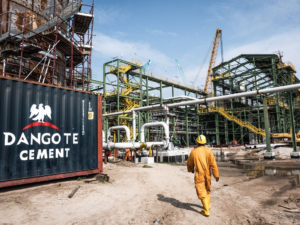
Dangote Cement, meanwhile, remains Africa’s largest cement producer, with an installed production capacity of 55 million metric tonnes annually across 11 plants in 10 African countries.
Although the company first announced plans for a London listing in 2011, the latest comments indicate the long-delayed strategy is now approaching execution as market conditions improve.
Capital market analysts say a London listing could significantly enhance Dangote Cement’s global visibility, improve liquidity in its shares and broaden access to institutional investors that may have limited exposure to African exchanges.
The Chief Executive Officer of the Centre for the Promotion of Private Enterprise (CPPE), Dr. Muda Yusuf, has consistently argued that international listings can strengthen corporate governance, improve transparency and expand access to long-term foreign capital, particularly for companies with continental operations and strong export earnings.
Similarly, investment analysts note that London remains one of the world’s leading financial centres for emerging market companies because of its deep institutional investor base, well-established regulatory framework and extensive analyst coverage. These factors can help companies attract a wider pool of international investors while potentially lowering their long-term cost of capital.
However, analysts also caution that maintaining dual listings increases regulatory compliance obligations and reporting costs, requiring issuers to meet the governance and disclosure standards of multiple jurisdictions.
The planned secondary listing follows a series of strategic capital market initiatives by the Dangote Group.
The conglomerate recently completed a $2.5 billion private placement, one of the largest corporate fundraising transactions undertaken by an African company. In December 2025, Aliko Dangote also announced plans to list a 10 per cent stake in the approximately $20 billion Dangote Refinery on the Nigerian Exchange (NGX), while billionaire investor Femi Otedola has pledged to invest $100 million in the refinery’s anticipated public offering, describing it as a strategic long-term investment.
Analysts say the combination of the refinery IPO, the proposed London listing of Dangote Cement and the planned sale of a stake in the fertiliser business underscores the group’s strategy of leveraging capital markets to finance expansion while positioning its businesses for greater international visibility and sustained long-term growth.

Africa must finance its own energy future as Nigeria pursues 3mbpd target — SPE

PTML to pilot Customs’ new MIS File Tracker as Miko targets seamless nationwide rollout

Dangote picks London over Dubai for cement listing, cites faster approval process
-

 Fashion9 years ago
These ’90s fashion trends are making a comeback in 2017
-
Entertainment9 years ago
The final 6 ‘Game of Thrones’ episodes might feel like a full season
-
Fashion9 years ago
According to Dior Couture, this taboo fashion accessory is back
-
Sports9 years ago
Steph Curry finally got the contract he deserves from the Warriors
-
Entertainment9 years ago
The old and New Edition cast comes together to perform
-
Business9 years ago
Uber and Lyft are finally available in all of New York State
-
Sports9 years ago
Phillies’ Aaron Altherr makes mind-boggling barehanded play
-
Entertainment9 years ago
Disney’s live-action Aladdin finally finds its stars