Connect with us

Business

Nigeria, China advance $200m poultry project to drive agro-industrial growth

Published

on

By Editor

Nigeria’s push to modernise its agricultural sector has gained fresh momentum following high-level engagements with leading Chinese agribusiness firms in Beijing.

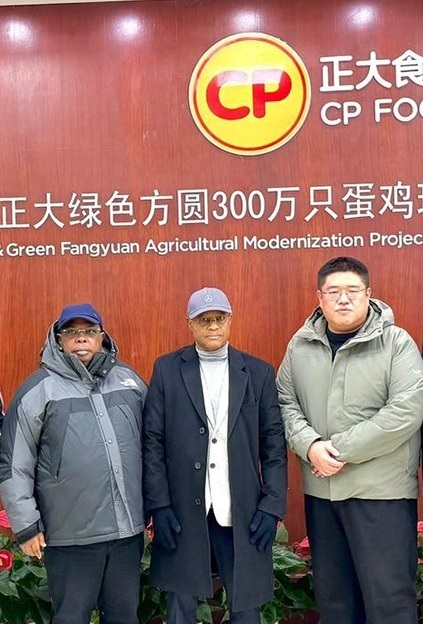
A delegation led by Kaduna State Governor, Senator Uba Sani, and the Director-General of the Nigeria–China Strategic Partnership (NCSP), Joseph Tegbe, embarked on a series of strategic meetings and facility tours aimed at accelerating livestock development and agro-industrial growth in Kaduna State and across Nigeria.

During the visit, the delegation toured Beijing Doudian Yisheng Halal Meat Industry Co. Ltd and CP Food Layers and Eggs Ltd—two major players in China’s livestock and poultry ecosystem. The engagements build on earlier NCSP discussions with DQY Ecological Farm, a subsidiary of China Communications Construction Company (CCCC) Group and one of China’s most advanced agricultural technology platforms.

According to officials on the mission, discussions focused on deepening technical cooperation, finalising project frameworks, and securing long-term investment commitments from Chinese partners to strengthen Nigeria’s livestock value chain.

The NCSP said the engagements align with the Federal Government’s priorities on food security, agricultural industrialisation, and foreign investment expansion under President Bola Tinubu’s Renewed Hope Agenda.

A key outcome of the collaboration is the proposed $200 million National Integrated Poultry Development Project, with its pilot phase to be located in Kaduna State. The project, designed for replication across Nigeria’s six geopolitical zones, is expected to become one of West Africa’s most technologically advanced poultry enterprises, helping to reduce the cost of eggs and other poultry products through large-scale, efficient production.

When fully operational, the Kaduna pilot is projected to generate over $450 million in annual revenue and create more than 350,000 direct and indirect jobs across the national poultry value chain. Analysts say the initiative could significantly boost food production capacity, enhance export competitiveness, and support Nigeria’s economic diversification efforts.

The delegation expressed appreciation to the Government of the People’s Republic of China for its continued partnership, while Chinese institutions involved signaled strong interest in expanding investment and technology cooperation with Nigeria.

The NCSP reaffirmed its commitment to driving high-impact bilateral partnerships that strengthen Nigeria–China relations, accelerate agricultural modernisation, and unlock inclusive economic opportunities nationwide.


Continue Reading
Click to comment

Leave a Reply

Your email address will not be published. Required fields are marked *

Business

Dangote expands industrial ambition to steel, power, ports

Published

on

By Editor

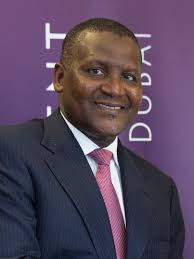
President of the Dangote Group, Aliko Dangote, has unveiled plans to enter steel manufacturing, electricity generation and port development, marking what could become the conglomerate’s most consequential diversification since the launch of its $20 billion refinery complex.

Dangote said the expansion forms part of a long-term strategy to accelerate Africa’s industrialisation, deepen manufacturing capacity and reduce structural dependence on imports.

The group, which already operates across cement, sugar, salt, fertiliser and petrochemicals, recently commenced full operations at the Dangote Petroleum Refinery & Petrochemicals, now producing approximately 650,000 barrels of refined products per day. According to Dangote, output is expected to scale up further over the next three years as optimisation and expansion plans progress.

But refining, he noted in a recent interview with The New York Times, represents only one layer of a broader industrial blueprint.

“We have to industrialise Africa,” Dangote said, outlining steel production, expanded power generation and new port infrastructure as the next strategic pillars.

Industry analysts say the proposed entry into steel manufacturing could significantly alter Nigeria’s industrial ecosystem. Steel remains foundational to construction, transport infrastructure, housing and heavy manufacturing — sectors critical to economic diversification.

Investment in power generation is equally strategic. Chronic electricity shortages have long constrained Nigeria’s productivity, forcing manufacturers to rely heavily on self-generation at high cost. Vertical integration into power could lower operating risks while improving competitiveness.

Port development, meanwhile, is expected to address logistics bottlenecks that inflate trade costs and undermine export capacity. With large-scale manufacturing expansion, integrated port access would enhance supply chain efficiency and reduce turnaround time for imports of raw materials and exports of finished goods.

Dangote cited India’s Tata Group as a model for diversified industrial expansion, describing its multi-sector footprint as evidence that indigenous conglomerates can anchor economic transformation in emerging markets.

Beyond scale, employment generation remains central to the strategy. With Nigeria projected to require between 40 and 50 million new jobs by 2030, Dangote argued that large industrial platforms are essential to absorbing the country’s expanding youth population.

The refinery currently employs about 30,000 workers, roughly 80 per cent of them Nigerians. Expansion into steel, power and port infrastructure is projected to lift total group employment to about 65,000.

Dangote also disclosed plans to list the refinery on the Nigerian Exchange, broadening domestic investor participation and deepening local capital market involvement in large-scale industrial assets.

Despite progress, the group continues to face structural constraints, including crude supply inconsistencies and logistics inefficiencies within the oil value chain. Dangote has repeatedly called for improvements in feedstock security and regulatory alignment to ensure optimal refinery utilisation.

Nevertheless, he reaffirmed the group’s commitment to sectors capable of retaining value within Africa and reducing import dependence.

“Nobody dared to do it, so we did it,” he said, underscoring his belief that transformative private capital deployment remains critical to reshaping Nigeria’s industrial architecture.

With cement operations across several African countries and a refinery reshaping Nigeria’s downstream market, Dangote’s next pivot into steel, power and ports signals a new phase in Africa’s industrial consolidation drive.


Continue Reading

Oil & Gas

NEITI backs Tinubu’s executive order mandating direct remittance of oil revenues

Published

on

By Ambrose Nnaji

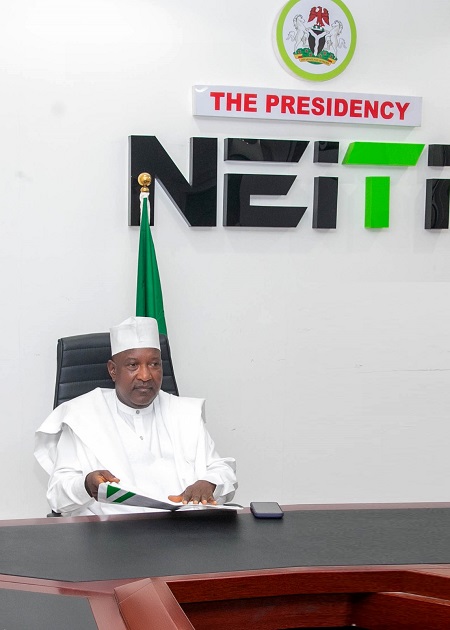
The Nigeria Extractive Industries Transparency Initiative (NEITI) has applauded President Bola Ahmed Tinubu for issuing Executive Order 9, directing that all revenues accruing to the Federal Government from tax oil, profit oil, profit gas, royalty oil, and other government entitlements under production sharing, profit-sharing and risk service contracts be remitted directly into the Federation Account.

The Executive Order, signed on February 13, 2026, is designed to safeguard oil and gas earnings, curb leakages and eliminate wasteful expenditure by ensuring that all operators transfer statutory revenues straight to the constitutionally recognised Federation Account.

In a statement, NEITI’s Executive Secretary, Musa Sarkin Adar, described the directive as “a bold and strategic milestone” in Nigeria’s ongoing fiscal reform agenda aimed at strengthening transparency, accountability and revenue mobilisation.

According to him, the presidential order aligns squarely with Section 162 of the Constitution, which mandates that all revenues collected by the government be paid into the Federation Account for equitable distribution among the federating units.

“For over two decades of our oversight work, NEITI has consistently recommended the full remittance of all revenues due to the Federation Account in line with constitutional provisions,” Sarkin Adar stated. “This directive reflects the realisation of that long-standing reform objective.”

He recalled that NEITI’s 2017 special report titled Unremitted Funds, Economic Recovery and Oil Sector Reform uncovered over $20 billion in revenues owed to the Federation but yet to be remitted at the time — a development that significantly strained government finances and triggered high-level engagements between the executive, legislature and oversight bodies.

The NEITI boss said the new order marks a critical step in addressing systemic revenue gaps and consolidating reforms introduced under the Petroleum Industry Act (PIA), which remains the principal legislation governing Nigeria’s oil and gas sector.

While affirming NEITI’s longstanding advocacy that contributed to the enactment of the PIA, Sarkin Adar urged the National Assembly and relevant stakeholders to expedite amendments to align certain provisions of the law with emerging fiscal reforms and current operational realities.

“The core objectives of transparency, efficiency and accountability that shaped NEITI’s advocacy for the PIA are being advanced through this directive,” he noted.

He reiterated the agency’s commitment to collaborate with anti-corruption institutions, development partners and other stakeholders to deepen reforms and ensure the transparent, accountable and efficient management of Nigeria’s extractive resources for the benefit of all federating units and citizens.

Analysts say the Executive Order, if effectively implemented, could significantly boost government revenues, reduce opacity in oil remittances and improve fiscal stability at a time when Nigeria is intensifying efforts to strengthen its public finance framework.

Continue Reading

Oil & Gas

Oil industry regulator expands local content drive into healthcare

Published

on

By Ambrose Nnaji

The Nigerian Content Development and Monitoring Board (NCDMB) has commissioned a state-of-the-art Clinical Skills and Simulation Laboratory at Bayelsa Medical University (BMU), Yenagoa, in a landmark intervention aimed at strengthening local capacity and aligning medical training in Nigeria with global standards.

Fully funded and equipped by the Board, the hi-tech facility features high-fidelity adult and paediatric patient simulators, laparoscopic training systems, and obstetric trainers, advanced life support mannequins, consultation cubicles, and integrated audio-visual learning systems. University authorities said the equipment will enable students to acquire hands-on clinical experience in a zero-risk environment — allowing them to learn, make mistakes, and perfect life-saving skills before attending to real patients.

Speaking during the commissioning at the university’s Clinical Skills Acquisition Centre, the Executive Secretary of NCDMB, Engr. Felix Omatsola Ogbe, underscored the broader philosophy driving the intervention.

“Capacity building is not just about oil and gas; it is about ecosystems,” he said, noting that industries such as healthcare, education, engineering and logistics are intrinsically linked to the oil and gas value chain.

Represented by the Acting Director, Planning, Research and Statistics, Ene Ette, Ogbe described simulation-based learning as the global benchmark in modern medical education. According to him, it enhances clinical competence, sharpens decision-making, and builds professional confidence in a controlled and safe environment.

He commended the management of BMU and partner organisations for what he termed a strategic collaboration that translates policy into measurable developmental impact, describing the upgraded laboratory as a deliberate investment in human capital development.

The Vice Chancellor, Professor Dimie Ogoina, in his welcome address, described the event as more than the unveiling of a building or medical equipment.

“This is about securing the future of healthcare in Bayelsa State, the Niger Delta and Nigeria at large,” he said.

Ogoina expressed deep appreciation to the NCDMB, recalling that upon assuming office in 2025, he unveiled the A.S.P.I.R.E. Agenda — a strategic vision to transform BMU into a globally recognised leader in medical education, research and innovation powered by technology and excellence.

“Today, we are seeing that vision come alive,” he said, noting that the facility would directly contribute to reducing medical errors, improving patient safety and producing highly skilled indigenous healthcare professionals capable of serving both communities and industries.

“We are not just training doctors for today; we are nurturing digital-age physicians ready to compete globally,” he emphasised.

The Vice Chancellor also acknowledged the support of Bayelsa State Governor, Douye Diri, as well as the Commissioners for Health and Education, for creating an enabling environment for strategic partnerships.

The Provost of the College of Medicine, Professor Philip Eyimina, said the laboratory played a pivotal role in the university’s recent accreditation verification exercise, affirming its readiness to deliver quality medical education in line with national standards.

“In this laboratory, our students will master essential competencies — from history taking and physical examination to suturing, intravenous access, cardiopulmonary resuscitation, obstetric procedures and emergency response — while developing critical thinking, teamwork and communication skills,” he stated.

Representing Governor Diri, the Commissioner for Education, Gentle Emelah, described the facility as remarkable and aligned with the university’s ambition to become a leading institution in medical education globally.

The Pro-Chancellor, Tarilah Tebepah, thanked the NCDMB for its foresight and generosity, urging the Board to sustain its partnership with the institution as it continues to address resource constraints.

The ceremony was complemented with a guided tour of the facility, including its Virtual Reality Station, Paediatric and Airway Management Stations, ECG and Patient Monitoring Station, IV Fluids Administration and Cannulation Station, and a fully equipped Demonstration Hall — underscoring a new chapter in technology-driven medical training in the Niger Delta.
Continue Reading

Trending