Oil & Gas
NCDMB, Dangote push beyond compliance as local content retention hits 61%

By Editor
The Nigerian Content Development and Monitoring Board (NCDMB) and Dangote Group have called for a shift from regulatory compliance to sustainable investment in technology, financing and indigenous industrial capacity to deepen local participation in Nigeria’s oil and gas industry.
The organisations said developing reliable local supply chains, transferring technical expertise and improving access to financ

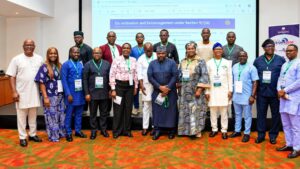
The call was made at a strategic retreat of the NCDMB/Dangote Joint Technical Committee (JTC), in Lagos, themed “Beyond Compliance: Partnering for Sustainable Nigerian Content Development.”
The meeting brought together stakeholders from the oil and gas industry and relevant government institutions to address operational challenges, strengthen collaboration and expand indigenous participation across Nigeria’s energy value chain.
Speaking at the retreat, the Executive Secretary of NCDMB, Engr. Felix Omatsola Ogbe, represented by the Senior Technical Adviser and Director of Project Certification and Authorisation, Engr. Austin Uzoka, identified commitment, technology and financing as critical to building a sustainable Nigerian content ecosystem.
Ogbe challenged industry stakeholders to look beyond statutory obligations and address the long-term requirements for sustaining industrial investments, strengthening domestic supply chains and retaining more economic value within the country.
He said the development of world-class industrial facilities must be matched by investments in local capabilities to operate, maintain and support them.
Drawing attention to the challenges facing Nigeria’s publicly owned refineries, he stressed the need to build the domestic supply chains required to sustain the operations of the Dangote Refinery and other critical industrial assets.
According to him, Nigeria must develop the capacity to supply the goods, works and services required by major industrial facilities rather than depend excessively on foreign expertise and external suppliers.
He warned that weak domestic supply chains could undermine the economic benefits of industrial investments by allowing a substantial proportion of the resulting value to flow outside the country.
Ogbe also emphasised the importance of developing Nigerian expertise in industrial operations, maintenance and technology, arguing that local content must deliver capabilities that remain within the country over the long term.
On financing, he identified high interest rates and delays in accessing funds as significant constraints facing indigenous businesses seeking to execute projects, expand operations and compete effectively in the oil and gas industry.
He urged stakeholders to consider how Nigeria could nurture a new generation of large-scale indigenous industrialists and support investors seeking to establish refineries and related industrial facilities.
While acknowledging Dangote Group’s contribution to industrial development, he called for a supportive business environment in which emerging Nigerian investors could also succeed.
He said a stronger domestic refining industry would enhance Nigeria’s position in the regional and global oil and gas markets.
NCDMB reiterated its commitment to creating an enabling environment for Nigerian businesses to develop technical competence, access industry opportunities and compete across the oil and gas value chain.
In a separate presentation, the Director of Planning, Research and Statistics at NCDMB and Chairman of the NCDMB/Dangote JTC, Omomehin Ajimijaye, urged contractors, vendors and service providers operating within the Dangote business ecosystem to comply with Nigerian content requirements and register on the Nigerian Oil and Gas Industry Joint Qualification System (NOGICJQS).
He said the Board’s regulatory framework was designed to promote business growth and indigenous participation rather than create unnecessary bureaucratic obstacles.
Ajimijaye identified four key areas of compliance: Nigerian content planning, workforce localisation, local procurement and capacity development.
He explained that companies bidding for projects were expected to submit Nigerian content plans demonstrating how they intended to maximise indigenous participation.
Employers were also required to prioritise qualified Nigerians, procure locally available goods and services, and invest in skills development and technology transfer.
On expatriate employment, he said foreign personnel could be engaged where genuine skills gaps existed, but companies were expected to work with the Board to establish those gaps and develop succession plans to prepare Nigerians to assume the positions over time.
Ajimijaye described NOGICJQS as an important digital platform for supplier registration, prequalification, capacity verification and validation of technical expertise.
He said reliable industry data would enable NCDMB to identify skills shortages, connect businesses with qualified professionals and direct training investments towards areas of greatest need.
He commended Dangote Group for collaborating with the Board since around 2019 to develop Nigerian capacity through training at local and overseas institutions.
Some beneficiaries of the programmes, he said, had subsequently secured employment within the group’s businesses.
Ajimijaye also called for sustained investment in research and development to stimulate indigenous innovation, improve competitiveness and enable Nigerian companies to export technical expertise.
He disclosed that Nigerian content interventions had retained more than $10bn in the Nigerian economy, generated over 50,000 direct and indirect jobs, and supported more than 50 million man-hours of training.
However, he said in-country value retention stood at approximately 61 per cent, below the 70 per cent target, highlighting the need for stronger collaboration among regulators, operators and service providers.
He urged industry players to view Nigerian content as an opportunity to expand their businesses, develop technical expertise and strengthen the competitiveness of the domestic energy industry.
In his welcome address, the Group Vice President of Dangote Group, Edwin Devakumar, called for a fundamental shift from a compliance-driven approach to one based on national responsibility, ownership and commitment.

He argued that laws and regulations alone could not guarantee sustainable Nigerian content unless businesses, individuals and institutions genuinely embraced the responsibility of building the country’s productive capacity.
“For sustainable Nigerian content development to succeed, it must not be seen as a regulatory burden. Every individual must regard it as something they genuinely want to do from the bottom of their heart,” he said.
Devakumar maintained that local content should extend beyond sourcing raw materials to encompass skills transfer, workforce development and the growth of indigenous contractors into enterprises capable of executing increasingly complex projects.
The Director of Legal Services at NCDMB, Naboth Onyesoh, called for stronger coordination among government institutions to ensure that investment promotion, petroleum regulation and Nigerian content compliance worked together to advance national economic interests.
He said inter-agency engagement should clarify statutory responsibilities, eliminate unnecessary duplication and produce practical solutions to operational challenges.
Onyesoh addressed the regulatory responsibilities of the Oil and Gas Free Zones Authority (OGFZA), explaining that its investment-promotion mandate did not supersede the statutory responsibilities of other government institutions.
He said incentives designed to attract investment and improve the ease of doing business in free zones did not exempt operators from applicable federal laws.
Depending on the nature of their operations, petroleum businesses remained subject to the relevant requirements of the Nigerian Upstream Petroleum Regulatory Commission, the Nigerian Midstream and Downstream Petroleum Regulatory Authority and NCDMB.
He also highlighted the roles of the Central Bank of Nigeria, customs and immigration authorities in facilitating financial transactions, monitoring goods and ensuring compliance with applicable regulations.
Reaffirming the importance of the Nigerian Oil and Gas Industry Content Development Act, 2010, Onyesoh said the legislation remained central to promoting indigenous participation, technology transfer, employment and domestic value retention.
He cautioned against interpretations of free-zone incentives that could exclude companies operating within the zones from contributing to local capacity development and the growth of Nigerian businesses.
“An incentive regime is a business advantage; it is not a regulatory exception,” he said.

Onyesoh also highlighted the Board’s efforts to strengthen indigenous maritime capacity through the Nigerian Content Intervention Fund, which supports local companies in acquiring vessels and expanding their operations.
He disclosed that the Nigerian Content Fund was partnering with Nigeria LNG Limited on a shipyard project at Snake Island to strengthen domestic industrial capacity.
He also commended the Nigerian Maritime Administration and Safety Agency for collaborating with NCDMB on vessel verification and indigenous participation in maritime operations.
Onyesoh urged OGFZA and other government agencies to intensify engagement, share information and jointly resolve operational challenges.
He said coordinated regulation would improve the ease of doing business, strengthen investor confidence, create jobs and ensure that Nigeria derived greater economic benefits from its oil and gas resources.
Earlier, the Alternate Chairperson of the NCDMB/Dangote JTC, Ebele Oputa, described the retreat as a gathering of stakeholders united by the objective of placing Nigerians at the centre of industrial development.
She acknowledged the contributions of participating government agencies and commended Devakumar for his longstanding commitment to Nigeria and investment in young Nigerians.
Oputa noted that his more than 33 years in the country and contributions to Nigerian content development had helped advance the collaboration between the Board and Dangote Group.