Business
Dangote’s $11.6bn philanthropy plan redefines wealth succession in Africa

By Ambrose Nnaji
Africa’s richest man, Aliko Dangote, is preparing to commit one-third of his estimated $35.1 billion fortune to charity under a family-backed succession plan, a move that could become one of the largest philanthropic commitments by an African billionaire and reshape conversations around wealth succession, corporate legacy and private-sector development financing on the continent.
The proposal, endorsed by his children and wife, signals a shift in how Africa’s wealthiest entrepreneurs are approaching succession planning—not merely as the transfer of ownership to heirs, but as an opportunity to institutionalise philanthropy alongside business continuity.
Dangote’s daughter, Halima Dangote, a trustee of the Aliko Dangote Foundation, disclosed the arrangement in an interview with Bloomberg, saying philanthropy has always been central to her father’s vision of legacy.
According to the Bloomberg Billionaires Index, Dangote’s net worth currently stands at $35.1 billion. At that valuation, dedicating one-third of his fortune would amount to approximately $11.6 billion, placing the commitment among the largest ever announced by an African business leader.
Halima said her father requested that she, her two sisters and their mother formally approve the arrangement allowing him to commit 33 per cent of his wealth “to humanity.”
She explained that the decision is consistent with Islamic inheritance principles while reflecting the family’s longstanding belief that wealth creation carries a responsibility to improve society.
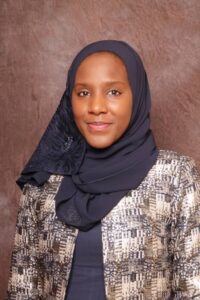

“Giving back is part and parcel of what we do,” she said, adding that the family believes its commercial success and philanthropic work are closely intertwined.
Beyond inheritance: a new model of succession
Corporate governance specialists say the announcement reflects a broader evolution in succession planning among founder-led businesses across emerging markets.
Rather than focusing exclusively on transferring assets to family members, many global entrepreneurs are creating institutional structures—including charitable foundations, endowments and trusts—to ensure their wealth continues generating social and economic value long after they leave active business.
Experts at the International Finance Corporation have consistently argued that effective succession planning is critical to the long-term sustainability of family-owned enterprises, especially in developing economies where such businesses account for a significant share of employment and investment. Increasingly, governance frameworks are expanding beyond ownership transition to include legacy, environmental and social impact.
Analysts say Dangote’s approach reflects this growing trend by combining family succession with structured philanthropy rather than treating them as separate objectives.
Building one of Africa’s largest philanthropic institutions
The planned commitment builds on more than three decades of organised philanthropy through the Aliko Dangote Foundation, established in 1994.
According to Halima, the foundation received an endowment of $1.25 billion about a decade ago and has since been strengthened with an additional $700 million, making it one of Africa’s largest privately funded charitable organisations.
Approximately 70 per cent of its annual interventions are concentrated in Nigeria, while another 20 per cent supports programmes across Africa, with the balance funding humanitarian initiatives globally.
Its activities span healthcare, education, nutrition, disaster relief, youth empowerment and economic development.
One of its most recognised interventions was its partnership with the Bill & Melinda Gates Foundation and northern Nigerian state governments in supporting Nigeria’s campaign against wild poliovirus, contributing to Africa’s certification as free of indigenous wild poliovirus transmission in 2020.
In March 2025, Dangote was recognised in TIME magazine’s inaugural TIME100 Philanthropy list, becoming the only Nigerian included among the “Titans” of global philanthropy alongside Michael Bloomberg, Oprah Winfrey, Warren Buffett and Melinda French Gates.
Wealth inequality raises expectations of billionaire giving
Dangote’s announcement comes as wealth inequality continues to widen across Africa, placing growing attention on the role wealthy individuals can play in complementing government-led development.
According to Oxfam, the wealth of Africa’s richest individuals has continued to grow significantly faster than incomes earned by the continent’s poorest households. Its 2025 inequality assessment found that the average income of Africa’s richest one per cent increased five times faster than that of the poorest 50 per cent since 2020.
Development economists argue that while philanthropy cannot substitute for effective public policy, it can provide catalytic capital for sectors where governments often face persistent funding constraints, including education, healthcare, nutrition, research and entrepreneurship.
The World Bank has repeatedly stressed that investments in human capital—particularly health and education—remain among the highest-return investments for long-term economic growth. Private philanthropy, experts note, can help accelerate such investments when strategically aligned with national development priorities.
Professor Pat Utomi, a political economist and founder of the Centre for Values in Leadership, has previously argued that Africa’s business leaders increasingly have a responsibility to build institutions that outlive them, noting that sustainable philanthropy should focus on strengthening systems rather than simply providing charitable relief.
More than charity
Development finance experts increasingly distinguish between traditional charity and strategic philanthropy.
Traditional giving often addresses immediate needs through donations, while strategic philanthropy seeks measurable long-term outcomes by investing in institutions, healthcare systems, education, innovation and economic opportunity.
Observers say the Aliko Dangote Foundation has increasingly adopted this latter model by supporting vaccination campaigns, nutrition programmes, educational initiatives and youth development rather than limiting interventions to one-off donations.
Below the Giving Pledge benchmark
Despite its scale, Dangote’s proposed allocation remains below the threshold associated with the Giving Pledge, founded by Warren Buffett, Bill Gates and Melinda French Gates, under which billionaires commit at least half of their wealth to philanthropy during their lifetime or through their estates.
Only a handful of African billionaires have joined the initiative, including South African businessman Patrice Motsepe and his wife Precious, Zimbabwean entrepreneurs Strive and Tsitsi Masiyiwa, and Tanzanian businessman Mohammed Dewji.
Philanthropy scholars caution, however, that formal membership of the Giving Pledge is less important than the effectiveness, transparency and long-term sustainability of charitable institutions.
A legacy beyond business
Dangote’s philanthropic record predates his latest announcement.
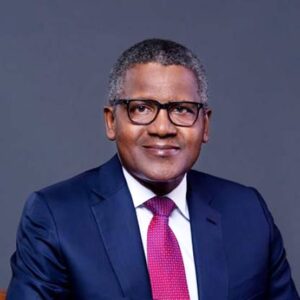

In 2014, the Dangote Group disclosed that he had donated approximately ₦30 billion to charitable causes across Africa within two years while outlining plans to expand the foundation’s continental footprint.
Today, the Aliko Dangote Foundation reportedly spends more than ₦50 billion annually on programmes across Africa, making it one of the continent’s largest private development institutions.
For governance experts, the proposed $11.6 billion commitment represents more than an act of generosity.
It illustrates how succession planning is evolving from the transfer of wealth to the transfer of purpose.
As Africa witnesses the emergence of a new generation of billionaires, the challenge may no longer be how much wealth is created, but how much of that wealth is institutionalised to address the continent’s most pressing development needs.
If implemented as planned, Dangote’s decision could become a defining benchmark for African philanthropy—demonstrating that legacy is measured not only by the size of an empire built, but also by the enduring social value it leaves behind.