Oil & Gas
Dangote Refinery exceeds design capacity, reaches 700,000 barrels per day

By Editor 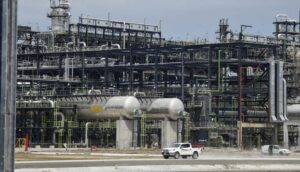

Nigeria’s ambition to become a major global refining hub received a significant boost as Dangote Petroleum Refinery & Petrochemicals announced that it has increased crude oil processing capacity to 700,000 barrels per day (bpd), surpassing its original nameplate capacity of 650,000 bpd.
The milestone, achieved during a performance test conducted by the refinery’s process licensors, underscores the facility’s growing operational efficiency and reinforces its status as the world’s largest single-train petroleum refinery.
The achievement comes less than two years after the refinery commenced fuel production and signals the rapid maturation of a project that is reshaping Nigeria’s downstream petroleum sector while strengthening Africa’s energy security.
According to the Vice President, Oil and Gas, Dangote Industries Limited, Devakumar Edwin, the increase in processing capacity forms part of a broader strategy to more than double the refinery’s throughput to 1.4 million barrels per day within the next 30 months.
“The refinery’s growth trajectory is not only about meeting domestic demand but positioning Nigeria as a major refining and export hub serving Africa and global markets,” Edwin said.
The increase in capacity further enhances the refinery’s ability to process larger volumes of crude oil while optimizing production of premium motor spirit (petrol), diesel, aviation fuel, liquefied petroleum gas (LPG), polypropylene and other petroleum products.
Industry analysts view the development as a major step toward reducing Africa’s dependence on imported refined products, a challenge that has historically exposed many countries to supply disruptions and foreign exchange pressures.
Owned by Nigerian businessman and philanthropist Aliko Dangote, the refinery has rapidly emerged as a key supplier of refined petroleum products to domestic and international markets.


Since commencing operations in 2024, the facility has expanded exports across Africa and into Europe, supplying markets in countries including the United Kingdom, France, Spain, Italy and the Netherlands. The refinery has also delivered gasoline to the United States and aviation fuel to Saudi Arabia, demonstrating its growing relevance in global energy trade.
The refinery’s rising output comes at a time when geopolitical tensions and supply chain disruptions in the Middle East continue to affect global energy markets. Industry observers note that several African countries increasingly view the Dangote Refinery as a strategic source of supply that can help strengthen regional energy security.
Its growing international footprint has also earned global recognition. In April, the refinery was identified by S&P Global Commodities Insights as the world’s largest exporter of jet fuel, reflecting its expanding role in international petroleum markets.
Beyond exports, the refinery has played a critical role in transforming Nigeria’s domestic fuel market by reducing dependence on imported petroleum products and easing pressure on scarce foreign exchange resources.
The expansion aligns with broader national objectives of maximizing value from Nigeria’s crude oil resources, creating jobs, supporting industrialization and strengthening the country’s balance of trade.
Growing production volumes have also attracted increased interest from international crude suppliers and commodity trading companies, with the refinery sourcing feedstock from both domestic producers and global markets to support its rising operational needs.
Looking ahead, Dangote’s ambition to expand capacity to 1.4 million barrels per day by 2028 could position the facility among the largest refining complexes in the world, further elevating Nigeria’s standing in the global energy value chain.
The refinery is also expected to deepen industrial development by ensuring reliable supplies of key petrochemical feedstocks such as polypropylene and, in the future, Linear Alkylbenzene (LAB), a critical raw material used in detergent manufacturing.
For Nigeria, the refinery’s latest capacity milestone represents more than an operational achievement. It signals the emergence of a strategic industrial asset capable of reshaping fuel markets, strengthening energy security, driving export earnings and accelerating the country’s transition from a crude oil exporter to a major processor and supplier of refined petroleum products.