Uncategorized
Air Peace grounds airbus A320 after ground handling vehicle damages engine at Lagos airport

By Our Reporter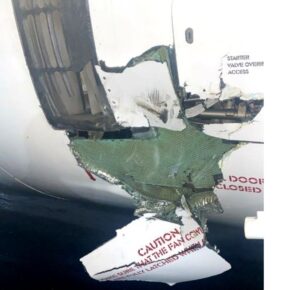

Air Peace has grounded one of its Airbus A320 aircraft after a baggage conveyor belt operated by a ground handling company collided with one of the aircraft’s engines at the Murtala Muhammed Airport Terminal 1 (MMA1) in Lagos, disrupting the airline’s domestic flight operations.
The incident occurred shortly after Flight P47427 arrived safely from Kano and all passengers had disembarked. No passengers or crew members were injured.
In a statement, Air Peace said the damaged aircraft had been scheduled to operate several domestic flights over the coming days. With the aircraft declared unserviceable, the airline said it is redeploying its fleet, a move expected to result in delays and possible flight cancellations on some routes.
Preliminary reports indicate that the accident occurred while a baggage conveyor belt belonging to the Nigerian Aviation Handling Company (NAHCO) was being positioned beside the aircraft.
According to initial findings, the conveyor belt operator, identified as Sunday, reportedly slumped while driving the equipment. After falling from the moving vehicle, the unattended conveyor belt continued moving and struck one of the aircraft’s engines.
The operator was immediately evacuated to the Federal Airports Authority of Nigeria (FAAN) clinic at the airport, where he is receiving medical treatment.
The collision caused significant damage to the aircraft’s engine, rendering the Airbus A320 unfit for service pending engineering assessment, repairs and regulatory clearance.
Air Peace apologised to passengers affected by the disruption, assuring them that its operations and customer service teams have been mobilised to provide alternative travel arrangements where possible.
“We sincerely apologise to our esteemed passengers whose travel plans may be affected by this unforeseen ground handling incident. Our operational and customer service teams are actively working to minimise the inconvenience by providing available alternatives and ensuring that affected passengers receive the necessary assistance,” the airline said.
The airline reiterated that safety remains its highest operational priority and said it is working closely with the ground handling company and aviation authorities to determine the cause of the incident and prevent a recurrence.
Industry experts noted that aircraft engine damage typically requires detailed technical inspections, replacement of damaged components, certification by licensed aviation engineers and regulatory approval before the aircraft can return to service. Depending on the severity of the damage and the availability of spare parts, repairs could take several days or even weeks.
To minimise passenger disruption, airlines often adjust schedules, deploy replacement aircraft where available and consolidate flights during such periods.
Aviation safety stakeholders described the incident as a reminder of the importance of strict ramp safety procedures, continuous supervision of airside operations and regular medical fitness assessments for personnel operating ground support equipment.
They also stressed the need for enhanced emergency safety mechanisms capable of automatically stopping moving airside vehicles if an operator becomes incapacitated.
Although the incident occurred after passengers had safely disembarked, experts said it highlights the significant operational and financial risks associated with ground handling accidents, including aircraft downtime, repair costs, flight cancellations and passenger compensation.
Investigations involving Air Peace, the ground handling company and relevant aviation authorities are ongoing. The findings are expected to determine the exact cause of the accident and recommend measures to strengthen safety procedures for airport ground handling operations.
Air Peace thanked passengers for their patience and understanding, assuring them that every effort is being made to restore normal flight schedules while maintaining the highest standards of operational safety.