Oil & Gas
Tinubu’s executive orders not to undermine NOGICD Act, says NCDMB




By Editor
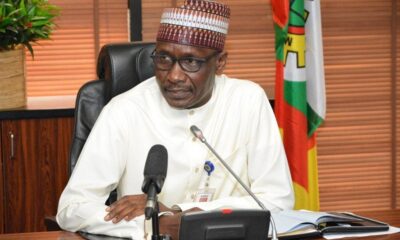
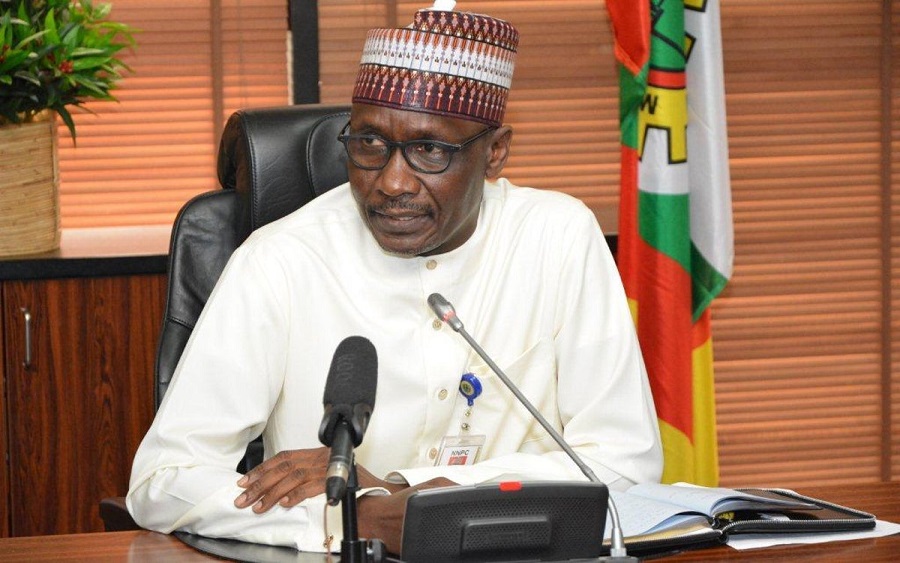
The Senate Committee on Public Accounts has ordered the arrest of former Group Chief Executive Officer of the Nigerian National Petroleum Company Limited (NNPCL), Mele Kyari, over his repeated failure to appear before it to respond to alleged financial discrepancies amounting to N210 trillion.
The directive was issued on Wednesday by the committee chairman, Senator Ibrahim Hassan Dankwambo, following a voice vote by members of the panel.
The committee is investigating audit queries covering the period between 2017 and 2023, during which it says massive financial figures in the NNPCL accounts remain insufficiently explained.
At the session, Senator Adams Oshiomhole urged the committee to invoke its constitutional powers, arguing that repeated absences by the former NNPCL chief undermined the integrity of the probe.
He questioned the justification for Kyari’s reported absence on health grounds in Germany, insisting that such explanations were not sufficient given the scale of the alleged financial issues and Nigeria’s fiscal pressures.
According to him, the committee must act decisively, especially as the audit queries were raised by professional auditors and not by public speculation.
The Vice Chairman of the committee, Senator Onyeka Peter Nwebonyi, also supported the move, stating that there was no further need to delay proceedings and calling for the issuance of an arrest warrant.
Following the deliberations, Chairman Dankwambo ruled that Kyari should be arrested and compelled to appear before the committee immediately.
The probe, which initially involved summons issued in March, also covered other former senior officials of the NNPCL, including former Chief Financial Officer Umar Ajiya Isa and former Group General Manager of NAPIMS, Bala Wunti.
The committee flagged two major financial components during its review of audit reports: N103 trillion allegedly linked to cumulative Joint Venture (JV) cash call spending since 2017, and N107 trillion recorded as “sundry receivables” in the December 2023 audited financial statements, reportedly owed by banks and other entities.
The panel had earlier directed the current NNPCL leadership under Bayo Ojulari to appear before it in July 2025 to respond to the audit queries, warning that failure to comply could also lead to enforcement actions.
With the latest order, the Senate Committee says it is intensifying efforts to compel accountability over the alleged financial discrepancies and ensure full compliance with its ongoing investigation into NNPCL’s audited accounts.
By Editor 
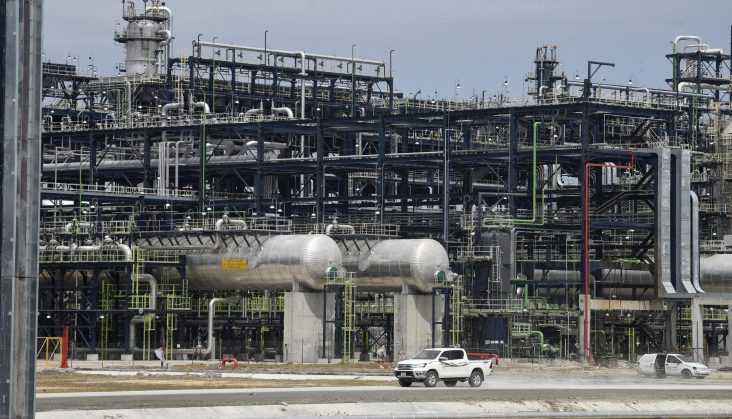
Nigeria’s ambition to become a major global refining hub received a significant boost as Dangote Petroleum Refinery & Petrochemicals announced that it has increased crude oil processing capacity to 700,000 barrels per day (bpd), surpassing its original nameplate capacity of 650,000 bpd.
The milestone, achieved during a performance test conducted by the refinery’s process licensors, underscores the facility’s growing operational efficiency and reinforces its status as the world’s largest single-train petroleum refinery.
The achievement comes less than two years after the refinery commenced fuel production and signals the rapid maturation of a project that is reshaping Nigeria’s downstream petroleum sector while strengthening Africa’s energy security.
According to the Vice President, Oil and Gas, Dangote Industries Limited, Devakumar Edwin, the increase in processing capacity forms part of a broader strategy to more than double the refinery’s throughput to 1.4 million barrels per day within the next 30 months.
“The refinery’s growth trajectory is not only about meeting domestic demand but positioning Nigeria as a major refining and export hub serving Africa and global markets,” Edwin said.
The increase in capacity further enhances the refinery’s ability to process larger volumes of crude oil while optimizing production of premium motor spirit (petrol), diesel, aviation fuel, liquefied petroleum gas (LPG), polypropylene and other petroleum products.
Industry analysts view the development as a major step toward reducing Africa’s dependence on imported refined products, a challenge that has historically exposed many countries to supply disruptions and foreign exchange pressures.
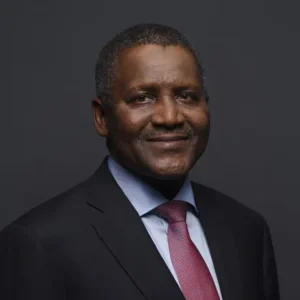
Owned by Nigerian businessman and philanthropist Aliko Dangote, the refinery has rapidly emerged as a key supplier of refined petroleum products to domestic and international markets.
Since commencing operations in 2024, the facility has expanded exports across Africa and into Europe, supplying markets in countries including the United Kingdom, France, Spain, Italy and the Netherlands. The refinery has also delivered gasoline to the United States and aviation fuel to Saudi Arabia, demonstrating its growing relevance in global energy trade.
The refinery’s rising output comes at a time when geopolitical tensions and supply chain disruptions in the Middle East continue to affect global energy markets. Industry observers note that several African countries increasingly view the Dangote Refinery as a strategic source of supply that can help strengthen regional energy security.
Its growing international footprint has also earned global recognition. In April, the refinery was identified by S&P Global Commodities Insights as the world’s largest exporter of jet fuel, reflecting its expanding role in international petroleum markets.
Beyond exports, the refinery has played a critical role in transforming Nigeria’s domestic fuel market by reducing dependence on imported petroleum products and easing pressure on scarce foreign exchange resources.
The expansion aligns with broader national objectives of maximizing value from Nigeria’s crude oil resources, creating jobs, supporting industrialization and strengthening the country’s balance of trade.
Growing production volumes have also attracted increased interest from international crude suppliers and commodity trading companies, with the refinery sourcing feedstock from both domestic producers and global markets to support its rising operational needs.
Looking ahead, Dangote’s ambition to expand capacity to 1.4 million barrels per day by 2028 could position the facility among the largest refining complexes in the world, further elevating Nigeria’s standing in the global energy value chain.
The refinery is also expected to deepen industrial development by ensuring reliable supplies of key petrochemical feedstocks such as polypropylene and, in the future, Linear Alkylbenzene (LAB), a critical raw material used in detergent manufacturing.
For Nigeria, the refinery’s latest capacity milestone represents more than an operational achievement. It signals the emergence of a strategic industrial asset capable of reshaping fuel markets, strengthening energy security, driving export earnings and accelerating the country’s transition from a crude oil exporter to a major processor and supplier of refined petroleum products.
By Ambrose Nnaji
Nigeria LNG Limited (NLNG) has described its Train 7 project as a major catalyst for Nigerian Content development and broader industrial growth in the country.
The company’s Managing Director and Chief Executive Officer, Adeleye Falade, made the statement during a panel session on Nigerian Content support, lessons, experiences, and success stories at the Nigerian Oil & Gas Midstream & Downstream Summit (NOGMDS) 2026 held in Lagos. Falade was represented by the Train 7 Project Manager, Ali Uwais.
According to Falade, the Train 7 project goes beyond expanding LNG production capacity, serving instead as “a practical model for intentional localisation of expertise” and a strong demonstration of how Nigerian Content can strengthen industrial capability while delivering projects at global standards.
He also praised the Nigerian Content Development and Monitoring Board (NCDMB) for organising the summit and sustaining initiatives aimed at advancing growth within Nigeria’s oil and gas industry.
Speaking during the session, Uwais highlighted key achievements recorded by the project, noting that Train 7 has surpassed 120 million man-hours and achieved about 92 per cent Nigerian Content participation. He said the milestone reflects NLNG’s deliberate efforts to deepen local capacity and expand indigenous participation across the project value chain.
He attributed the progress to extensive industry collaboration, structured Nigerian Content implementation plans, and targeted investments designed to strengthen local capabilities.
Drawing lessons from previous NLNG trains, Uwais explained that the Train 7 team adopted a strategic and data-driven approach to evaluate local capabilities and identify participation opportunities that meet international standards. According to him, this approach enabled greater local involvement and ensured Nigerian companies were integrated into project execution from the early stages.
He revealed that several fabrication processes previously handled overseas were successfully executed within Nigeria. Local companies, he said, fabricated pressure vessels, structural steel components, valves, blocks, pipes, lighting systems, cables, and painting materials used for the project.
Uwais added that NLNG intentionally identified promising local manufacturers and supported them in meeting international quality assurance standards rather than relying solely on conventional quality-control measures.
He also recalled collaborations with foreign technical partners that enabled Nigerian firms to transition from asbestos-based gaskets to safer carbon-graphite alternatives. The initiative, he noted, included equipment support and international testing certification aimed at strengthening local manufacturing capabilities.
According to Uwais, the interventions reflect NLNG’s broader philosophy of viewing Nigerian Content not merely as a regulatory requirement, but as a long-term development strategy capable of creating sustainable value beyond project delivery.
“Our focus has been on building lasting value. We have seen Nigerian companies participate actively in fabrication and manufacturing activities, while universities and research institutions are increasingly contributing through innovation, research, and technical development. These are critical foundations for sustainable industrial growth,” he said.
Train 7 remains one of Nigeria’s largest ongoing energy investments. Upon completion, the project is expected to increase NLNG’s production capacity from 22 million tonnes per annum to 30 million tonnes per annum, representing a 35 per cent rise in Nigeria’s LNG export capacity.
Discussions at the summit also underscored the need to sustain capability gains achieved through major projects by continuing investments in skills development, manufacturing capacity, and infrastructure.
Participants noted that beyond production milestones, Train 7’s long-term legacy may ultimately be defined by the industrial capacity, technical expertise, and national development it leaves behind.

NOG 2026: Nigeria to unveil first-ever gas, power infrastructure map to boost energy investment

Senate orders arrest of Mele Kyari over alleged N210tr NNPCL financial gaps

Consumer complaints trigger FCCPC enforcement action against PWAN
-

 Fashion9 years ago
These ’90s fashion trends are making a comeback in 2017
-
Entertainment9 years ago
The final 6 ‘Game of Thrones’ episodes might feel like a full season
-
Fashion9 years ago
According to Dior Couture, this taboo fashion accessory is back
-
Entertainment9 years ago
The old and New Edition cast comes together to perform
-
Business9 years ago
Uber and Lyft are finally available in all of New York State
-
Sports9 years ago
Steph Curry finally got the contract he deserves from the Warriors
-
Sports9 years ago
Phillies’ Aaron Altherr makes mind-boggling barehanded play
-
Entertainment9 years ago
Disney’s live-action Aladdin finally finds its stars