Oil & Gas
Dangote Refinery posts $4.7b profit, builds $6.7b cash reserves

By Ambrose Nnaji
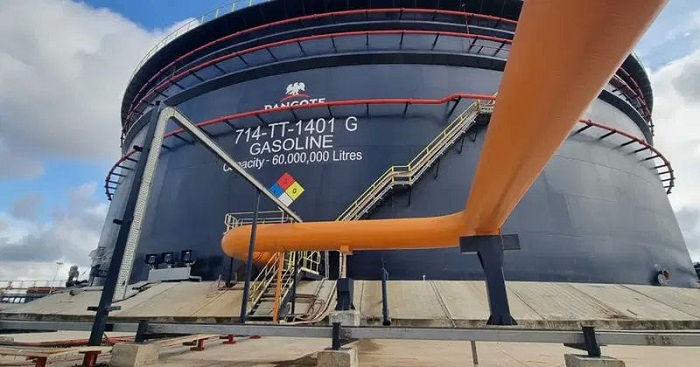
Dangote Petroleum Refinery and Petrochemicals recorded a $4.73 billion net profit in the first nine months of 2026, reversing a loss of $117.2 million in the corresponding period of 2025, as higher refining throughput, improved operational reliability and stronger refining margins drove a sharp increase in earnings.
The refinery’s unaudited financial results for the nine months ended September 30, released in Lagos on Tuesday, showed that revenue rose 144 per cent to $22.48 billion from $9.2 billion a year earlier, while earnings before interest, taxes, depreciation and amortisation (EBITDA) climbed to $5.52 billion from $627.6 million.
The results point to a significant shift in the financial performance of the 700,000-barrel-per-day facility, which has moved beyond its initial commissioning and production ramp-up phase towards more commercially established operations.
Beyond the revenue and profit growth, the refinery’s cash position strengthened considerably, with cash balances rising to $6.69 billion from $809.5 million in September 2025.
Its balance sheet also moved from a net debt position of $1.73 billion a year earlier to net cash of $650.8 million by September 2026, indicating that its cash and cash equivalents exceeded its reported debt obligations on a net basis.
The improvement in cash generation and balance-sheet strength comes as the company pursues an Initial Public Offering (IPO) intended to widen African participation in the ownership of one of the continent’s largest industrial investments.
The refinery’s operating cash flow rose more than tenfold to $3.68 billion in the nine-month period, compared with $364.7 million in the corresponding period of 2025.
The increase suggests that the company is generating substantially more cash from its operations, strengthening its capacity to finance working capital, meet financial obligations and support planned expansion.
Its EBITDA margin also expanded to 24.56 per cent from 6.83 per cent, reflecting improved earnings relative to revenue.
The combination of higher profitability, stronger operating cash flow and a move into net cash provides a more comprehensive picture of the refinery’s financial progress than revenue growth alone.
However, sustaining the performance will depend on the refinery’s ability to maintain operational reliability, manage crude supply and feedstock costs, preserve refining margins and convert its growing production capacity into consistent cash generation.
A breakdown of the cumulative results indicates that the refinery recorded a substantial contribution to revenue and earnings in the third quarter.
Revenue rose from $13.91 billion at the end of June to $22.48 billion at the end of September, implying third-quarter revenue of approximately $8.57 billion.
EBITDA increased from $2.60 billion at the half-year mark to $5.52 billion by September, suggesting third-quarter EBITDA of about $2.92 billion.
Net profit similarly rose from $1.82 billion at the end of June to $4.73 billion in September, indicating an additional $2.90 billion in earnings during the three months.
These quarterly figures are derived by subtracting the reported first-half results from the nine-month cumulative figures. They are not separately presented quarterly results.
The performance reflects the pace of the refinery’s commercial expansion and the impact of improved operating efficiency on its earnings.
Managing Director and Chief Executive Officer of Dangote Petroleum Refinery and Petrochemicals, David Bird, attributed the improvement to increased throughput, greater operational stability and stronger gross refining margins.
“Our third-quarter performance demonstrates the successful transition from commissioning and ramp-up activities to sustainable commercial operations,” Bird said.
He added that revenue increased to $22.5 billion from $9.2 billion in the corresponding period of 2025, while EBITDA rose to $5.5 billion from $627.6 million.
According to him, the improvement reflects higher throughput, better operational reliability and stronger gross refining margins.
Bird said the results demonstrated the strength of the refinery’s integrated business model and provided a foundation for its next phase of growth.
“These results reflect the strength of our integrated business model and provide a solid foundation as we progress through our IPO and execute our Vision 2030 growth strategy,” he said.
He added that the company’s expansion programme was underway, with plans to increase refining capacity, broaden its product portfolio and strengthen distribution networks across African markets.
The financial performance comes as the refinery seeks to broaden its ownership base through an IPO that could bring more African investors into the business.
The company recently secured approval from the Securities and Exchange Commission to extend the closing date of its share offer from October 13 to October 27, to accommodate growing investor interest and facilitate wider cross-border participation.
The offer comprises 4.1 billion ordinary shares at ₦525 per share, giving it a total value of approximately ₦2.15 trillion.
President and Chief Executive of Dangote Industries Limited, Aliko Dangote, had disclosed that subscriptions to the offer had exceeded the company’s original fundraising target.
He said the objective was to enable more Africans to participate in the refinery’s ownership rather than simply raise additional capital.
The latest results provide investors with additional information on the company’s revenue base, profitability, cash generation and balance-sheet position as they assess its financial prospects.
Nevertheless, the nine-month figures represent historical performance and do not, on their own, establish whether the refinery can sustain its current margins or deliver its expansion targets.
Investors will also need to consider the company’s valuation, future capital expenditure, crude procurement arrangements, operating costs, debt obligations and exposure to fluctuations in global oil prices and refining margins.
The ability to maintain strong cash generation while funding expansion will be particularly important as the refinery pursues its Vision 2030 strategy.
Located in the Lekki Free Zone in Lagos, Dangote Petroleum Refinery and Petrochemicals operates an integrated refining and petrochemical complex with an installed crude distillation capacity of 700,000 barrels per day.
The facility represents a major investment in Nigeria’s downstream petroleum industry, with potential implications for domestic fuel supply, imports, foreign-exchange demand and the development of associated petrochemical businesses.
Its financial performance also places greater attention on the relationship between refinery profitability and the wider economic benefits of domestic refining.
While higher throughput and stronger margins can improve the company’s earnings, the broader impact on Nigeria will depend on factors including the availability and cost of crude feedstock, domestic product pricing, distribution efficiency and the extent to which local refining reduces dependence on imported petroleum products.
For the company, the immediate challenge is to translate its improved financial position into sustained operational performance and profitable expansion.
For prospective shareholders, the central question is whether the earnings and cash generation recorded in the first nine months of 2026 can be maintained as the business expands its capacity and market reach.

By Ambrose Nnaji
Nigeria needs between $30 billion and $50 billion in fresh oil and gas investment by 2030 to expand processing capacity, boost gas-based industries, increase liquefied petroleum gas (LPG) supply and commercialise flare gas, the Nigerian Midstream and Downstream Petroleum Regulatory Authority (NMDPRA) has said.
The Authority also disclosed that petrol imports fell by about 54 per cent in a year, from 22.1 million litres per day in September 2025 to 10.2 million litres per day in September 2026, as domestic refineries increased their contribution to the country’s fuel supply.
Speaking ahead of the OTL Africa Downstream Energy Week 2026, in Lagos, the Authority Chief Executive, Rabiu Umar, said domestic refineries supplied approximately 74 per cent of petrol received into the market in September, compared with about 44 per cent in September 2025.
The figures highlight the growing contribution of local refining to Nigeria’s fuel supply, although the regulator warned that rising exports, inadequate strategic reserves and dependence on a major refinery present challenges to sustaining energy security.
Umar said Nigeria’s refining expansion had helped the country withstand international supply pressures, including disruptions associated with conflict in the Gulf and crude oil prices approaching $100 per barrel.
“Secure energy is energy we produce, move, store and price well ourselves,” he said, adding that the economic benefits would be greater when more value from the country’s energy resources remained within domestic and African economies.
However, the NMDPRA chief stressed that increased local production must be accompanied by adequate inventories, diversified supply sources, reliable crude feedstock and investment in transportation and storage infrastructure.
Despite the growth in domestic refining, the Authority said petrol consumption exceeded fresh supply in September, with the shortfall met from existing stocks.
According to the presentation, petrol supply averaged 38.7 million litres per day against consumption of 44.4 million litres per day.
Petrol stock cover stood at approximately 24 days, below the 30-day threshold, while cooking gas inventories were tighter, at about 16 days.
Diesel and aviation fuel stocks were more comfortable, with cover of approximately 50 days and 53 days respectively.
The Authority is targeting 30 to 45 days of product sufficiency as part of measures to strengthen the country’s capacity to withstand international price shocks, supply disruptions and national emergencies.
It plans to operationalise a National Strategic Stock programme through a pilot involving the Nigerian National Petroleum Company Limited (NNPC Ltd) at designated depots in Ibadan, Enugu and Suleja.
The initiative is expected to provide an additional buffer against disruptions and improve the country’s capacity to respond to sudden changes in fuel supply.
The regulator also plans to measure actual consumption at filling stations to improve demand forecasting and ensure that supply planning reflects market realities.
Umar acknowledged that domestic petrol volumes fell in September from their August peak as refinery exports increased.
He said the Authority would continue working with refiners and traders to ensure that growing exports did not undermine domestic availability.
The NMDPRA also reaffirmed that import licences would remain available to qualified operators under published, merit-based criteria, signalling that the expansion of local refining would not automatically exclude fuel importers from the market.
The presentation also highlighted the growing role of domestic refineries in supplying diesel and aviation fuel.
Domestic refineries accounted for approximately 93 per cent of diesel receipts in September, although total diesel receipts fell to 8.7 million litres per day, their lowest level in 13 months.
The Authority attributed the decline partly to high prices weighing on imports and domestic evacuation, adding that the trend required close monitoring.
Aviation turbine kerosene receipts, however, rose to 3.3 million litres per day in September, six per cent above August’s level.
The regulator said the expansion of domestic refining could reduce exposure to external supply disruptions and bring fuel supply closer to local consumers, including airlines and industrial users.
For businesses, the sustainability of these gains will depend on reliable product availability, competitive pricing and efficient transportation from refineries to consumption centres.
The NMDPRA said active domestic refining capacity had increased to approximately 682,000 barrels per day, compared with about 5,000 barrels per day in 2021.
The LPG market has also expanded, with supply rising by 50 per cent from 1.2 million metric tonnes in 2021 to 1.8 million metric tonnes.
The number of LPG depots increased from 28 to 35, while the number of compressed natural gas (CNG) compression facilities rose from 17 to 43.
CNG and liquefied natural gas autogas stations increased from 16 to 101 over the period, while gas distribution infrastructure expanded to 10 licensed operators, covering 692 kilometres and attracting reported investment of $639 million.
The Authority said the sector had avoided nationwide supply disruptions since deregulation, while the quality of petrol supplied in the country had improved to meet the 50 parts per million sulphur limit.
It added that monthly market data was being published to improve transparency and provide industry operators with a common basis for assessing market developments.
The NMDPRA, however, does not set pump prices, which remain a major concern for households and businesses.
Its stated priorities include expanding supply, promoting fair competition, improving product quality and ensuring that consumers have access to reliable market information.
Beyond refining, the regulator identified gas processing, transportation, fertiliser production and LPG supply as major investment opportunities.
Nigeria has approximately 215 trillion cubic feet of gas reserves and 37 billion barrels of crude oil reserves, according to the presentation.
Yet the country uses only about 52 per cent of its installed gas processing capacity of 16.2 billion cubic feet per day, leaving considerable scope for investment in infrastructure and utilisation.
The NMDPRA said the country’s gas sector would require additional capital to support industrial expansion, improve energy access and commercialise resources that are currently wasted through flaring.
Major infrastructure projects include the Ajaokuta-Kaduna-Kano (AKK) pipeline, the Oben-Obiafu-Obrikom (OB3) pipeline and the ELPS midline compressor.
The OB3 pipeline and ELPS midline compressor were reported to be nearing completion, while the AKK pipeline was more than 80 per cent complete as of September 2026.
When the relevant projects become operational, gas transportation capacity is expected to increase from 2.2 billion cubic feet per day to 4.2 billion cubic feet per day.
The expanded network is expected to improve the movement of gas from southern production areas to northern markets, supporting power generation, manufacturing and other industrial activities.
The regulator also highlighted investment opportunities in depots, jetties, coastal shipping and the rehabilitation of product pipelines through public-private partnerships.
It said the Midstream and Downstream Gas Infrastructure Fund would form part of the mechanisms for supporting infrastructure development.
Despite growth in the LPG market, demand continues to exceed supply.
The Authority estimated daily LPG consumption at 5,200 tonnes, against supply of approximately 4,700 tonnes, representing a demand-supply gap of about 500 tonnes per day.
The regulator said the imbalance presented opportunities for investors in processing, storage, distribution and transportation infrastructure.
It also identified expanding access to LPG as an important component of the country’s energy transition, particularly in replacing traditional cooking fuels.
The NMDPRA’s target is to increase LPG market capacity from 1.8 million metric tonnes annually to four million metric tonnes by 2030.
Other planned expansions include increasing Nigeria LNG’s capacity from 22 million to 30 million metric tonnes annually through Train 7, and expanding Indorama’s fertiliser capacity from 4.38 million to 5.84 million metric tonnes annually.
The Authority said these projects could strengthen domestic value addition, create jobs and support regional trade if backed by adequate infrastructure and predictable regulation.
As part of its reform agenda, the Authority announced the launch of Revision 2 of the Nigerian Gas Transportation Network Code at the opening ceremony of OTL Africa Downstream Energy Week on October 26.
The code establishes rules governing access to gas transportation infrastructure, capacity booking, nominations, network balancing, measurement and gas quality.
The revised framework is intended to provide clearer and more predictable rules for companies transporting gas through the network.
According to the presentation, the code builds on the original framework introduced in 2020 and the first revision in 2024.
The Authority said the latest revision was designed to improve access to the gas network, support transparent and cost-reflective transportation tariffs, and strengthen measurement at entry and exit points.
It also reported that imbalance on the Western Network had fallen by about 30 per cent in the first half of 2026.
The regulator said the revised framework could provide an initial basis for developing rules for a proposed trans-African pipeline network, helping to improve predictability for shippers, investors and partner countries.
The success of the framework will depend on effective implementation, transparent access arrangements and the confidence of companies investing in gas transportation and related infrastructure.
The Authority said it had signed a memorandum of understanding with the Federal Competition and Consumer Protection Commission to coordinate enforcement and improve consumer protection.
It has also consulted stakeholders on draft regulations aimed at preventing anti-competitive practices in the midstream and downstream petroleum sectors.
On product quality, the regulator said it was upgrading its laboratories to international ISO standards and working with Bureau Veritas and Ace Energy and Power Solutions towards establishing a National Reference Laboratory.
The Authority said the initiatives formed part of Project NEXUS, its programme to strengthen regulatory effectiveness through a firm, fair and fast approach.
It also plans to expand gas distribution licensing and improve transparency through regular publication of market data.
The NMDPRA said Nigeria’s progress in domestic refining would have greater economic value if supported by stronger regional cooperation.
Despite producing approximately five million barrels of crude oil per day, Africa imports about 70 per cent of the refined petroleum products it consumes, according to figures cited in the presentation.
The Authority identified five priorities for improving the continent’s energy security: refining more African crude within Africa, developing shared infrastructure, harmonising regulations, mobilising African capital and coordinating strategic reserves.
It proposed a phased approach to regulatory convergence in West Africa.
The first phase, covering 2026 and 2027, would focus on enforcing the Economic Community of West African States’ 50 ppm fuel standard, establishing regional data-sharing arrangements and conducting joint product-quality checks at borders.
The second phase, covering 2028 and 2029, would prioritise mutual recognition of licences and certificates, common cross-border pipeline and storage rules, and the application of African Continental Free Trade Area arrangements to refined products.
By 2030, the proposed framework envisages coordinated regional strategic stocks, a pathway towards cleaner 10 ppm AFRI-6 fuels and a credible West African reference price.
Umar said regulatory convergence should not prevent individual countries from protecting their domestic markets.
He argued that a more integrated regional market could reduce duplication, improve supply resilience and create a larger commercial base for African refiners and infrastructure investors.
The Authority identified five priorities for the coming period: strengthening supply security, ensuring reliable crude feedstock, expanding infrastructure, attracting investment and improving transparency.
It said these would be pursued through strategic stock development, the Domestic Crude Supply Obligation, the Naira-for-Crude initiative, public-private partnerships and more efficient licensing.
Umar called on refiners to prioritise domestic supply, while urging marketers and logistics operators to invest in storage and maintain fair business practices.
He also appealed to financiers, host communities, security agencies and African partners to support the infrastructure and regulatory reforms required to strengthen the sector.
For Nigeria, the challenge is no longer simply to increase domestic refining. It is to ensure that higher production translates into reliable fuel availability, competitive markets, stronger industrial output and investment returns.
The regulator’s position is that the country’s expanding refining capacity and gas resources can support a more resilient energy market. Delivering that outcome, however, will require sustained investment, adequate strategic stocks, dependable infrastructure and rules that give businesses confidence to commit long-term capital.

By Reporter
The Nigerian Content Development and Monitoring Board (NCDMB) and oil and gas industry stakeholders have begun working out how to implement recommendations from a study on manufacturing key industry components in Nigeria.
At a meeting in Port Harcourt, Rivers State, participants discussed practical steps to expand local manufacturing capacity, strengthen indigenous businesses and reduce dependence on imported components.
The NCDMB commissioned an industry team on July 7, 2022, to develop a strategy for local production of pumps, valves, flanges, gaskets, bolts and nuts, metering solutions, and instrument fittings. The team submitted its report on July 12, 2023.
The study followed the identification of these components as essential to advancing Nigerian content. They play a significant role in maintaining oil and gas production uptime and account for a substantial share of operating and capital expenditure.
Representing NCDMB Executive Secretary Engr. Felix Omatsola Ogbe, Olugbenga Sheba, General Manager of Institutional Development in the Capacity Building Directorate, said the Board was working to deepen local capacity, promote industrialisation and retain more value in Nigeria’s oil and gas industry.
He said building the ability to manufacture critical components locally would strengthen indigenous businesses, improve technical expertise and help Nigerian companies participate more fully in major oil and gas project supply chains.
Sheba cited the Nigerian Oil and Gas Industry Content Development Act, 2010, which provides for first consideration to be given to Nigerian goods and services. He said the Board would ensure that implementation of the study’s recommendations followed the Act and expanded opportunities for qualified Nigerian companies.
“Today’s rollout is not an isolated initiative; it is an integral pillar of our NCDMB 10-Year Strategic Roadmap, which targets achieving 70 per cent Nigerian Content by 2027,” he said.
Sheba said the initiative would advance the roadmap’s technical capability development pillar by addressing skills gaps, technology limitations and constraints on local manufacturing.

Priority areas include expanding infrastructure, delivering structured training, improving access to finance and strategic partnerships, and strengthening monitoring, compliance and enforcement, he said.
He urged the Board, indigenous manufacturers, operators, service companies, financial institutions and other industry players to work together, saying sustained collaboration would be vital to delivering results.
In a presentation, Nander Salmwang, Assistant Manager of Institutional Strengthening in the Capacity Building Directorate, said the assessment identified about 60 indigenous companies, but only 18 met the required criteria. He outlined challenges to growing local manufacturing and called for targeted measures to close the gaps.
Emmanuel Yusuf, Manager of the Nigerian Content Development Fund (NCDF), presented funding opportunities for indigenous companies and community contractors seeking to strengthen their operations and take part in the industry’s supply chain.
Participants also discussed the Nigerian Oil and Gas Park Scheme (NOGaPS) and its potential to support local manufacturing infrastructure and capabilities.
Presentations and discussions allowed stakeholders to review available opportunities, identify barriers to implementation and consider ways to increase indigenous participation in manufacturing critical oil and gas equipment and components.

By Editor
The Nigerian Content Development and Monitoring Board (NCDMB) and Dangote Group have called for a shift from regulatory compliance to sustainable investment in technology, financing and indigenous industrial capacity to deepen local participation in Nigeria’s oil and gas industry.
The organisations said developing reliable local supply chains, transferring technical expertise and improving access to financ e were critical to ensuring that investments in major industrial facilities generated lasting economic benefits for Nigeria.
The call was made at a strategic retreat of the NCDMB/Dangote Joint Technical Committee (JTC), in Lagos, themed “Beyond Compliance: Partnering for Sustainable Nigerian Content Development.”
The meeting brought together stakeholders from the oil and gas industry and relevant government institutions to address operational challenges, strengthen collaboration and expand indigenous participation across Nigeria’s energy value chain.
Speaking at the retreat, the Executive Secretary of NCDMB, Engr. Felix Omatsola Ogbe, represented by the Senior Technical Adviser and Director of Project Certification and Authorisation, Engr. Austin Uzoka, identified commitment, technology and financing as critical to building a sustainable Nigerian content ecosystem.
Ogbe challenged industry stakeholders to look beyond statutory obligations and address the long-term requirements for sustaining industrial investments, strengthening domestic supply chains and retaining more economic value within the country.
He said the development of world-class industrial facilities must be matched by investments in local capabilities to operate, maintain and support them.
Drawing attention to the challenges facing Nigeria’s publicly owned refineries, he stressed the need to build the domestic supply chains required to sustain the operations of the Dangote Refinery and other critical industrial assets.
According to him, Nigeria must develop the capacity to supply the goods, works and services required by major industrial facilities rather than depend excessively on foreign expertise and external suppliers.
He warned that weak domestic supply chains could undermine the economic benefits of industrial investments by allowing a substantial proportion of the resulting value to flow outside the country.
Ogbe also emphasised the importance of developing Nigerian expertise in industrial operations, maintenance and technology, arguing that local content must deliver capabilities that remain within the country over the long term.
On financing, he identified high interest rates and delays in accessing funds as significant constraints facing indigenous businesses seeking to execute projects, expand operations and compete effectively in the oil and gas industry.
He urged stakeholders to consider how Nigeria could nurture a new generation of large-scale indigenous industrialists and support investors seeking to establish refineries and related industrial facilities.
While acknowledging Dangote Group’s contribution to industrial development, he called for a supportive business environment in which emerging Nigerian investors could also succeed.
He said a stronger domestic refining industry would enhance Nigeria’s position in the regional and global oil and gas markets.
NCDMB reiterated its commitment to creating an enabling environment for Nigerian businesses to develop technical competence, access industry opportunities and compete across the oil and gas value chain.
In a separate presentation, the Director of Planning, Research and Statistics at NCDMB and Chairman of the NCDMB/Dangote JTC, Omomehin Ajimijaye, urged contractors, vendors and service providers operating within the Dangote business ecosystem to comply with Nigerian content requirements and register on the Nigerian Oil and Gas Industry Joint Qualification System (NOGICJQS).
He said the Board’s regulatory framework was designed to promote business growth and indigenous participation rather than create unnecessary bureaucratic obstacles.
Ajimijaye identified four key areas of compliance: Nigerian content planning, workforce localisation, local procurement and capacity development.
He explained that companies bidding for projects were expected to submit Nigerian content plans demonstrating how they intended to maximise indigenous participation.
Employers were also required to prioritise qualified Nigerians, procure locally available goods and services, and invest in skills development and technology transfer.
On expatriate employment, he said foreign personnel could be engaged where genuine skills gaps existed, but companies were expected to work with the Board to establish those gaps and develop succession plans to prepare Nigerians to assume the positions over time.
Ajimijaye described NOGICJQS as an important digital platform for supplier registration, prequalification, capacity verification and validation of technical expertise.
He said reliable industry data would enable NCDMB to identify skills shortages, connect businesses with qualified professionals and direct training investments towards areas of greatest need.
He commended Dangote Group for collaborating with the Board since around 2019 to develop Nigerian capacity through training at local and overseas institutions.
Some beneficiaries of the programmes, he said, had subsequently secured employment within the group’s businesses.
Ajimijaye also called for sustained investment in research and development to stimulate indigenous innovation, improve competitiveness and enable Nigerian companies to export technical expertise.
He disclosed that Nigerian content interventions had retained more than $10bn in the Nigerian economy, generated over 50,000 direct and indirect jobs, and supported more than 50 million man-hours of training.
However, he said in-country value retention stood at approximately 61 per cent, below the 70 per cent target, highlighting the need for stronger collaboration among regulators, operators and service providers.
He urged industry players to view Nigerian content as an opportunity to expand their businesses, develop technical expertise and strengthen the competitiveness of the domestic energy industry.
In his welcome address, the Group Vice President of Dangote Group, Edwin Devakumar, called for a fundamental shift from a compliance-driven approach to one based on national responsibility, ownership and commitment.

He argued that laws and regulations alone could not guarantee sustainable Nigerian content unless businesses, individuals and institutions genuinely embraced the responsibility of building the country’s productive capacity.
“For sustainable Nigerian content development to succeed, it must not be seen as a regulatory burden. Every individual must regard it as something they genuinely want to do from the bottom of their heart,” he said.
Devakumar maintained that local content should extend beyond sourcing raw materials to encompass skills transfer, workforce development and the growth of indigenous contractors into enterprises capable of executing increasingly complex projects.
The Director of Legal Services at NCDMB, Naboth Onyesoh, called for stronger coordination among government institutions to ensure that investment promotion, petroleum regulation and Nigerian content compliance worked together to advance national economic interests.
He said inter-agency engagement should clarify statutory responsibilities, eliminate unnecessary duplication and produce practical solutions to operational challenges.
Onyesoh addressed the regulatory responsibilities of the Oil and Gas Free Zones Authority (OGFZA), explaining that its investment-promotion mandate did not supersede the statutory responsibilities of other government institutions.
He said incentives designed to attract investment and improve the ease of doing business in free zones did not exempt operators from applicable federal laws.
Depending on the nature of their operations, petroleum businesses remained subject to the relevant requirements of the Nigerian Upstream Petroleum Regulatory Commission, the Nigerian Midstream and Downstream Petroleum Regulatory Authority and NCDMB.
He also highlighted the roles of the Central Bank of Nigeria, customs and immigration authorities in facilitating financial transactions, monitoring goods and ensuring compliance with applicable regulations.
Reaffirming the importance of the Nigerian Oil and Gas Industry Content Development Act, 2010, Onyesoh said the legislation remained central to promoting indigenous participation, technology transfer, employment and domestic value retention.
He cautioned against interpretations of free-zone incentives that could exclude companies operating within the zones from contributing to local capacity development and the growth of Nigerian businesses.
“An incentive regime is a business advantage; it is not a regulatory exception,” he said.

Onyesoh also highlighted the Board’s efforts to strengthen indigenous maritime capacity through the Nigerian Content Intervention Fund, which supports local companies in acquiring vessels and expanding their operations.
He disclosed that the Nigerian Content Fund was partnering with Nigeria LNG Limited on a shipyard project at Snake Island to strengthen domestic industrial capacity.
He also commended the Nigerian Maritime Administration and Safety Agency for collaborating with NCDMB on vessel verification and indigenous participation in maritime operations.
Onyesoh urged OGFZA and other government agencies to intensify engagement, share information and jointly resolve operational challenges.
He said coordinated regulation would improve the ease of doing business, strengthen investor confidence, create jobs and ensure that Nigeria derived greater economic benefits from its oil and gas resources.
Earlier, the Alternate Chairperson of the NCDMB/Dangote JTC, Ebele Oputa, described the retreat as a gathering of stakeholders united by the objective of placing Nigerians at the centre of industrial development.
She acknowledged the contributions of participating government agencies and commended Devakumar for his longstanding commitment to Nigeria and investment in young Nigerians.
Oputa noted that his more than 33 years in the country and contributions to Nigerian content development had helped advance the collaboration between the Board and Dangote Group.

Nigeria’s $50b energy investment gap: Refining gains, gas infrastructure, supply risks

NCDMB targets local production of critical oil, gas components

NCDMB, Dangote push beyond compliance as local content retention hits 61%

-
 News7 months ago
Investor confidence lifts Guinness Nigeria above ₦1trn market cap
-

 News11 months ago
Tinubu opens first stretch of Lagos–Calabar Coastal Highway, hints on ₦trillion legacy roads push
-

 News4 months ago
HEDA demands probe into alleged ₦1bn PFIPC budget allocation
-

 Business4 months ago
Villa of Love bets on interactive digital engagement with ₦100m entertainment platform
-

 Business3 months ago
BREAKING: RenCap says CBN HoldCo rule could trigger ₦1.7tn capital raise by banks
-

 Banking3 months ago
Nigerian pension funds anchor ₦20.69bn FCMB-TLG private debt raise
-
Business3 months ago
First HoldCo posts record ₦653.5bn H1 profit as shares hit 10% gain
-

 News4 months ago
Nigeria Customs posts ₦3.35tn revenue, intensifies anti-smuggling operations