Oil & Gas
Dangote Refinery cuts PMS price by N200 in one month, eyes further relief


By Editor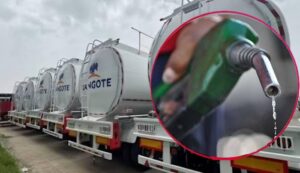
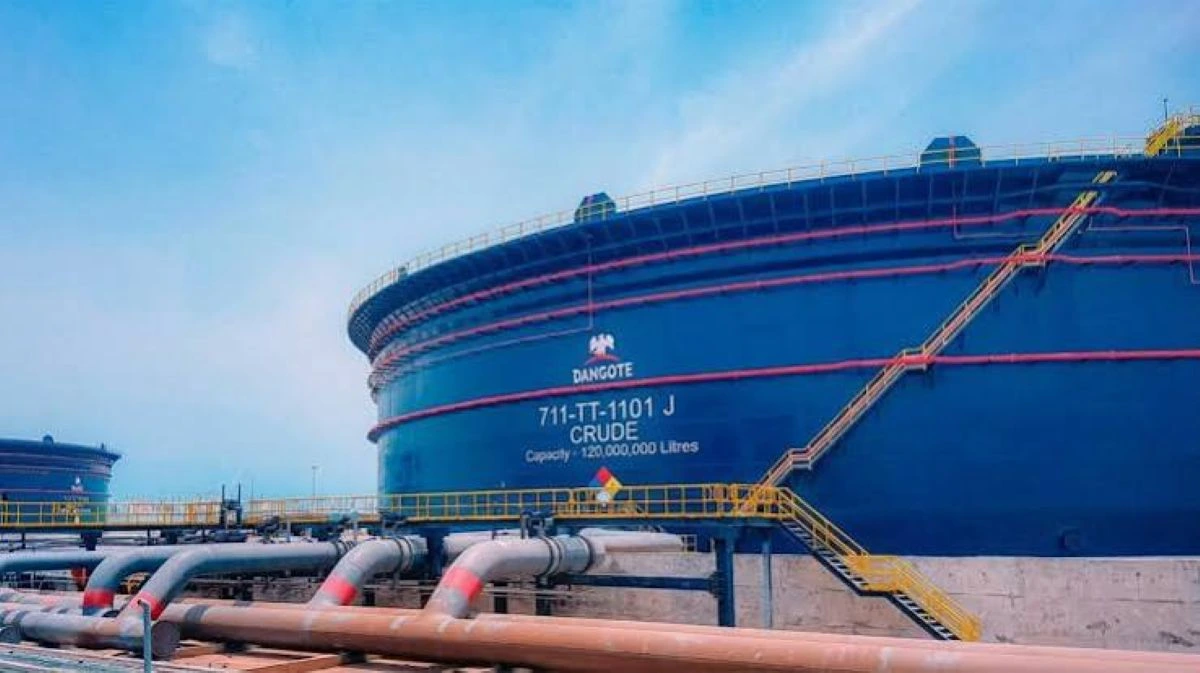
Dangote Petroleum Refinery & Petrochemicals has announced another reduction in the ex-depot price of Premium Motor Spirit (PMS), marking the fourth cut within a month as the company said it is passing lower production costs to consumers despite still refining crude purchased at significantly higher international prices.
The latest N50 per litre reduction lowers the refinery’s ex-depot price of petrol to N1,075 per litre and brings the cumulative reduction in PMS prices to N200 per litre since May 30, 2026.
Within the same period, the refinery also cut the ex-depot price of Automotive Gas Oil (AGO), commonly known as diesel, by N300 per litre and that of Jet A1 aviation fuel by N520 per litre.
According to the company, the successive reductions underscore its commitment to ensuring Nigerians benefit from favourable market conditions while sustaining the long-term viability of domestic refining operations.
In a statement issued on Thursday, the refinery explained that petroleum product prices cannot immediately reflect daily movements in international crude oil prices because crude oil is purchased weeks or months before it is refined.
It noted that the petroleum products currently being supplied to the market are being produced from crude inventories acquired when international oil prices were considerably higher.
The refinery disclosed that the average landed cost of crude processed was about $124.80 per barrel in May and $95.25 per barrel in June, compared with the current international benchmark price of about $71.01 per barrel.
It also clarified that its crude procurement costs are not determined solely by the widely quoted ICE Brent benchmark.
Instead, it said crude is purchased on a Dated Brent basis, with additional costs such as market premiums, freight and logistics charges, resulting in actual feedstock costs that are significantly higher than benchmark prices.
Despite the elevated crude acquisition costs, Dangote Refinery said it deliberately absorbed a substantial portion of the increase instead of passing the full burden to consumers, in a bid to stabilise the domestic market and shield Nigerians from volatility in global energy prices.
The company added that this pricing strategy has helped keep petroleum product prices in Nigeria below those of neighbouring countries, even after taxes are considered.
It noted that as cheaper crude cargoes gradually replace higher-cost inventories in its production cycle, the resulting cost savings are being transferred to consumers through phased price reductions.
“Today’s N50 per litre reduction is the fourth price cut in one month, bringing cumulative reductions to over N200 per litre on PMS. This approach ensures that pricing decisions are anchored on actual production economics and inventory costs rather than short-term fluctuations in international oil markets,” the company said.
It added that domestic refining has become a stabilising force for Nigeria’s energy market.
“Nigeria today benefits from the stabilising role of domestic refining capacity. The Dangote Petroleum Refinery currently supplies volumes sufficient to meet national demand, helping to strengthen energy security, eliminate dependence on imports, conserve foreign exchange and provide greater price stability for consumers and businesses.”
The refinery expressed confidence that if international crude prices remain favourable and lower-cost feedstock continues to replace more expensive inventories, Nigerians should expect further moderation in petroleum product prices.
Dangote Petroleum Refinery reiterated its commitment to supplying high-quality, internationally certified petroleum products at competitive prices while supporting Nigeria’s economic growth and the long-term development of the downstream petroleum sector.

By Ambrose Nnaji
The Society of Petroleum Engineers (SPE), Nigerian Council, has warned that Nigeria’s ambition to increase crude oil production to three million barrels per day by 2030 will depend less on the award of new oil blocks and more on the country’s ability to rapidly execute projects, mobilise investment, deploy technology and strengthen indigenous operators.
Chairman of the SPE Nigerian Council, Francis Nwaochei, who is also Deputy General Manager, Partners Relations and Regulatory Affairs at Chevron Nigeria Limited, said the country’s energy sector has entered a decisive phase where operational execution, rather than policy announcements, will determine whether recent reforms translate into increased production and economic growth.
Speaking ahead of the 49th Nigerian Annual International Conference and Exhibition (NAICE 2026), scheduled for August 3-5, in Lagos, Nwaochei said this year’s conference theme, “Thriving in the Evolving Global Energy Landscape: Collaborative Growth and Resilience,” reflects the realities confronting Nigeria and Africa’s energy industry.
According to him, rapid changes in global investment patterns, technology adoption, geopolitical dynamics and decarbonisation policies require African producers to pursue energy security and environmental sustainability simultaneously rather than treating them as competing priorities.
He argued that resilience for Africa should no longer be viewed merely as protection against market shocks but as a competitive strategy capable of attracting investment, reducing costs and expanding access to energy.
“Our continent faces the dual challenge of ending energy poverty while accelerating industrialisation. Achieving both requires collaboration among regulators, operators, financiers, technology developers and service providers to reduce operating costs, de-risk investments and unlock capital,” he said.
Nwaochei described the recent conclusion of Nigeria’s 2025 licensing round by the Nigerian Upstream Petroleum Regulatory Commission (NUPRC) as an important milestone but cautioned that the award of exploration licences represents only the beginning of the investment cycle.
He commended the Federal Government, the Ministry of Petroleum Resources and the NUPRC for conducting what he described as a transparent, automated and market-driven licensing process under the Petroleum Industry Act (PIA).
However, he stressed that the real challenge now lies in converting the newly awarded assets into commercially viable production.
“The licensing round is only the catalyst. Turning those licences into producing assets requires rapid technology deployment, reservoir management, disciplined capital mobilisation and efficient project execution,” he said.
According to him, discussions at NAICE 2026 will focus on the commercial and technical pathways required to move the newly awarded assets from exploration to production while supporting Nigeria’s production target.
Nwaochei noted that indigenous operators have become increasingly central to Nigeria’s upstream industry following the ongoing divestment of international oil companies from onshore and shallow-water assets.
He said local companies now account for about 60 per cent of national oil production and must demonstrate stronger operational capability, financial discipline and environmental stewardship as they assume responsibility for ageing assets and decommissioning obligations.
“The success of indigenous operators will largely determine Nigeria’s future production growth,” he added.
Beyond upstream operations, the SPE chairman identified domestic refining as another strategic pillar of Nigeria’s energy security.
He said the expansion of large-scale private refineries alongside modular refining projects presents an opportunity to transform Nigeria into a regional refining hub, provided government succeeds in balancing domestic crude supply obligations with commercially sustainable pricing for producers.
Addressing concerns over Nigeria’s OPEC production quota, Nwaochei argued that the country’s immediate priority should be building sustainable production capacity rather than focusing solely on quota limitations.
He also identified natural gas and condensate production, which are not subject to OPEC crude quotas, as areas offering immediate opportunities for production growth and increased revenue.
Financing remains one of the biggest constraints to Africa’s energy ambitions, he said, particularly as many Western commercial banks continue reducing exposure to oil and gas projects because of Environmental, Social and Governance (ESG) policies.
Nwaochei therefore urged African governments and financial institutions to strengthen regional financing mechanisms capable of supporting large-scale energy investments.
He expressed optimism that the planned commencement of the Africa Energy Bank later this year would provide an alternative source of capital for oil and gas projects across the continent.

On infrastructure security, he called for greater deployment of digital surveillance systems, fibre-optic monitoring, automated metering and artificial intelligence to protect critical oil and gas assets.
He noted, however, that technology alone cannot solve the challenge of pipeline vandalism and crude oil theft without meaningful implementation of the Host Community Development Trusts established under the Petroleum Industry Act.
The SPE chairman also stressed that Africa’s energy transition must reflect the continent’s developmental realities.
According to him, hydrocarbons will continue to play a critical role in industrialisation, manufacturing and electricity generation for decades, even as producers work to reduce carbon emissions and improve environmental performance.
He urged operators to eliminate routine gas flaring, reduce methane emissions and adopt cleaner production technologies to ensure Nigerian crude remains competitive in international markets that are increasingly imposing carbon-related trade measures.
Nwaochei said NAICE 2026 will feature more than 600 peer-reviewed technical papers covering reservoir management, drilling engineering, artificial intelligence, deep-water operations, carbon capture and other emerging technologies.
The conference will also host strategic policy discussions on fiscal reforms, investment attraction, local content development, indigenous operators, energy financing and resilient energy systems, alongside exhibitions showcasing digital energy technologies, subsea innovations and operational equipment.
He added that technical recommendations emerging from the conference would be compiled into an official communiqué for submission to government, regulators and industry stakeholders as part of efforts to strengthen evidence-based policy implementation.
According to him, the conference is intended not merely as an industry gathering but as a platform for developing practical solutions that will help Nigeria and Africa build a more competitive, resilient and sustainable energy sector.
Responding to questions on collaboration and technology in driving industry growth, Nwaochei said collaboration can only succeed when all stakeholders share common objectives adding that once government, regulators, operators, investors and service companies align around the same national goals, cooperation becomes much easier.
“The Federal Government has made its ambition very clear by setting a target of producing three million barrels of oil per day. You can already see every segment of the industry aligning with that objective.
“Operators are increasing drilling activities, regulators are repositioning themselves as business enablers through supportive policies, and the industry is working towards a common goal. That is what true collaboration looks like.”
Nwaochei stressed that technology remains the single most important factor in improving the competitiveness of Nigeria’s energy industry.
“Every country that has advanced industrially has done so through technology. The same applies to Nigeria’s energy industry.
“If we improve our technological capabilities in reservoir engineering, production, gas development, downstream operations and other areas, we will significantly improve productivity and competitiveness.
“The telecommunications revolution transformed Nigeria through technology. We need a similar transformation across the petroleum industry. Countries such as China and Japan have demonstrated what technological innovation can achieve.”, he said.
SPE Council Secretary, Obianuju Igbokwe urged young professionals to develop both technical and personal leadership skills.
“Technical competence will take you far, but personal development will take you even further.
Identify professionals whose careers you admire, study how they work, understand their strengths and deliberately build those qualities in yourself.
Young professionals should define the kind of reputation they want to build and intentionally develop the skills needed to achieve it.”, Igbokwe said.
Also, the SPE Chief of Staff, Choja Ojanomare said NAICE should be viewed as a long-term institution rather than an annual event.
“NAICE is not a sprint; it is a marathon that has been running for nearly five decades.
It has consistently brought together government, regulators, industry players and academia to exchange ideas that have shaped Nigeria’s energy policies over the years.
“The conference has contributed significantly to the evolution of Nigeria’s petroleum industry, and its impact extends well beyond a single year.”, he said.

Caption:
L-R:
The Chairman, Planning Committee, Nigeria Annual International Conference and Exhibition (NAICE) 2026, Capt. Aris John-Emezi; Secretary, Society of Petroleum Engineers (SPE) Nigeria Council, Obianuju Igbokwe; Chairman, Francis Nwaochei; Vice Chairman, Etta Agbor; and Vice Chairman-elect, SPE Nigeria Council, Oladipo Ashafa during a press conference to announce the upcoming SPE-NAICE 2026, in Lagos.
By Ambrose Nnaji
Dangote Petroleum Refinery has confirmed the successful completion of a $2.5 billion private placement, marking one of the largest corporate fundraising transactions ever undertaken by an African company.
While announcing the development, the company described the equity raise as a major milestone in its long-term growth strategy and an important step toward strengthening its capital base.
According to Dangote Refinery, the private placement was oversubscribed, reflecting strong investor confidence in the business and its expansion plans. The proceeds will be used to support the continued expansion of the Dangote Petroleum Refinery and Petrochemicals complex.
“The Private Placement achieved 3.7 times subscription relative to the initial offer size and resulted in the issuance and allotment of approximately US$2.5 billion in new equity,” the company said in a statement.
It added that the funds raised would support the ongoing expansion of its refining and petrochemical operations.
President and Chief Executive Officer of Dangote Industries Limited, Aliko Dangote, described the transaction as a strategic move to broaden the company’s shareholder base while strengthening its financial capacity.
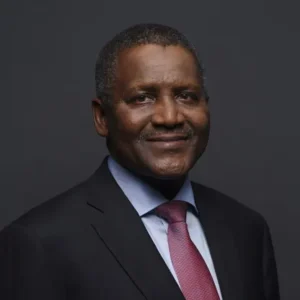
“This is a strategic step to deepen and further institutionalise the Enterprise’s shareholder base, while raising capital to complement our internal cash flows and external funding,” Dangote said.
He added that the fundraising underscores the company’s commitment to expanding domestic refining and petrochemical capacity, reducing Africa’s dependence on imported refined petroleum products, and enhancing the continent’s energy security.
Managing Director and Chief Executive Officer of Dangote Petroleum Refinery, David Bird, said the overwhelming investor response reflected confidence in the company’s leadership, operational performance and long-term growth prospects.
The fundraising follows months of market interest in the refinery’s capital-raising programme. Earlier reports indicated that investor subscriptions had exceeded $2 billion before the offer closed, with investments structured around a minimum subscription threshold and a one-year lock-up period for allotted shares.
The successful private placement also comes ahead of the refinery’s planned initial public offering (IPO), expected to be one of the largest listings by an African industrial company. Market observers believe the fresh capital will further strengthen the company’s balance sheet as it prepares for its next phase of growth.
Beyond the planned IPO, Dangote Petroleum Refinery has continued to outline ambitious expansion plans aimed at increasing refining capacity and growing its petrochemicals business. Aliko Dangote has also expressed interest in replicating the refinery model in other African countries, including Kenya, as part of a broader strategy to deepen industrial investments across the continent.
By 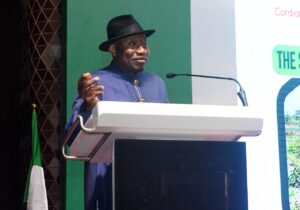 Reporter
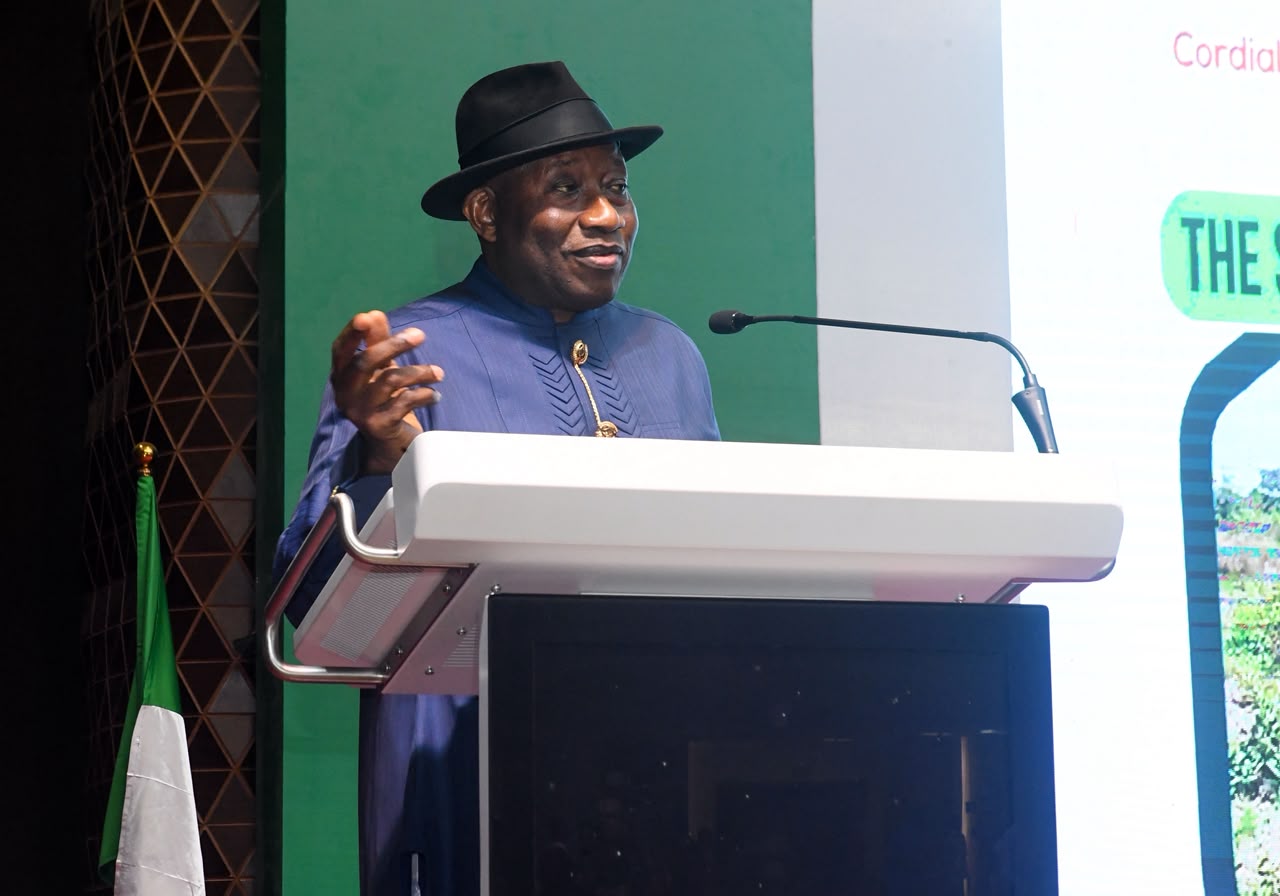
Former President Goodluck Jonathan has credited China’s success in developing a strong domestic oil and gas industry as the inspiration behind Nigeria’s local content policy, while commending the Nigerian Content Development and Monitoring Board (NCDMB) for significantly expanding indigenous participation in the sector.
Speaking at the SweetCrude Dialogue 2026, themed “Through the Python’s Eye: 70 Years of Oil and Gas Production,” held at the Nigerian Content Tower in Yenagoa, Bayelsa State, Jonathan said he remained fulfilled by signing the Nigerian Oil and Gas Industry Content Development (NOGICD) Act into law in April 2010.
He recalled that the idea for the legislation was shaped by a visit to China while serving as Deputy Governor of Bayelsa State, where he observed that virtually every component used in the country’s oil industry was sourced locally.
“Almost everything used in the Chinese oil industry was sourced locally,” Jonathan said, noting that China’s remarkable progress in the petroleum sector followed the discovery of the Daqing Oilfield in 1959—just three years after crude oil was first discovered in Oloibiri, present-day Bayelsa State.
The former president said the contrast between China’s industrial development and Nigeria’s dependence on foreign technology, expertise, equipment and production inputs left a lasting impression on him.
According to Jonathan, the experience reinforced the need for Nigeria to establish a legal framework that would promote local participation, build indigenous capacity and retain greater value from its oil and gas resources.
He praised the NCDMB for delivering on the objectives of the Act and commended the organisers of the dialogue, De Mangrove Conversations, led by Biobele Da-Wariboko, for creating a platform for stakeholders to reflect on the industry’s evolution.
Jonathan also stressed the importance of sustained conversations around host communities and governance challenges, noting that the Petroleum Industry Act (PIA) has made notable progress in addressing some longstanding issues.
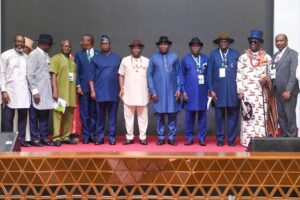
Representing the Executive Secretary of the NCDMB, Engr. Felix Omatsola Ogbe, the Board’s Director of Monitoring and Evaluation, Esueme Dan Kikile, described the conference theme as an opportunity to assess the industry’s journey, review achievements and define the future of Nigeria’s energy sector.
He acknowledged Jonathan’s role in establishing the NOGICD Act and the NCDMB, noting that local content participation has increased from less than five per cent in 2010 to 61 per cent in 2026.
According to him, the Board has consistently pursued its mandate of increasing indigenous participation by enforcing local content requirements, building local capacity and ensuring more industry expenditure remains within the Nigerian economy.
He said the Board’s Human Capacity Development Initiative has compelled operators to dedicate resources to training Nigerian engineers, geologists, technicians and seafarers, while its flagship graduate training programmes have created a steady pipeline of industry-ready professionals.
Kikile also highlighted several strategic projects undertaken by the Board, including the 17-storey Nigerian Content Tower in Yenagoa, the Oloibiri Museum and Research Centre, the Nigerian Oil and Gas Park Scheme in Bayelsa and Cross River states, gas processing infrastructure in Gbarain, the Polaku Gas Project, the Brass Shipyard and alignment with the Nigeria LNG Fertiliser Project.
He added that the NCDMB’s Back-to-the-Creek Initiative is helping to extend development opportunities to grassroots communities directly impacted by oil and gas operations.
“By anchoring these transformative initiatives, human capital development and high-level investments, the Board is transitioning the cradle of Nigeria’s oil history from a mere extraction zone into an active centre of commercial, technological and industrial value retention,” he said.
Bayelsa State Governor Douye Diri, represented by Deputy Governor Lawrence Ewhrudjakpo Akpe, said Bayelsa was the appropriate venue for discussions marking 70 years of Nigeria’s petroleum industry, given its historical significance as the birthplace of the country’s oil industry.
He commended De Mangrove Conversations for promoting dialogue on the development of the Niger Delta and Nigeria’s oil and gas sector.
Delta State Governor Sheriff Oborevwori, represented by his Chief of Staff, Johnson Erijo, urged industry stakeholders to renew their commitment to host communities while evaluating the sector’s progress over the past seven decades.
Also speaking, the Managing Director of the Niger Delta Development Commission (NDDC), represented by Chief of Staff Julius Oworibo, said the dialogue provided an opportunity to reflect on the gains recorded in oil-producing communities and identify areas requiring further intervention.
Delivering the keynote address, Professor Ibibia Lucky Worika of the Centre for Advanced Law Research, Rivers State University, said oil had shaped Nigeria’s economy, politics, foreign relations and development over the last 70 years, while also contributing to environmental degradation and conflict in the Niger Delta.
He argued that environmental justice must remain central to future energy policies, describing it as “a constitutional, moral and developmental imperative.”
Earlier, the convener of De Mangrove Conversations, Biobele Da-Wariboko, said the initiative was established to preserve the history and contributions of the Niger Delta to Nigeria’s economic development and prevent them from being overshadowed by political and ethnic divisions.

Africa must finance its own energy future as Nigeria pursues 3mbpd target — SPE

PTML to pilot Customs’ new MIS File Tracker as Miko targets seamless nationwide rollout

Dangote picks London over Dubai for cement listing, cites faster approval process
-

 Fashion9 years ago
These ’90s fashion trends are making a comeback in 2017
-
Entertainment9 years ago
The final 6 ‘Game of Thrones’ episodes might feel like a full season
-
Fashion9 years ago
According to Dior Couture, this taboo fashion accessory is back
-
Sports9 years ago
Steph Curry finally got the contract he deserves from the Warriors
-
Entertainment9 years ago
The old and New Edition cast comes together to perform
-
Business9 years ago
Uber and Lyft are finally available in all of New York State
-
Sports9 years ago
Phillies’ Aaron Altherr makes mind-boggling barehanded play
-
Entertainment9 years ago
Disney’s live-action Aladdin finally finds its stars