News
Tinubu opens first stretch of Lagos–Calabar Coastal Highway, hints on ₦trillion legacy roads push

By Editor
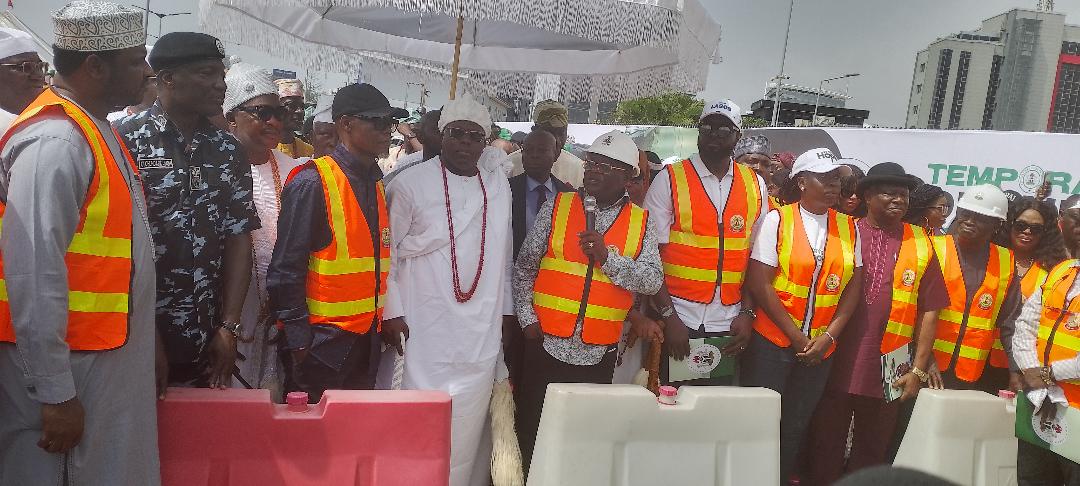
The long-delayed Lagos–Calabar Coastal Highway took a major step forward at the weekend with the temporary opening of Section 1, stretching from the Ahmadu Bello Way junction to Eleko Village in Lagos, as the Federal Government pushed to demonstrate delivery on President Bola Ahmed Tinubu’s flagship infrastructure agenda.
The opening, performed on behalf of the President by the Minister of Works, Engr. David Umahi, marks the first visible milestone on one of Tinubu’s four “legacy projects” — a network of strategic highways designed to knit together Nigeria’s economic corridors across all six geopolitical zones.
The Lagos–Calabar Coastal Highway is a proposed inter-state corridor designed to run along Nigeria’s coastal shoreline, linking Lagos to Cross River State. The highway is expected to pass through nine states—Lagos, Ogun, Ondo, Edo, Delta, Bayelsa, Rivers, Akwa Ibom and Cross River—with a spur extending northwards into the North-Central region. When completed, the corridor will span an estimated 75 kilometres.
Within Lagos State, the project covers a total stretch of about 103 kilometres. To ease construction and delivery, the highway has been broken into phases. Section 1, measuring 47.47 kilometres, runs from Chainage 0+00 at Ahmadu Bello Way Junction to Chainage 47+474 at Eleko Village Junction. This section was awarded to Hi-Tech Construction Company Limited at a contract sum of ₦1.067 trillion.
The scope of work includes the construction of a dual-carriage rigid-pavement highway, supported by associated drainages and culverts, median barriers and street lighting. It also covers the relocation of critical public utilities, including electricity cables and poles, cable ducts, as well as gas and water pipelines, where required.
Umahi said Section 1 covers about 47.47 kilometres of six-lane carriageway built with reinforced concrete pavement, equipped with street lighting, CCTV surveillance and rapid-response facilities designed to address incidents within five minutes. Landscaping and extensive tree planting are also integrated into the design, reflecting what the minister described as a “new quality benchmark” for federal highways.
Beyond Lagos, works are progressing simultaneously across multiple sections of the coastal highway. According to the minister, the second section spans about 55 kilometres between Ogun State and the Lagos border, while Sections 3A and 3B — roughly 72 kilometres after redesign — are underway in Cross River and Rivers states. Sections 4A and 4B are progressing in Akwa Ibom and Cross River, reinforcing the administration’s strategy of starting construction from both ends of the corridor.
In total, over 60 kilometres of the 258-kilometre Lagos–Calabar route have been opened to traffic on a temporary basis, while more than 30 kilometres have completed earthworks, Umahi said.
He framed the project as the fulfilment of a vision first conceived nearly five decades ago during the Shehu Shagari administration, when the idea of a Badagry–Sokoto superhighway was first mooted. Under Tinubu, the concept has been reworked into interconnected coastal and inland corridors, including a six-lane Sokoto axis starting from Ilela, where 120 kilometres have already been awarded and construction commenced.
The minister stressed that the coastal highway is only one pillar of a broader national grid of roads. The third legacy project, running from the South-East through the North-Central to Abuja, has seen 120 kilometres awarded in Ebonyi State at a cost of about ₦456 billion, with concrete pavement already progressing on over 10 kilometres. A fourth legacy corridor — recently approved by the Federal Executive Council — will link Akwanga to Jos, Bauchi and Gombe, extending the network into the North-East.
Umahi said the projects are deliberately designed to interconnect, creating continuous trade and logistics routes from the Atlantic coast to the country’s hinterland. He also revealed plans for a privately financed public-private partnership (PPP) section, including a 3.5-kilometre tunnel linking coastal corridors through island communities.
Addressing concerns around cost and transparency, the minister said anti-corruption agencies, including the ICPC and EFCC, have been invited to independently inspect all legacy projects nationwide. He pledged that detailed cost breakdowns — from bills of quantities to evaluation sheets — are available for scrutiny, challenging critics to “query any item line by line.”
For investors and businesses, the administration argues that the roads will lower logistics costs, open up coastal tourism and industrial zones, and improve access to ports, agro-belts and manufacturing hubs. Umahi maintained that despite security, funding and environmental challenges, progress remains “above 95 per cent on the positives.”
“The policy is simple,” he said. “We start from the beginning and from the end at the same time — so the nation can see, touch and use what is being built.”
As traffic begins to flow on the first Lagos stretch, the government is betting that visible delivery — even on a temporary basis — will help build confidence in what is shaping up to be one of Nigeria’s most ambitious road-building programmes in decades.
The Lagos State Governor, Babajide Sanwo-Olu, represented by the Commissioner for Transportation, Oluwaseun Osiyemi, said the temporary opening of the Lagos–Calabar Coastal Highway, Phase 1, Section 1, marks a significant milestone for productivity, commerce and long-term economic growth. Infrastructure of this magnitude goes beyond reducing travel time; it unlocks efficiency across the entire economic value chain, enabling individuals and businesses to focus on productive activity rather than avoidable delays, Sanwo-Olu said.
Currently, journeys along this corridor can take as long as 15 hours. Upon full completion, travel time is expected to be reduced to just a few hours, significantly lowering logistics costs and improving the movement of goods, services and labour. The Governor said broader economic benefits are substantial—faster transit, improved road safety, stronger regional trade linkages and a strategic corridor capable of driving industrial expansion.
According to him, when fully delivered, this project has the potential to boost Nigeria’s Gross Domestic Product by catalysing industrialisation, stimulating trade and enhancing connectivity between key commercial hubs. It will also ease congestion, improve road safety and create a more predictable and efficient transport environment for commuters and businesses.

By Reporter
Rite Foods Limited, an indigenous food and beverage company, has felicitated with Muslim faithful across Nigeria as they celebrate Eid-el-Maulud, commemorating the birth of Prophet Muhammad.
The company urged Muslims to use the occasion to reflect on the values of peace, tolerance, unity, compassion and peaceful coexistence embodied in the teachings of the Prophet.
In a goodwill message, the Managing Director and Chief Executive Officer of Rite Foods, Seleem Adegunwa, called on Muslim faithful to demonstrate exemplary conduct and promote harmony as they celebrate.
Adegunwa also urged Nigerians to use the occasion to pray for the peace, unity and sustainable development of the country.
“As a company that shares in the joy of our consumers, we stand with our Muslim brothers and sisters as they mark this important moment in their faith. We hope this season brings renewed unity and progress for all Nigerians,” he said.
Also speaking, the Head of Corporate Affairs and Sustainability at Rite Foods, Ekuma Eze, said the company was delighted to celebrate important occasions with its consumers across the country.
Eze encouraged Muslim faithful to celebrate the season with family and friends, noting that Rite Foods’ portfolio of products is designed to cater to consumers across different occasions.
The company’s product portfolio includes Bigi Carbonated Soft Drinks, Bigi Premium Drinking Water, Sosa Fruit Drinks, Fearless Energy Drink, Rite Spicy Beef Sausage, Bigi Beef Sausage and Bigi Flex Sausage.
The company said its products are manufactured using automated infrastructure and technology, with continued investment in innovation and quality.
Rite Foods has also received industry recognition for its sustainability and innovation initiatives, including Outstanding FMCG Corporate Brand of the Year at the Edge Awards, as well as honours at the Sustainability, Innovation and Social Impact (SISA) Awards and the SERAS Awards.
The company reiterated its commitment to supporting initiatives that promote social cohesion, community development and sustainable growth while creating value for its consumers and other stakeholders.

By Reporter
Nigerian management consultant, organizational strategist and leadership expert, Michael Odafe Ugbewanko, has been admitted into the Forbes Human Resources Council, an invitation-only professional body that brings together senior human resources executives, chief people officers, founders and business leaders shaping the future of work globally.
Ugbewanko, who is the Lead Consultant at Dmidaf Global Consult, joins an international network of C-suite executives, vice presidents, directors, founders and business owners recognised for their professional accomplishments and leadership in the human resources profession.
In a welcome message, Forbes Councils Member Success Specialist, Jessica McClendon, said members of the council enjoy access to an exclusive platform designed to expand their professional influence and industry impact.
“Welcome to Forbes Human Resources Council. We’re delighted to have you as part of our vibrant and empowering community. Here, you’ll have the opportunity to share your expertise with the Forbes.com audience, connect with industry-leading peers and access carefully curated benefits that support your personal and professional growth,” the message stated.
The appointment represents another milestone for Ugbewanko, whose work has centred on helping organisations build sustainable, high-performing institutions through strategic leadership, operational excellence and effective human capital management.
Over the past decade, he has advised hundreds of chief executives across more than 1,000 organisations, helping businesses strengthen what he identifies as the three foundations of long-term success—process, structure and people.
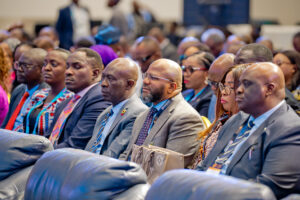
Speaking on his admission, Ugbewanko described the recognition as an opportunity to contribute African perspectives to global conversations on leadership, organisational transformation and the future of work.
“The future of business belongs to organisations that intentionally build strong systems and empower people to perform at their highest potential. I am honoured to join a global community of leaders committed to advancing excellence in human resources and organisational leadership while representing the innovation and resilience of African businesses on the global stage,” he said.
Widely regarded as one of Africa’s leading voices on organisational effectiveness, Ugbewanko was named one of the 10 Most Influential HR Leaders in Africa by Entrepreneur Magazine in 2025. He is also the author of HR Is Dead, a book that advocates a more strategic role for human resources in driving business growth and institutional sustainability.
Beyond his consulting practice, he convenes the Operational Excellence Conclave, a leadership forum held ten times each year for chief executives, founders, senior executives and political leaders seeking practical strategies for building resilient organisations. He also leads The Presidential Table, an executive advisory platform limited to 15 chief executives annually and focused on transformational organisational growth.
Academically, Ugbewanko holds a Master’s degree in Human Resource Management from the University of South Wales, United Kingdom, and a Bachelor’s degree in Philosophy from the University of Ibadan. He is a Chartered Management Consultant (FIMC, CMC), a Fellow of Corporate Governance (FCGP), and an Associate Member of the Chartered Institute of Personnel and Development (CIPD), United Kingdom.
His admission into the Forbes Human Resources Council reflects the growing global recognition of African business leaders contributing to discussions on leadership, governance, people strategy and organisational excellence, while strengthening the continent’s voice in shaping the future of work.

By Reporter
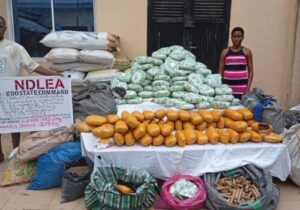
The National Drug Law Enforcement Agency (NDLEA) has intercepted 1.63 million pills of tramadol (250mg) concealed in specially fabricated compartments of two articulated trucks along the Lagos-Ibadan Expressway, exposing what it described as a transnational drug trafficking syndicate operating across the Togo-Benin-Nigeria corridor.
The agency’s Director of Media and Advocacy, Femi Babafemi, disclosed the development in a statement on Sunday, noting that the latest seizures bring the total quantity of tramadol recovered from the same syndicate to more than 2.18 million pills in three separate operations conducted within one month.
According to the statement, the first trailer was tracked and intercepted on July 2 while heading to Kano.
NDLEA operatives recovered 853,000 pills of tramadol (250mg) hidden in a fabricated compartment beneath the truck’s cargo floor and arrested the 22-year-old driver, Jabir Kabiru.
Two days later, on July 4, intelligence-led operations led to the interception of another trailer, also travelling to Kano on the same highway.
The agency recovered an additional 777,000 pills of tramadol (250mg) concealed in a similar hidden compartment and arrested the driver, Muhammed Nuhu, also aged 22.
Investigations, according to the NDLEA, revealed that the trucks intercepted on June 21, July 2 and July 4, together with their illicit consignments, were all linked to the same international drug trafficking network.
In a separate operation, NDLEA operatives intercepted 4.70 kilograms of Canadian Loud, a synthetic strain of cannabis, at the import shed of the Murtala Muhammed International Airport (MMIA), Lagos.
The consignments, concealed inside cartons marked “Odugwu,” arrived from Canada on British Airways and Ethiopian Airlines flights on June 24 and July 3, respectively.
The agency arrested two cargo agents, Ali Rotimi Samson and Orimolade Oluwagbenga, in connection with the shipments before apprehending Edeh Onyeamachi Stanislaus, who attempted to collect the consignments from a logistics company.
Further investigations led to the arrest of the alleged owner of the drugs, Chioma Nneka Mokeme, a 44-year-old businesswoman, on July 7 in Surulere, Lagos, with support from the Nigeria Police Force’s Area C Command.
The agency also arrested Hajara Abdullahi, a 38-year-old Chadian national, and her Nigerian associate, Abdulkareem Jidda, 44, in Apapa, Lagos.
Their arrest followed the interception of 50,000 pills of tramadol (225mg) in Kogi State on July 12, with investigations linking the consignment to the two suspects.
NDLEA also recorded several other seizures during the period.
In Rivers State, operatives arrested 80-year-old Chika Ugwoji in Ahoada on July 14 after recovering 800 grams of skunk from him.
In Edo State, a couple, Christian Chukwuka, 32, and Nwanneka Christian, 33, were arrested during a raid on a drug warehouse along Sapele Road, Benin City.
The operation led to the seizure of 219.5 kilograms of cannabis sativa and 192.67 kilograms of compressed Canadian Loud.
The NDLEA said the operations underscore its sustained crackdown on organised drug trafficking networks and cross-border narcotics syndicates operating within and outside Nigeria.

Customs: Salako takes charge at Lilypond Export Command, pledges stronger trade facilitation

Eid-el-Maulud: Rite Foods calls for peace, unity, national progress

Rite Foods’ innovation, green energy drive earns top 50 impact recognition
-

 Fashion9 years ago
These ’90s fashion trends are making a comeback in 2017
-
Entertainment9 years ago
The final 6 ‘Game of Thrones’ episodes might feel like a full season
-
Fashion9 years ago
According to Dior Couture, this taboo fashion accessory is back
-
Fashion9 years ago
Model Jocelyn Chew’s Instagram is the best vacation you’ve ever had
-
Sports9 years ago
Steph Curry finally got the contract he deserves from the Warriors
-
Entertainment9 years ago
The old and New Edition cast comes together to perform
-
Business9 years ago
Uber and Lyft are finally available in all of New York State
-
Sports9 years ago
Phillies’ Aaron Altherr makes mind-boggling barehanded play