Oil & Gas
NNPC/Heirs Energies record major gas commercialisation milestone at OML 17

By Ambrose Nnaji
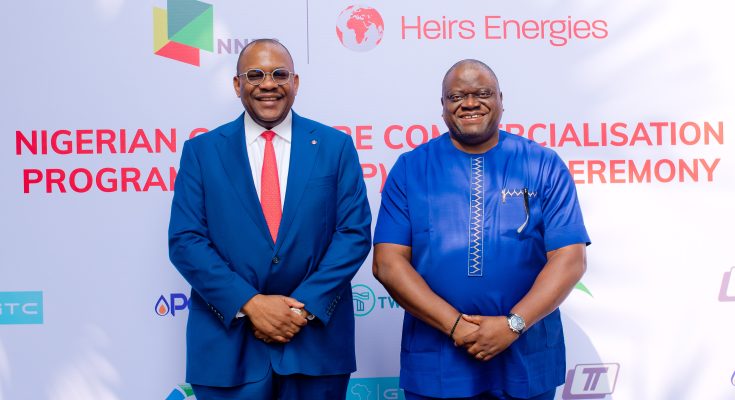
The NNPC/Heirs Energies OML 17 Joint Venture has recorded a major milestone in Nigeria’s gas commercialisation drive with the signing of Gas Flare Commercialisation Agreements under the Nigerian Gas Flare Commercialisation Programme (NGFCP), alongside approved non-NGFCP frameworks.
The landmark ceremony signals a decisive shift from regulatory approvals to structured commercial execution, paving the way for flare gas volumes across OML 17 to be captured and channelled into productive uses such as power generation, industrial applications, liquefied petroleum gas (LPG) and compressed natural gas (CNG). The initiative aligns closely with Nigeria’s gas development priorities and broader energy-transition objectives.
Under the agreements, Heirs Energies, operator of the OML 17 Joint Venture, formalised partnerships with approved flare gas offtakers — AUT Gas, Twems Energies, Gas & Power Infrastructure Development Limited (GPID), PCCD, and Africa Gas & Transport Company Limited (AGTC). The frameworks are designed to eliminate routine gas flaring while transforming previously wasted resources into sustainable economic value.
Speaking at the event, Chief Upstream Investment Officer of the National Upstream Investment Management Services (NUIMS), Engr. Seyi Omotowa, who represented NNPC Limited, described the milestone as a clear demonstration of Nigeria’s commitment to gas-based development.
“For us at NNPC Limited and NUIMS, flare gas commercialisation is not merely a compliance exercise; it is a strategic pathway to improving energy availability, deepening gas-based industrialisation and strengthening Nigeria’s position as a responsible energy producer,” Omotowa said.
“OML 17 has emerged as a practical model of this vision, moving decisively from approval to delivery.”, he added.
He commended Heirs Energies for what he described as disciplined execution and sustained investment, noting that the joint venture continues to set benchmarks for operational delivery and gas development in Nigeria’s upstream sector.
The Nigerian Upstream Petroleum Regulatory Commission (NUPRC), represented at the ceremony on behalf of its Chief Executive, Engr. Gbenga Komolafe, reaffirmed regulatory support for the project. The Commission described flare gas commercialisation as a critical pillar of Nigeria’s decarbonisation pathway under the Petroleum Industry Act (PIA) 2021.
According to the NUPRC representative, the agreements demonstrate Heirs Energies’ firm commitment to ending routine gas flaring at OML 17 and fully align with the Commission’s gas flare commercialisation framework, national energy goals and emission-reduction targets.

Heirs Energies Chief Executive Officer, Osa Igiehon, said the agreements reflect the company’s gas-led growth strategy and its focus on brownfield excellence aimed at delivering long-term value for Nigeria.
“Gas sits at the heart of Nigeria’s development journey,” Igiehon said. “Through disciplined investment, strong partnerships with regulators and credible offtakers, and a clear focus on execution, we are converting waste into value, strengthening domestic energy supply and supporting responsible operations across OML 17.”
The NGFCP and non-NGFCP flare gas projects build on recent operational gains recorded by the OML 17 Joint Venture, including a significant increase in gas delivery to the domestic market driven by brownfield interventions and infrastructure optimisation. The JV has also sustained host-community engagement through targeted healthcare initiatives, education support and skills-development programmes in its areas of operation.
With the symbolic signing concluded, flare gas offtakers are expected to move swiftly into full project implementation, working closely with the joint venture, regulators and host communities to deliver measurable commercial, environmental and social benefits.
Overall, the OML 17 NGFCP initiative reinforces Nigeria’s gas-led economic vision, supporting domestic power generation, industrial growth and responsible resource development while advancing the country’s energy-transition and decarbonisation goals.

By Ambrose Nnaji
The Managing Director of TotalEnergies Exploration and Production Nigeria Limited, Mathieu Bouyer, has reaffirmed the company’s commitment to expanding Nigeria’s energy supply while steadily lowering the carbon intensity of its operations.
Bouyer spoke during a panel session titled “Capitalising on Africa’s Global Upstream Momentum” at the Nigeria International Energy Summit (NIES) 2026 in Abuja, where industry leaders examined evolving investment trends and emerging opportunities across Africa’s oil and gas sector.
He said TotalEnergies’ strategy in Nigeria is anchored on two core pillars: growing oil and gas production and expanding electricity generation through integrated power solutions—aligned with the company’s global ambition of delivering more energy with fewer emissions.
“Our strategy is about growing energy as a whole,” Bouyer said, stressing that Nigeria remains a strategic market within TotalEnergies’ global portfolio, even as countries across Africa compete for upstream investment capital.
According to him, the company’s immediate focus is on maximising value from existing assets, spanning onshore gas and offshore oil and gas developments. He cited the recently sanctioned Ubeta Gas Project, expected to deliver up to 300 million cubic feet of gas per day, alongside several additional projects currently under evaluation.
On sustainability, Bouyer disclosed that TotalEnergies has eliminated routine gas flaring across all its Nigerian operations since 2023, marking a major milestone in its emissions-reduction drive. He added that the company has deployed advanced methane-detection technologies, including its proprietary AUSEA system, designed for real-time emissions monitoring and rapid intervention.
In addition, he said TotalEnergies EP Nigeria has installed over 2,500 Permanent Emission Monitoring Systems (PEMS) across its production sites nationwide.
Bouyer also announced plans to commission a five-megawatt solar power plant at OML 58 to supply electricity to the Ubeta Gas Project, describing it as one of the world’s first near-net-zero gas developments.
He underscored the importance of partnerships with indigenous companies, describing collaboration with local operators as critical to accelerating project execution and unlocking broader economic value.
Bouyer cited long-standing joint ventures with AMNI, Conoil, and Sapetro, pointing to flagship assets such as Egina FPSO and Akpo Condensate as examples of successful collaboration between international and indigenous operators. He also disclosed ongoing deep-offshore appraisal work with Conoil and planned exploration drilling with Sapetro.
“When we work with local partners, it enables us to move faster and create value—not just for ourselves, but for the country,” he said.
Bouyer and members of his management team also engaged with students at the summit, reinforcing TotalEnergies’ focus on knowledge transfer, skills development, and nurturing the next generation of energy professionals.

Dangote expands industrial ambition to steel, power, ports

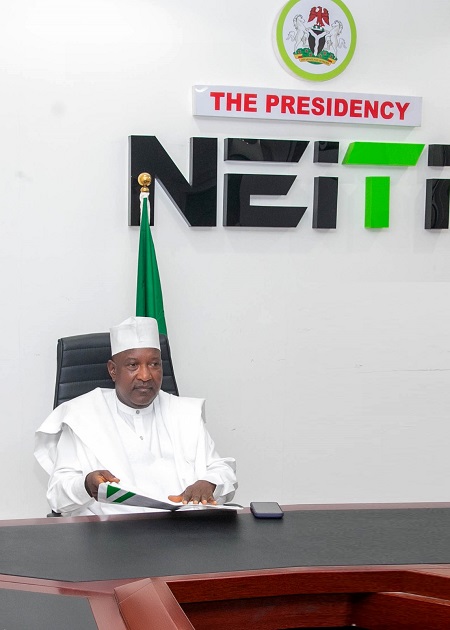
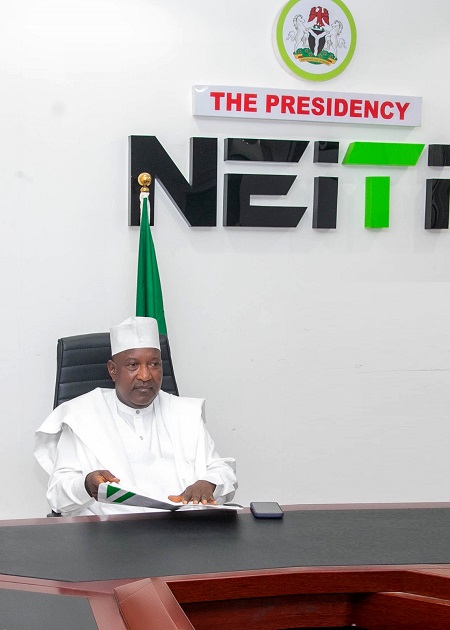
NEITI backs Tinubu’s executive order mandating direct remittance of oil revenues

Oil industry regulator expands local content drive into healthcare
-

 Fashion9 years ago
These ’90s fashion trends are making a comeback in 2017
-
Entertainment9 years ago
The final 6 ‘Game of Thrones’ episodes might feel like a full season
-
Fashion9 years ago
According to Dior Couture, this taboo fashion accessory is back
-
Entertainment9 years ago
The old and New Edition cast comes together to perform
-
Sports9 years ago
Phillies’ Aaron Altherr makes mind-boggling barehanded play
-
Business9 years ago
Uber and Lyft are finally available in all of New York State
-
Sports9 years ago
Steph Curry finally got the contract he deserves from the Warriors
-
Entertainment9 years ago
Disney’s live-action Aladdin finally finds its stars