Energy
NDPHC injects 450MW into grid, begins 225MW Gbarain revival

By Ambrose Nnaji
Nigeria LNG Limited (NLNG) has emerged Overall Champion and Best Sports Company at the 20th edition of the Nigeria Oil and Gas Industry Games (NOGIG), concluding a week of competition in Abuja with a commanding performance that underscored its culture of excellence and teamwork.
Team NLNG topped the medals table with an impressive haul of 52 medals — 20 gold, 16 silver and 16 bronze — overtaking defending champions Nigerian National Petroleum Company Limited (NNPCL), which finished second with 49 medals (14 gold, 15 silver and 20 bronze).
The Nigerian Content Development and Monitoring Board (NCDMB) secured third place with 18 medals, while TotalEnergies placed fourth with 15 medals. Other participating organisations included Oando, Seplat Energy, Chevron, ExxonMobil, and Shell, among others.
Held from February 8 to 14, 2026, the biennial tournament marked four decades of fostering unity, collaboration and healthy competition within Nigeria’s oil and gas sector. Beyond athletic performance, the event serves as a strategic platform for strengthening corporate relationships and reinforcing industry cohesion.
Leading the NLNG delegation, Deputy Managing Director Olakunle Osobu described the victory as a reflection of the company’s resilience, discipline and unity. He noted that excellence at NLNG extends beyond operational performance into wellness, teamwork and corporate engagement.
Organisers hailed the 20th edition as a landmark celebration of industry camaraderie, emphasising the enduring value of collaboration beyond boardroom engagements.
With chants of #TeamNLNG reverberating across the stadium, the triumph further solidifies NLNG’s leadership reputation — not only as a major player in Nigeria’s energy landscape, but also as a champion of corporate wellness and inter-company collaboration.
By Editor
The Nigerian Content Development and Monitoring Board (NCDMB) has reaffirmed its support for the African Petroleum Producers Organisation (APPO) and its newly established financial institution, the Africa Energy Bank (AEB), as preparations intensify for the bank’s official launch.
The Executive Secretary of NCDMB, Engr. Felix Omatsola Ogbe, made the commitment when the new Secretary General of APPO, Farid Ghezali, paid him a courtesy visit at the Board’s Abuja liaison office, accompanied by senior APPO officials, Bakary Traore and Tchananti Sahguir.
The meeting followed Nigeria’s handover of the fully established office of the Africa Energy Bank, clearing the way for the institution’s formal launch by APPO and Afreximbank, its joint promoters.
Ogbe described APPO and the Africa Energy Bank as critical to the future of Africa’s oil and gas industry, pledging NCDMB’s readiness to provide operational support for the bank’s take-off in line with the directives of President Bola Tinubu and the Minister of State for Petroleum Resources (Oil), Senator Heineken Lokpobiri.
“The NCDMB stands ready to support the successful launch of the Africa Energy Bank and the broader objectives of APPO,” Ogbe said, noting that the bank would play a strategic role in mobilising financing for energy projects across the continent.
Ghezali, who assumed office in January, sought NCDMB’s continued support in strengthening APPO’s operations, highlighting the long-standing relationship between both institutions. He outlined plans to enhance transparency, improve financial discipline and expand APPO’s membership base, disclosing that Mauritania is expected to join the organisation, further broadening its continental reach.
He stressed the importance of transparent governance structures for the Africa Energy Bank, including a credible and inclusive process for selecting its Governing Board. According to him, strict Know Your Customer (KYC) standards and credibility requirements are essential to building confidence among member countries and investors.
Discussions also focused on capacity building and regional collaboration. Ghezali proposed the creation of an interactive platform to showcase African-certified companies across key specialties, while recommending the use of NCDMB’s Nigerian Content Academy to support training and skills development across APPO member states.
Both parties agreed on the need for equitable distribution of project benefits, harmonisation of regulations, technical assistance, knowledge sharing and deeper regional market integration, particularly within West Africa, under the African Continental Free Trade Area (AfCFTA) framework.
Key resolutions from the meeting included plans to launch the interactive local content platform in the first half of 2026, strengthen financial discipline, circulate detailed roadmaps to stakeholders, follow up on outstanding member contributions and provide operational support for the Africa Energy Bank’s launch.
Ogbe requested that APPO share its implementation roadmap, timelines and an update on the bank’s financial position, while both sides agreed to hold follow-up meetings to track progress.
The engagement underscored NCDMB’s growing role in advancing Africa’s energy agenda through strategic partnerships such as the Africa Energy Bank, which aims to close longstanding financing gaps in oil, gas and energy development while supporting sustainable growth across the continent.

How Renaissance Africa Energy redefines N/Delta development through HCDTs
By Our Reporter
Renaissance Africa Energy is embedding community participation at the heart of its operations in the Niger Delta, positioning local partnerships as a critical driver of both operational efficiency and social impact.
The Chief Executive Officer of the company, Tony Attah, said sustainable energy development in host communities depends largely on how effectively companies collaborate with local stakeholders to deliver shared value.
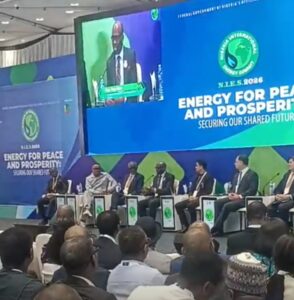
Attah spoke during a panel session titled “Capitalizing Africa’s Global Upstream Momentum” at the ongoing Nigerian International Energy Summit (NIES) in Abuja, where he highlighted the company’s Host Community Development Trusts (HCDTs) as a central pillar of its engagement strategy.
According to him, the HCDTs provide communities with a structured platform to participate in decision-making and directly benefit from development initiatives tied to energy projects.
“We rise and fall together. There is no scenario where we grow and they don’t grow,” Attah said.
He noted that the approach represents a clear departure from past models, where development projects were often imposed without adequate consultation. Under the new framework, communities now “hold the wheels of their development,” with the autonomy to prioritise and allocate resources based on their specific needs.
Attah cited examples of previous interventions—such as the construction of schools or water facilities—that failed to deliver value because cultural and practical realities were overlooked. In one case, a community water project initially faltered due to limited consultation, prompting residents to later redesign the initiative themselves to better reflect local priorities.
He credited the Petroleum Industry Act (PIA) with formalising community engagement structures and strengthening the governance and sustainability of HCDTs.
Describing the model as a long-term solution, Attah said shared prosperity is no longer optional but essential for stability and growth in the Niger Delta.
“The shared prosperity model is the ultimate future for the Niger Delta,” he said, stressing that community-led development is both a social responsibility and a business imperative.

Dangote expands industrial ambition to steel, power, ports

NEITI backs Tinubu’s executive order mandating direct remittance of oil revenues

Oil industry regulator expands local content drive into healthcare
-

 Fashion9 years ago
These ’90s fashion trends are making a comeback in 2017
-
Entertainment9 years ago
The final 6 ‘Game of Thrones’ episodes might feel like a full season
-
Fashion9 years ago
According to Dior Couture, this taboo fashion accessory is back
-
Entertainment9 years ago
The old and New Edition cast comes together to perform
-
Sports9 years ago
Phillies’ Aaron Altherr makes mind-boggling barehanded play
-
Business9 years ago
Uber and Lyft are finally available in all of New York State
-
Sports9 years ago
Steph Curry finally got the contract he deserves from the Warriors
-
Entertainment9 years ago
Disney’s live-action Aladdin finally finds its stars