Energy
Nigeria’s electricity access drive ranks among world’s largest, REA MD says

By Editor
The Nigerian Content Development and Monitoring Board (NCDMB) has reaffirmed its support for the African Petroleum Producers Organisation (APPO) and its newly established financial institution, the Africa Energy Bank (AEB), as preparations intensify for the bank’s official launch.
The Executive Secretary of NCDMB, Engr. Felix Omatsola Ogbe, made the commitment when the new Secretary General of APPO, Farid Ghezali, paid him a courtesy visit at the Board’s Abuja liaison office, accompanied by senior APPO officials, Bakary Traore and Tchananti Sahguir.
The meeting followed Nigeria’s handover of the fully established office of the Africa Energy Bank, clearing the way for the institution’s formal launch by APPO and Afreximbank, its joint promoters.
Ogbe described APPO and the Africa Energy Bank as critical to the future of Africa’s oil and gas industry, pledging NCDMB’s readiness to provide operational support for the bank’s take-off in line with the directives of President Bola Tinubu and the Minister of State for Petroleum Resources (Oil), Senator Heineken Lokpobiri.
“The NCDMB stands ready to support the successful launch of the Africa Energy Bank and the broader objectives of APPO,” Ogbe said, noting that the bank would play a strategic role in mobilising financing for energy projects across the continent.
Ghezali, who assumed office in January, sought NCDMB’s continued support in strengthening APPO’s operations, highlighting the long-standing relationship between both institutions. He outlined plans to enhance transparency, improve financial discipline and expand APPO’s membership base, disclosing that Mauritania is expected to join the organisation, further broadening its continental reach.
He stressed the importance of transparent governance structures for the Africa Energy Bank, including a credible and inclusive process for selecting its Governing Board. According to him, strict Know Your Customer (KYC) standards and credibility requirements are essential to building confidence among member countries and investors.
Discussions also focused on capacity building and regional collaboration. Ghezali proposed the creation of an interactive platform to showcase African-certified companies across key specialties, while recommending the use of NCDMB’s Nigerian Content Academy to support training and skills development across APPO member states.
Both parties agreed on the need for equitable distribution of project benefits, harmonisation of regulations, technical assistance, knowledge sharing and deeper regional market integration, particularly within West Africa, under the African Continental Free Trade Area (AfCFTA) framework.
Key resolutions from the meeting included plans to launch the interactive local content platform in the first half of 2026, strengthen financial discipline, circulate detailed roadmaps to stakeholders, follow up on outstanding member contributions and provide operational support for the Africa Energy Bank’s launch.
Ogbe requested that APPO share its implementation roadmap, timelines and an update on the bank’s financial position, while both sides agreed to hold follow-up meetings to track progress.
The engagement underscored NCDMB’s growing role in advancing Africa’s energy agenda through strategic partnerships such as the Africa Energy Bank, which aims to close longstanding financing gaps in oil, gas and energy development while supporting sustainable growth across the continent.

By Ochiauto Nnaji
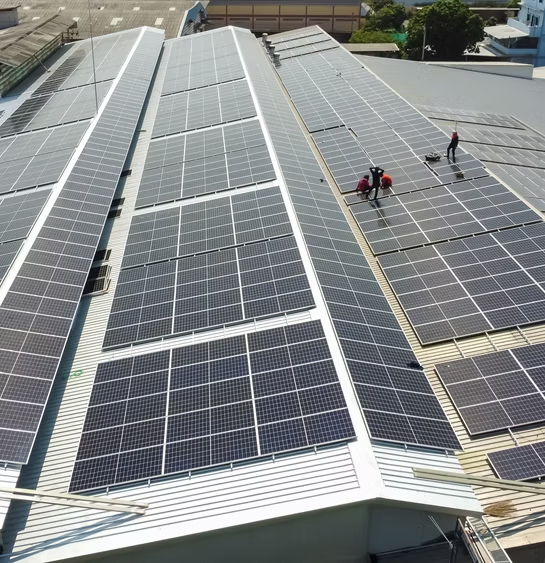
JMG Solar, the renewable energy arm of JMG Limited, has successfully installed and commissioned a hybrid solar power system at St. Catherine Specialist Hospital in Wuse 2, Abuja, reinforcing the growing adoption of clean energy solutions in Nigeria’s healthcare sector.
The project was designed to improve energy reliability, lower operating costs, and support the hospital’s sustainability objectives. For healthcare facilities where uninterrupted power is critical to patient care and medical operations, hybrid solar systems are emerging as a dependable alternative to conventional energy sources.
According to JMG, the solar installation has significantly reduced the hospital’s dependence on diesel generators and grid electricity. Since commissioning, diesel consumption has dropped by 50 percent—from 2,000 litres to 1,000 litres monthly—resulting in savings of approximately N14 million in diesel costs over four months.
In addition, the hospital’s monthly energy expenditure declined from N7 million to N5 million, generating net savings of about N2 million per month after lease costs, all without any upfront capital investment by the hospital.
Following a comprehensive energy audit, JMG Solar deployed a 92.8kWp solar photovoltaic system, supported by 65kW of hybrid inverter capacity and 160.8kWh of lithium battery storage. The installation comprises 160 Longi solar panels, three 20kW Deye hybrid inverters, one 5kW inverter, and 30 lithium batteries, integrated with a smart monitoring platform for real-time performance tracking.
The system is expected to generate approximately 11.13MWh of solar energy monthly, or 133.63MWh annually, enabling the hospital to meet its entire energy demand through solar generation and battery storage while reducing carbon emissions by an estimated 53,091 kilograms each year.
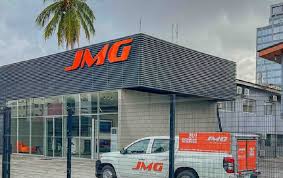
JMG said the project demonstrates how renewable energy solutions can help healthcare institutions improve operational efficiency, reduce costs, and advance environmental sustainability goals.
By Ambrose Nnaji
Savannah Energy Plc has reported a strong operational and financial performance for the first four months of 2026, posting higher production, rising revenues, improved cash collections and a stronger balance sheet as it advances key energy projects across Africa.
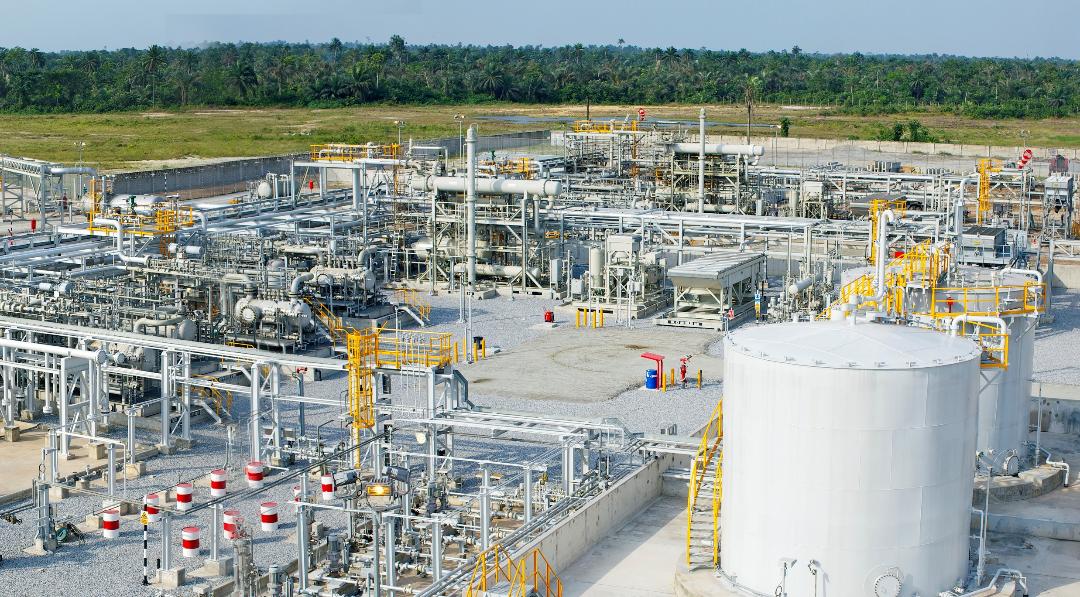
Ahead of its Annual General Meeting (AGM), the British independent energy company announced that average gross daily production at its Stubb Creek field in Nigeria rose by 8 per cent to 3,100 barrels of oil per day (bopd), up from 2,800 bopd in the corresponding period of 2025. The increase follows the completion of the SIPEC acquisition and ongoing production expansion activities at the field.
The company’s trading update showed revenue climbed 17 per cent year-on-year to $104.1 million, compared with $89.1 million recorded during the same period last year. Savannah also made significant progress in strengthening its financial position, reducing trade receivables by 22 per cent to $395.2 million from $507.2 million at the end of 2025.
One of the strongest indicators of operational efficiency was a sharp rise in cash collections, which surged 48 per cent to $183.5 million during the four-month period ended April 30, underscoring the company’s focus on cash discipline and receivables management.
Cash balances improved to $64.7 million from $42.8 million at the end of December 2025, while net debt declined to $641.7 million from $658.6 million, reflecting continued efforts to strengthen liquidity and reduce leverage.
To further enhance financial flexibility, Savannah secured a new £32 million unsecured loan facility from NIPCO Plc, its largest shareholder. The facility comprises an immediate £20 million tranche and an additional £12 million available from July 1. It carries a 4.5 per cent annual interest rate over a 36-month term.
The company said the facility includes an option to settle the loan through the issuance of shares at 8 pence per share, although neither party is obligated to exercise the conversion feature.
Beyond its financial performance, Savannah reported steady progress across its portfolio of oil, gas and renewable energy projects in Africa.
In Nigeria, drilling and completion activities at the Uquo North-East well have been completed, with flowline installation nearing completion. The company expects first gas from the well in early July 2026, supporting higher gas production in the second half of the year. Preparatory work is also advancing at the Uquo South exploration location ahead of the next drilling campaign.
The company noted that group average gross daily production for the period stood at 15,700 barrels of oil equivalent per day, compared with 18,800 boepd in full-year 2025, reflecting temporary constraints in gas production due to drilling activities and customer demand patterns.

Outside Nigeria, Savannah continued to make progress on strategic power projects. In Niger, the Parc Eolien de la Tarka wind project has been designated a priority project by the government, while discussions continue regarding the future development of the asset and the potential resumption of oil operations.
In Cameroon, negotiations with the government are at an advanced stage on a Joint Development Agreement for the proposed 95MW Bini a Warak hybrid hydroelectric and solar power project, a key component of Savannah’s renewable energy growth strategy.
Commenting on the performance, Chief Executive Officer Andrew Knott said the company had delivered strong results across its core strategic priorities, citing substantial improvements in revenue, cash collections and receivables management.
He noted that Savannah continues to advance major growth projects, including new gas wells at Uquo and production expansion activities at Stubb Creek, while simultaneously progressing its wind, solar and hydropower portfolio and evaluating additional acquisition opportunities in both the hydrocarbons and power sectors.
“The combination of strong operational delivery, improved cash generation and enhanced financial flexibility positions Savannah well to sustain growth and create long-term value through 2026 and beyond,” Knott said.
By Ambrose Nnaji
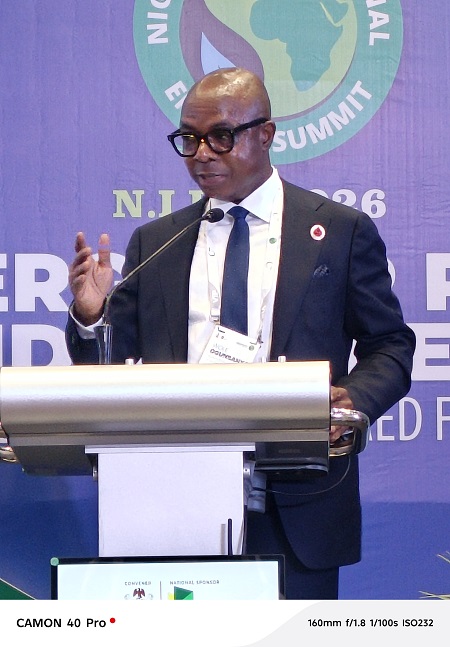
Nigeria’s oil and gas sector is in the middle of a “quiet but far-reaching transformation,” driven by local firms, zero-flare targets, and ambitions to lead Africa’s energy future, regulators told investors at the 2026 Offshore Technology Conference.
Eyesan made this known at the Nigerian Pavilion of Offshore Technology Conference 2026 in Houston, Texas.
The Nigerian Pavilion was organised by the Petroleum Technology Association of Nigeria (PETAN) with the 2026 edition themed: “Africa’s Energy Transformation: Scaling Investment, Technology, and Local Capacity for Sustainable Growth.”
NUPRC Boss said indigenous companies, climate goals, and policy reform are reshaping the industry from the ground up.
“Today, nearly 100 Nigerian companies are operating in the sector. That is phenomenal,” Eyesan said at the PETAN-organized Nigerian Pavilion. The shift marks a move away from decades of dominance by a handful of international oil companies toward local firms driving exploration, production, and tech adoption.

Her remarks highlight a significant shift from an era dominated by a handful of international oil companies to one where indigenous firms are increasingly shaping the industry’s direction.
She said that at the core of her agenda is a dual target of eliminating gas flaring by 2030 and achieving net-zero emissions by 2060.
She disclosed that gas flaring has already dropped below 10 per cent, with firm plans to eradicate it completely.
“We are not just penalising flaring. We are commercialising it,” Eyesan said, explaining that flare sites are being concessioned to firms capable of converting wasted gas into usable energy.
She said that the initiative is expected to generate up to three gigawatts of electricity.
She expressed confidence that Nigeria’s decarbonisation goals are achievable, emphasising a pragmatic transition that integrates cleaner technologies rather than abandoning hydrocarbons altogether.
According to her, some offshore facilities already deploy solar energy, while carbon capture, utilisation, and storage projects are under consideration.
Eyesan described the Petroleum Industry Act (PIA) as a “game changer” that has improved regulatory clarity and competitiveness while noting that continuous policy adjustments are necessary to remain globally attractive.
“The government has been responsive. We constantly evaluate our position and adjust to attract and retain investment,” she said.
She stressed that the Commission remains committed to enabling business while enforcing compliance, adding that collaboration is not confrontation, and will define engagement with industry players.
Looking beyond Nigeria, Eyesan said the country is well-positioned to drive Africa’s broader energy development.
“Nigeria is a major player, but I see us as a beacon for Africa. We have the resources to expand energy access, reduce energy poverty, and support industrialisation across the continent,” she said.
On investment opportunities, she revealed strong interest in Nigeria’s 2025 bid round.
“We have about 50 assets on offer and nearly 300 applicants. That tells you the opportunities are significant, and the story will change rapidly,” she added.
She also pointed to reforms in the downstream sector, noting that the removal of fuel subsidies has accelerated the adoption of alternative fuels such as compressed natural gas (CNG), with further growth expected as domestic gas infrastructure expands.
In his remarks, Wole Ogunsanya, Chairman of PETAN, said Nigeria’s participation at the conference demonstrates resilience despite global uncertainty and challenges.
“Even in these trying moments, not just in the United States but globally, we ensured Nigeria was represented,” Ogunsanya said.
“We engaged extensively to support delegates’ participation, and the outcome is encouraging.”
He noted that the strong presence of key stakeholders reflects a shared commitment to boosting production and strengthening the country’s energy security.
Ogunsanya added that Nigeria is approaching a major refining milestone, with projections of up to one million barrels per day in operational refining capacity, positioning the country to reduce import dependence and meet domestic demand more effectively.
1-3048×4064-1-0-{}-0-12#

NOG 2026: Nigeria to unveil first-ever gas, power infrastructure map to boost energy investment

Senate orders arrest of Mele Kyari over alleged N210tr NNPCL financial gaps

Consumer complaints trigger FCCPC enforcement action against PWAN
-

 Fashion9 years ago
These ’90s fashion trends are making a comeback in 2017
-
Entertainment9 years ago
The final 6 ‘Game of Thrones’ episodes might feel like a full season
-
Fashion9 years ago
According to Dior Couture, this taboo fashion accessory is back
-
Entertainment9 years ago
The old and New Edition cast comes together to perform
-
Business9 years ago
Uber and Lyft are finally available in all of New York State
-
Sports9 years ago
Steph Curry finally got the contract he deserves from the Warriors
-
Sports9 years ago
Phillies’ Aaron Altherr makes mind-boggling barehanded play
-
Entertainment9 years ago
Disney’s live-action Aladdin finally finds its stars