Mining
Ododo vows to end tax evasion as mining trucks damage newly built Lokoja road

By Ezurike Ugochukwu
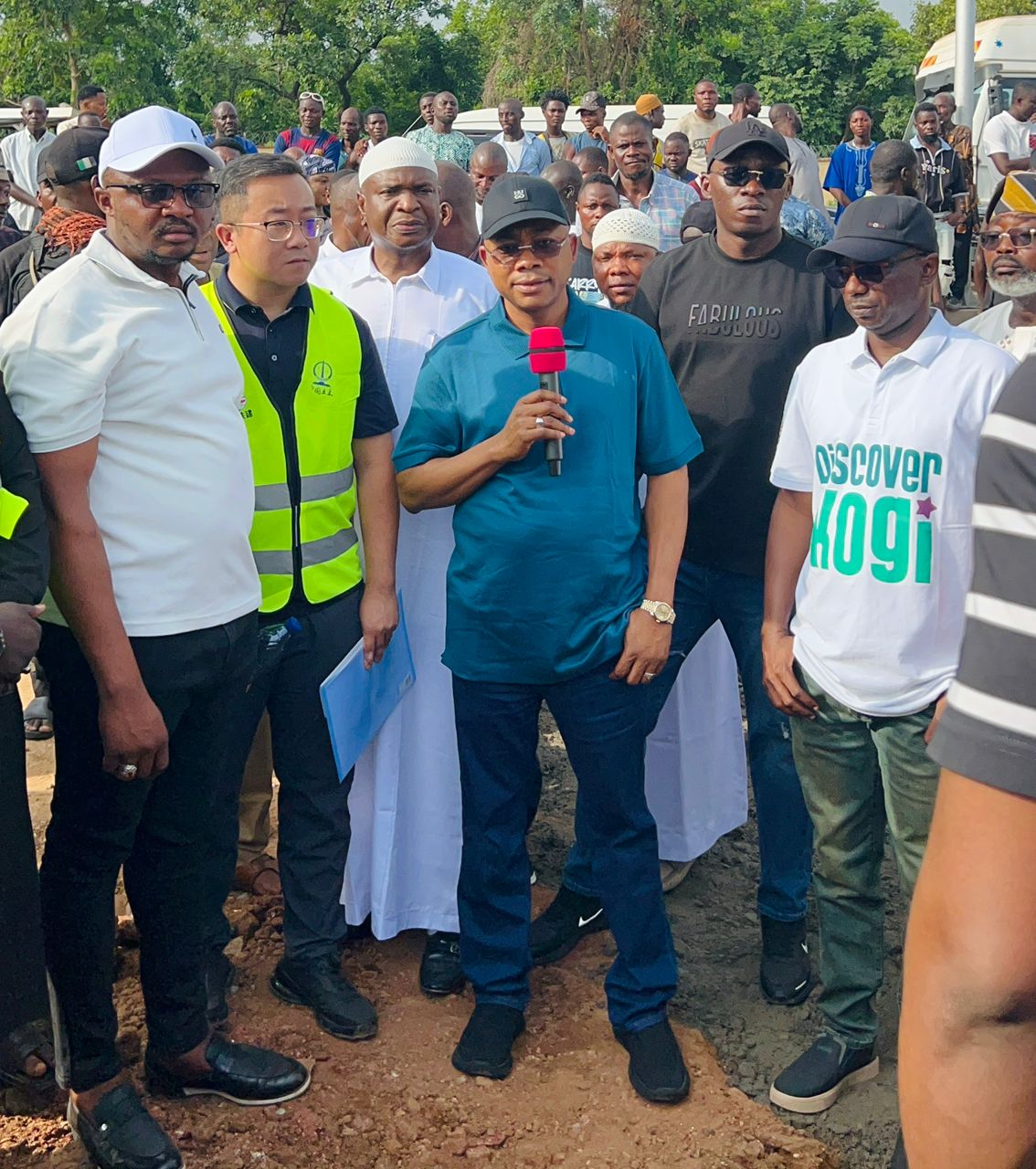
Kogi State Governor Ahmed Usman Ododo has ordered an immediate crackdown on tax-evading miners whose overloaded trucks allegedly damaged the recently constructed GYB Junction–Zango–Zone 8 Roundabout Road in Lokoja.
The governor directed the Kogi State Internal Revenue Service (KGIRS) to strengthen tax enforcement against defaulting mining operators while warning that the destruction of public infrastructure under the guise of tax evasion would no longer be tolerated.
Ododo gave the directive on Friday during an inspection of the damaged road, which was constructed by China Civil Engineering Construction Corporation (CCECC) less than two years ago.
According to the governor, the road was designed primarily for taxis and other light vehicles in line with its Bill of Engineering Measurement and Evaluation (BEME) and was never intended to accommodate overloaded mining trucks.
“We’re here to see how best we can address the issues on ground. This road was designed for small vehicles, but unfortunately, miners trying to evade tax collection points have diverted their heavy trucks to this route, causing massive destruction,” he said.
Describing tax evasion as a criminal offence, Ododo instructed the state’s revenue authorities to intensify enforcement, stressing that the government would no longer allow public infrastructure to be destroyed by operators seeking to avoid their tax obligations.
“I call on the Kogi State Internal Revenue Service to enforce tax collection on these miners. We cannot continue to construct roads only for them to be destroyed by people trying to evade tax. From now on, any heavy truck found on this road will be dealt with. This is not their designated route, and we will not take it anymore,” the governor said.
Ododo also ordered the closure of all illegal access routes being used by the trucks and announced plans to establish a special enforcement task force to ensure compliance with the restrictions. He warned that violators would face stiff penalties, including heavy fines and possible forfeiture of their vehicles.
During the inspection, the governor urged CCECC to accelerate rehabilitation work on the damaged sections, assuring residents that his administration remains committed to protecting critical infrastructure across the state.
“I want to urge our people to exercise patience with us. We’re following up closely to ensure this road is fixed and continues to serve the people effectively,” he added.
Speaking at the site, CCECC State Project Manager, Engineer Sun Yi Shi, explained that the road was constructed as an urban road for light vehicles and was never designed to withstand the weight of overloaded mining trucks.
He said the continued use of the road by heavy-duty trucks had exceeded its load-bearing capacity, leading to its rapid deterioration.
“This road was constructed as an urban road for light vehicles, not for heavy trucks. The damage occurred because miners have been using it as a shortcut. The road’s bearing capacity was not designed for such loads,” he said.
Sun disclosed that the company has commenced remedial work, including installing barriers and concrete planters to prevent heavy-duty trucks from accessing the road, excavating damaged sections, reinforcing the road foundation with stone base and cement stabilisation, and reconstructing the affected pavement.
He expressed confidence that the repairs, coupled with stricter enforcement of traffic restrictions, would prevent a recurrence.
“Once these barriers are in place and heavy trucks are prevented from using this route, this kind of deterioration will not happen again,” he said.

By Ambrose Nnaji
The Nigeria Extractive Industries Transparency Initiative (NEITI) says Nigeria is fully prepared for the 2026 global Extractive Industries Transparency Initiative (EITI) Validation, with civil society organisations expressing confidence in the country’s progress on transparency and accountability reforms in the extractive sector.
The global validation exercise, which begins on July 1, 2026, is an independent assessment of how implementing countries comply with the EITI Standard on transparency and good governance in the management of natural resources.
Speaking at a consultative forum in Abuja, the Executive Secretary, Musa Sarkin Adar, said Nigeria has systematically addressed the corrective actions identified during its last validation and is ready to demonstrate its progress to the global EITI community.

According to him, the National Stakeholders Working Group (NSWG) has strengthened compliance in key areas, including stakeholder engagement, contract disclosure, resource-backed loans, sub-national revenue transfers and the transparency of state-owned enterprises.
“Nigeria has taken deliberate steps to close the gaps identified in the last validation. We are stronger, more coordinated and ready to demonstrate our progress to the global EITI community,” Adar said.
He noted that NEITI has also engaged government, civil society and extractive companies on the new validation model, reporting templates and corrective actions required under the 2023 EITI Standard.
Describing the exercise as more than a compliance assessment, Adar said the validation provides an opportunity for Nigeria to demonstrate its commitment to transparency, accountability and good governance in the management of its extractive resources.
“Validation is proof of Nigeria’s unwavering commitment to transparency, accountability and good governance. It is also an opportunity to showcase the reforms and continuous improvements we have made in extractive sector governance,” he said.
The Executive Secretary added that NEITI is working closely with government agencies, extractive companies, civil society organisations and development partners to ensure that all required disclosures and supporting documents are completed before the assessment begins.
He urged civil society organisations and the media to actively participate in the process by tracking audit recommendations, reviewing validation templates and contributing evidence that reflects Nigeria’s progress.
Chair of the Communications and Civil Society Steering Committee and civil society representative on the NEITI Board, Erisa Danladi, said the meeting was convened to validate stakeholders’ inputs into the EITI reporting templates.
Director of Communications and Stakeholders Management, Obiageli Onuorah, said Nigeria had strengthened its compliance record by addressing previous corrective actions, highlighting the recent Memorandum of Understanding signed between NEITI and the National Human Rights Commission to safeguard civic space.
She described the agreement as an innovative initiative that has received recognition from the global EITI body.
Also speaking, Faith Nwadishi of the Centre for Transparency urged civil society organisations to use the validation templates not merely as reporting tools but as instruments for strengthening implementation and accountability.
“These documents must be used to hold covered entities accountable,” she said.
Other stakeholders, including NEITI Board representative for the South-South, Steven Akpan, as well as Chima Williams, Emeka Ononamadu and Mustapha Mohammed, Chair of the Resource Justice Network, expressed strong support for NEITI’s preparations and Nigeria’s participation in the validation exercise.
The stakeholders described the validation as an important mechanism for strengthening public trust, improving revenue accountability and ensuring that Nigeria’s natural resources contribute more effectively to sustainable national development.
By Ambrose Nnaji
The Nigeria Extractive Industries Transparency Initiative (NEITI) has called for urgent institutional and regulatory reforms to tackle illicit financial flows (IFFs) undermining Nigeria’s solid minerals sector, warning that weak oversight, illegal mining, and opaque ownership structures are costing the country billions in lost revenue.
In a new policy brief titled “Stemming the Scourge of Illicit Financial Flows in Nigeria’s Mining Sector,” released at the NEITI House, the agency identified weak regulatory capacity, fragmented institutional coordination, informal artisanal mining, foreign buyers’ dominance, and criminal infiltration of mining communities as major enablers of illicit financial activities in the sector.
NEITI noted that despite Nigeria’s vast deposits of commercially viable minerals such as gold, lithium, limestone, and gemstones, the mining sector continues to underperform. According to the agency’s 2023 industry audit report, the sector generated only N401 billion in revenue and contributed just 0.72 per cent to the country’s Gross Domestic Product (GDP).
The policy brief stated that the sector’s poor performance is largely driven by illicit financial flows that fuel revenue leakages, tax evasion, illegal mining, mineral smuggling, corruption, and money laundering linked to organised criminal networks.
According to NEITI, the challenges are systemic and deeply rooted across institutional arrangements, market structures, security architecture, and data management systems.
The report highlighted severe fragmentation among regulatory institutions, including the Federal Ministry of Solid Minerals Development, Mining Cadastre Office (MCO), NEITI, Nigeria Customs Service, Nigeria Financial Intelligence Unit, and state agencies, noting that most institutions operate isolated data systems with limited interoperability and no integrated digital monitoring framework for the sector.
NEITI further identified weak data governance and poor enforcement of beneficial ownership disclosure requirements as major structural loopholes enabling illicit financial flows. It noted that many mining licences are held through shell companies, special purpose vehicles, and layered corporate structures that conceal the real owners of extractive assets.
The agency warned that inadequate verification of beneficial ownership information among the Ministry of Solid Minerals Development, MCO, and the Corporate Affairs Commission allows politically exposed persons, undisclosed foreign interests, and criminal actors to hide control of mining operations, thereby facilitating corruption, money laundering, trade misrepresentation, and regulatory capture.
“Until beneficial ownership transparency is fully enforced and data systems are harmonised across agencies, accountability in the sector will remain structurally compromised,” the report stated.
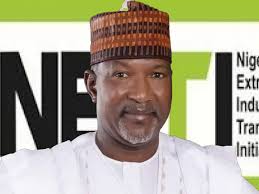
NEITI also raised concerns over the dominance of artisanal and small-scale mining (ASM), which accounts for more than 70 per cent of mining activities in Nigeria. It noted that many artisanal miners operate without licences, receipts, digital records, or traceability systems.
The report estimated that about 80 per cent of mining activities in parts of North-West Nigeria, particularly in Zamfara, Katsina, and Kaduna states, are conducted illegally.
According to the brief, minerals extracted from illegal mining sites are often mixed with legally sourced minerals, making verification difficult and creating channels for laundering illicit mineral flows into formal supply chains and export markets.
The agency warned that the continued informality of ASM operations complicates taxation, monitoring, and enforcement efforts, while sustaining parallel mineral economies beyond government control.
To address the challenges, NEITI proposed seven key reforms, including stronger inter-agency collaboration, integration of Anti-Money Laundering and Counter-Terrorism Financing (AML/CFT) measures into mining governance, formalisation of artisanal mining activities, mandatory beneficial ownership disclosure, legal and institutional reforms, improved community engagement, and sustained civil society participation.
The recommendations, according to the agency, align with Nigeria’s existing policy frameworks, including FATF standards, the Proceeds of Crime Act (POCA), beneficial ownership reforms under the Companies and Allied Matters Act (CAMA), Open Government Partnership commitments, and the Medium-Term National Development Plan (MTNDP).
NEITI stressed that tackling illicit financial flows is critical to Nigeria’s economic stability and long-term development, adding that coordinated institutional reforms, improved transparency mechanisms, stronger data systems, and inclusive engagement with artisanal mining communities are necessary to reposition the mining sector as a credible and sustainable revenue source for the country.
The policy brief was produced by NEITI in collaboration with the Federal Ministry of Solid Minerals Development and the Africa Network for Environment and Economic Justice, with support from the Foreign, Commonwealth and Development Office.


PTML to pilot Customs’ new MIS File Tracker as Miko targets seamless nationwide rollout

Dangote picks London over Dubai for cement listing, cites faster approval process

Dangote confirms successful completion of $2.5 billion private placement
-

 Fashion9 years ago
These ’90s fashion trends are making a comeback in 2017
-
Entertainment9 years ago
The final 6 ‘Game of Thrones’ episodes might feel like a full season
-
Fashion9 years ago
According to Dior Couture, this taboo fashion accessory is back
-
Sports9 years ago
Steph Curry finally got the contract he deserves from the Warriors
-
Entertainment9 years ago
The old and New Edition cast comes together to perform
-
Business9 years ago
Uber and Lyft are finally available in all of New York State
-
Sports9 years ago
Phillies’ Aaron Altherr makes mind-boggling barehanded play
-
Entertainment9 years ago
Disney’s live-action Aladdin finally finds its stars